When Jacob Nandieki Lukonyi died, he left behind six households, two parcels of land and a family inheritance that would eventually become the subject of a protracted court battle.
More than a decade after the succession case was filed, the High Court in Busia has rejected a proposed plan for sharing his property after finding that one of his six households had been completely left out.
“Before this Court for determination is a multi-pronged contest concerning the final distribution of the estate of the late Jacob Nandieki Lukonyi, who died without leaving a will. The deceased was a polygamist who customarily and contractually married six wives, thereby establishing six distinct statutory and customary households,” Justice Samuel Mohochi stated.
In the ruling, delivered on September 28, 2026, the court effectively sent the administrators back to the drawing board. The dispute arose from a proposed distribution filed by two of the administrators, Robert Oduya Nandieki and Denis Wanzala Nandieki.
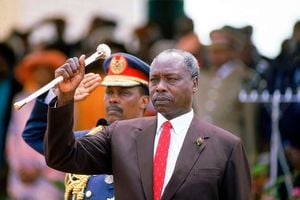
High Court rejects inheritance plan that left out one of six households.
Photo credit: Pool
Their plan was challenged by two groups. One was led by Nasirumbi Nandieki Okonyi, identified in the ruling as the deceased’s third wife. She complained that her household, including her children, had been left out of the proposed distribution.
The other challenge came from Christopher Kizito Oluta and Leonard Wafula Makhanu, who were involved in the case as interested parties and purchasers. They claimed that their late father, Francis Bede Juma Oluta, had bought 10.8 hectares from Mr Lukonyi in 1976.
The two said their family had occupied the land continuously since then and that it had become their ancestral home. The court examined the history of the disputed land and found documents supporting the Oluta family’s claim.
Among the records presented were an application for consent to subdivide the land, a letter of consent issued in June 2001 and a transfer document signed by Mr Lukonyi.
The court also considered records showing that the two families had met in 2011 in the presence of a lawyer and agreed that the land in Bukhayo should be subdivided to reflect the respective historical shares.
The disputed 10.8 hectares form part of the land, which measures approximately 17.47 hectares. The court found that the Oluta family had been in open and uninterrupted occupation of the 10.8 hectares since 1976.
It ruled that the portion should not form part of the property available for distribution among Mr Lukonyi’s six households. Instead, it ordered that the 10.8 hectares be transferred to the heirs of Mr Oluta. The ruling leaves the remainder of the land in Bukhayo as the property available for distribution among Mr Lukonyi’s beneficiaries.
But the land dispute was only one part of the family battle. Ms Okonyi’s protest exposed what the court considered a more fundamental problem with the proposed distribution — the omission of an entire household.
The court found that Mr Lukonyi had six wives and that the proposed distribution had made no provision for the third household.
The administrators had suggested that the deceased had distributed his property during his lifetime, but the court found that they had not produced concrete evidence to support that claim.
“The Co-Administrators, in drafting their distribution proposal dated September 11 2024, failed to make any provision for the 3rd widow's house, completely leaving out her and her children. The administrators vaguely claimed that the deceased distributed his properties during his lifetime, but they failed to bring any concrete, verifiable evidence to validate this claim,” the judge ruled.
A letter dated March 19, 2012, from the chief of Bukhayo East Location was among the records considered by the court.
It identified Jenita Nasirumbi Nandieki as Mr Lukonyi’s third wife and listed her five children — Godfrey Ouma, Crucifixa Nabwire, Simon Sande, Boniface Olele and Grace Antance.
The court therefore rejected the proposed distribution. It ordered that all six households be included in the fresh distribution of the estate.
The share allocated to each household will be determined by the number of children in that household, with a surviving wife also counted as an additional member.
This means that the administrators must now prepare a new distribution plan reflecting the six households and their respective numbers of children and surviving widows.
The court gave the co-administrators 35 days from the date of the ruling to file an amended and comprehensive distribution document.
The ruling also settled the fate of two other parcels of land that had featured in the dispute. The latest ruling means the family must now undertake a fresh calculation of how the remaining land should be divided.