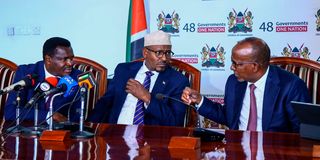
Governors have stepped up resistance to Executive directives they say undermine their authority, setting the stage for a confrontation with the national government.
The permanent employment of medics, mandatory use of an electronic procurement system, a single revenue collection system for counties, pay rise for county employees and delayed disbursement of county cash are the latest grievances by the governors.
Governors maintained the counties cannot absorb the staff until the Health ministry pays the contracted workers Sh9.4 billion in gratuity and transfers to the devolved units Sh7.7 billion for their salaries under permanent and pensionable terms.
The meeting resolved the UHC staff will continue working under the same contracts until next year when most of the contracts lapse, and their transition to permanent and pensionable terms remains conditional.
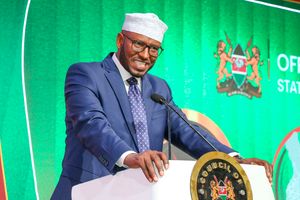
“The Council of Governors and Ministry of Health reaffirm the position that in the interest of UHC staff, and the public, transition would only happen on the following conditions: That the requisite resources—Sh7.7 billion—are availed to county governments through the Division of Revenue Allocation Act and the county’s equitable share of revenue increased,” said the CoG chair Ahmed Abdullahi.
CoG announced the formation of a joint committee comprising the chairpersons of health, legal, finance and human resource committees to work closely with the Ministry of Health and agree on the modalities of paying UHC staff at Salaries and Remuneration Commission rates for the remainder of their contracts.
“That money will be transferred and factored in the Division of Revenue Bill, and that is when the issue of UHC staff will finally be completed,” said Mr Duale, whose recent order that the counties absorb the workers from September 1 kicked up a storm.
County chiefs have also demanded withdrawal of a National Treasury-backed online procurement system, whose implementation President William Ruto has vowed will not be stopped. They have also rejected the government’s push for an e-Citizen-like revenue collection system for the counties.
“We call on the National Treasury to immediately withdraw the Circular directing the counties to implement the e-GP [Electronic Government Procurement System] until proper consultations, legal alignment and capacity-building are undertaken,” CoG said.
Governors also want an additional Sh4.8 billion to implement a pay rise for county workers, saying the national government implemented a salary review for all its employees during the 2024/2025 financial year.
Still on matters healthcare, the governors and the Ministry of Health resolved to establish a digital dashboard that will track how funds from the Social Health Insurance Fund (SHIF) are released to county health facilities.
“Currently, counties are owed upwards of Sh6 billion in unpaid claims. The meeting agreed that all claims should be paid by the 14th day of every month,” Mr Abdullahi said.
The council also faulted the Public Service Commission (PSC) for developing career progression guidelines for health workers without input of counties.
“We call upon PSC to withdraw the career guidelines and desist from approving cadre-based progression guidelines which have a huge financial impact on county governments without factoring in the cost of implementation in the equitable share of revenue,” it said.
These sticky issues add to a growing list of long-running grievances, like the allocation to counties under the equitable share of national revenue and severe delays in the disbursement of the funds.
This year, governors wanted Sh536.9 billion but Treasury offered Sh405 billion as the equitable share for the 2025/2026 financial year. To unlock a stalemate between the Senate and National Assembly over the Division of Revenue Bill, 2025, the equitable share of revenue to be disbursed to county governments was set at Sh415 billion.[email protected]