Cases of drowning in Lake Victoria are a common occurrence when people die due to sudden storms and overloaded boats with no life jackets.
But detectives in Homa Bay are now asking a chilling question: What if some of the people who die did not drown? What if they were intentionally pushed into the water?
The Directorate of Criminal Investigations (DCI) believes some drownings are intentional ritual sacrifices and now plans to hold fishermen legally accountable for the deaths of their colleagues.
According to the Kenya Maritime Authority (KMA), at least 420 accidents were reported in Lake Victoria over the last 10 years, with 146 incidences of fatalities.
During the period, 252 people died.
Investigators revealed that some reported drownings in the lake are actual killings disguised as accidents.
This follows revelations that some cases of deaths are intentionally caused by the fishermen themselves.
It has emerged that some people are being “sacrificed” in the lake for the population of fish to increase.
Investigating officers in Homa Bay revealed that some reported drownings are rituals where individuals are pushed to death under the belief that it will make others get more fish.
To combat this, County DCI Commander Jimmy Kisobo stated that investigators will no longer accept drowning narratives at face value.
Instead, fishermen who report these incidents will face charges as the individuals responsible for causing the deaths.
In the past, when fishermen died after falling from a vessel, the cases were reported as drowning and those who witnessed it normally went scot-free.
Fishing boats docked along Lake Victoria in Homa Bay County. Boat ownership is helping Homa Bay women escape sex-for-fish exploitation.
Photo credit: File | Nation Media Group
Rather, they will investigate them further and find the real cause of death besides the narration that fishermen tell.
Mr Kisobo said fishermen who report cases of drowning will be charged with being responsible for causing the death.
“Some of the explanations some fishermen give do not add up. It is unusual for some to just fall into the lake and sink. At least they can struggle on the water surface before they are rescued by their colleagues,” he said.
Some traditional fishing communities hold spiritual beliefs that water bodies like lakes possess spirits or ancestors that require sacrifices and respect.
According to Suba South Beach Management Unit chairperson William Onditi, stories are told of how fishing communities would pray for increased catch.
After prayers, he said, an accident would occur in the lake.
“Bodies were never found but the funeral service of those who die would be carried out with their families burying stones. The lake would thereafter have a lot of fish,” Mr Onditi said.
With climate change, pollution and overpopulation, fish production is declining at an alarming rate.
Some rogue fishermen are tempted to engage in crime, including practising illegal fishing by using prohibited nets or catching juvenile fish from breeding grounds.
While this goes on, cases of drowning are also reported in the lake, with Mr Kisobo, the county DCI boss, saying some raise eyebrows.
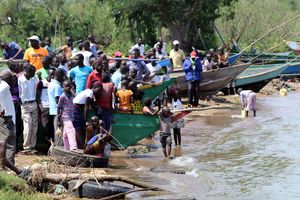
Fishermen on Lake Victoria.
Photo credit: Pool
While thousands of fishermen tragically drown in Lake Victoria every year due to sudden storms and night conditions when many victims do not wear life jackets or have proper navigation tools, making accidents far more lethal, the DCI officer said some cases of deaths are not just accidents.
“Most of the victims of this case are people who are new in fishing activities,” he said.
During investigations of past cases, Mr Kisobo said victims are later traced to be people who committed crimes elsewhere before going to the lake to hide.
He said some are people whose families disowned them before they decided to run away and hide in the lake.
“Fishermen operate like PSV drivers who sometimes pick on random touts before they work during the day. Boat operators can pick on anyone they find at the beach before going for a fishing expedition,” Mr Kisobo said.
In some past cases, fishermen reported that those who died were standing on the edge of the boat before falling off.
Mr Kisobo questioned this narrative, saying it does not add up.
“If you know you cannot swim, why would you engage in an activity that puts your life at risk?” he questioned.
Mr Onditi defended fishermen, saying most cases of death happen because of alcoholism.
“I don’t believe that a fisherman can push his colleague in water with the thought of getting more fish. The people who die are those who drink before going to the lake. They go straight to the bottom of the lake the moment they fall in water,” the BMU official said.
He said all fishermen who venture into the lake should be documented when they board their vessels and be accounted for when they go back on land.
“Other people in the lake should be on the watch out for fishing vessels that go to the lake with a certain number of people but get back on land with one or more people missing,” the DCI officer said.