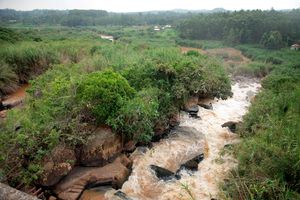
In the rugged landscapes of Bomet County where rivers carve deep gorges and waterfalls conceal dangerous currents, one man has quietly built a reputation as a lifeline for grieving families.
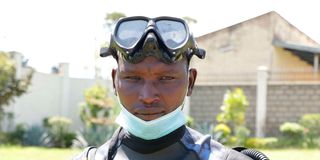
Gideon Ngo’twa is a self-taught diver whose years of experience have made him one of the most trusted figures in the search and recovery of drowning victims.
For many, drowning incidents often mark the beginning of long, painful waits filled with uncertainty. Families gather along riverbanks, clinging to hope even as days pass with no sign of their loved ones.
It is in these moments that Ngo’twa’s phone rings, and more often than not, he answers.
Despite lacking formal training, he has sharpened his skills through years of hands-on experience. His knowledge of water behaviour, currents, and underwater terrain has grown with every mission, allowing him to navigate environments that many would consider too dangerous.
His work is driven not by recognition or financial gain, but by a deep sense of duty to help families find closure.
Ngo’twa, who hails from Chepalungu Sub-county, recalled the first time he retrieved a body in 2014, after a man who was on a fishing spree slipped and fell into the water while removing fishing nets.
His family grew suspicious when he failed to return home in the morning. Upon arriving at the river, they found his clothes on the riverbank, raising alarm and prompting a search.
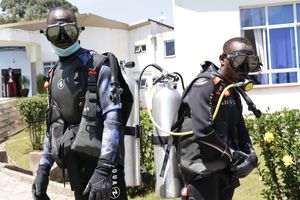
‘Bomet divers’ team (from left) Gideon Ngotwa, Leonard Langat, Gideon Siele, Julius Langat, Nicholas Sigei and Kenneth Rotich when they received diving gear from the county government.
Ngo’twa, who was a bodaboda rider at the time, was ferrying a client to Chebunyo Market when he saw hundreds of locals milling around the river as the search was ongoing.
He said he spoke to his client, who agreed to be ferried by someone else. He then parked his motorcycle aside and volunteered to help.
“When I joined the search, it only took one hour before we could locate his body. We retrieved it and it was moved to the mortuary. The family was happy; I went home a happy soul. I had helped a family get closure on what had happened to their kin,” he recalled during a phone interview.
His prowess in diving earned him a job with the Bomet County Government in the Disaster Management Department, where he has worked since 2015. He started on a contract basis before he was absorbed on permanent terms.
He said that after his successful search, during the victim’s burial, the first Bomet governor, Isaac Ruto, was in attendance and offered him a job in the disaster department.
Years later, Mr Ngo’twa has lost count of the bodies he has retrieved, saying they are more than 100 from different counties.
He says that when they go for a retrieval outside Bomet, the family only caters for transport and food for the days they conduct the search.
During the interview, he informed the Nation that he had received a phone call to go and help retrieve a body in Sotik.
According to Ngo’twa, at the office they have an emergency number. When a distress call comes through, Ngo’twa, who heads a team of five divers stationed across the five sub-counties, assembles his team.
He said that he alerts the team, prepares, and they leave for the scene.
At the scene, they first assess the location—the place where the victim might have fallen or was last seen. They then conduct prayers before embarking on the search mission.
His ability to read water patterns and predict where a body might be trapped or carried has proven invaluable in cases where time is critical.
Over time, Ngo’twa has developed a deep understanding of the environments he works in. He can assess the movement of water and debris, anticipate how conditions may change, and adjust his approach accordingly.
“We always dive and concentrate where the water is calm since the body always settles in such a place. Depending on the waves, we can take one day, two, or three days. Normally, when someone falls into the water, their body comes up after four days, unless it has been held by something underwater,” he said.
In 2016, he underwent a month-long training in Mombasa County, where he was equipped with skills in using oxygen underwater, which he now uses during missions, mostly in lakes or boreholes.
Divers Keneth Rotich (left) and Gideon Ngotwa showing their diving gear .
His work has also come with challenges, including an incident where a man from Bureti in Kericho County fell into a river, taking three months before his body was retrieved after the water subsided. He admitted that it was a difficult task.
He recalled another incident where two men drowned in separate incidents in Bomet and Trans Mara, and despite their efforts, their bodies were never recovered.
Ngo’twa noted that in 2019, he was involved in an accident during a search operation in Konoin, where he fell into a waterfall and lost two teeth. With support from the county government, the teeth were later replaced.
According to Ngo’twa, the recovery of a loved one’s body is often a crucial step in the grieving process, allowing for proper burial and closure, as burial rites hold deep significance, making timely recovery even more important.
“There was a time back in 2022 I went for a search mission but was overwhelmed after missing my path. I was trapped for more than 30 minutes. Luckily, I was rescued by my colleagues. I went home, but I felt sick at night and was rushed to Tenwek Hospital, where I was admitted in ICU for four days and six days in the general ward. After I was discharged, the next day I went for another search and it was successful.”
The father of three notes that his services extend far beyond his home county, as residents from neighbouring regions have come to rely on his expertise, especially in difficult recoveries where conventional rescue efforts fall short.
He was among divers who helped recover bodies when a chopper crashed into Lake Nakuru in 2017, killing all five occupants, noting that it had its own challenges.
He says the two-week experience was challenging, as the water in Lake Nakuru was contaminated. There was always a risk of accidentally ingesting it during search operations, which could lead to diarrhoea.
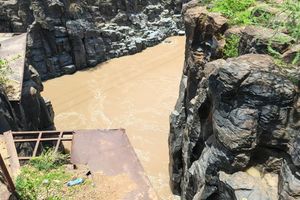
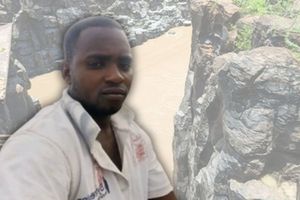
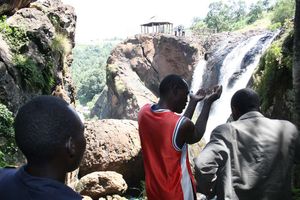
The recent case unfolded at Cheploch Gorge, a well-known tourist attraction site in Baringo County, where a diver drowned. Initial search efforts yielded no results, leaving the family in anguish.
Days turned into a week with no recovery, and hope began to fade. It was at this point that Ngo’twa was called in.
Drawing on his experience, he carefully studied the flow of the water and the structure of the gorge. He identified likely spots where the body could have been trapped beneath rocks or submerged debris.
Entering the cold, unpredictable waters, he conducted a thorough search, diving repeatedly despite the risks.
His persistence paid off: a week after the incident, he successfully located and recovered the body, bringing an end to the family’s agonising wait.
For the grieving relatives, the recovery meant more than just closure; it allowed them to proceed with burial rites and begin the difficult process of healing.
Such outcomes have defined Ngo’twa’s work over the years. Each recovery mission carries emotional weight, as he often interacts closely with families who are grappling with loss. While the work is physically demanding, it is the emotional toll that can be most challenging.
Yet Ngo’twa remains steadfast, as he understands that behind every call is a family seeking answers, and he approaches each case with compassion and determination.
His role extends beyond that of a diver; he becomes a source of hope during some of the darkest moments in people’s lives.
Despite the challenges, he continues to respond whenever he is called upon. His courage and resilience have earned him admiration from communities across the region, many of whom regard him as a hero.
They are facilitated whenever they go out for search operations, with the county providing a vehicle to support their movement.
They do not charge families for their services unless the families choose to appreciate them in their own way. However, when a county vehicle is not available, families cater for their transport and food.
According to Ngo’twa, the other team members have also been trained.
He admits that conducting search operations in areas inhabited by crocodiles is challenging. However, the team usually maps out the search area and drives the crocodiles downstream to ensure safety.
For now, Ngo’twa continues his work with quiet determination. Each mission is a reminder of the risks he faces and the lives he touches, and while the waters he dives into may be unpredictable, his purpose remains clear—to help families find closure when they need it most.
“I married when I was already doing this work. My family has never stigmatised me for my work. They are proud of me. I enjoy my work,” he said.