El Niño rush: Farmers scramble for seeds, fertiliser
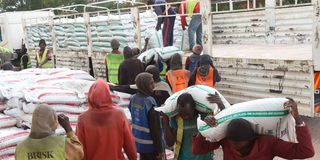
Workers offload the government's subsidised fertiliser from a truck at the National Cereals and Produce Board, Eldoret depot in Uasin Gishu County on March 18, 2026. The OCP fertiliser, which is preferred by maize farmers, is out of stock.

Farmers in the South Rift region are rushing to purchase subsidised fertiliser and maize seeds ahead of the expected El Niño rains.
The rush comes against the backdrop of crop failure in the Rift Valley, the country’s food basket, as a result of the prolonged drought.
The drought coincided with the weeding season in most parts of the region, resulting in stunted growth and crop failure in a country that depends heavily on maize as a staple food.


Traditionally, the planting season in the South Rift runs from December to February while in the North Rift it is between April and May. However, the current crop failure and prevailing weather conditions could alter the planting seasons in the two zones.
Farmers in Bomet, Kericho and Narok counties are buying farm inputs from the National Cereals and Produce Board (NCPB) and other government-appointed outlets in large volumes.
“In the last two weeks, there has been a rush for subsidised fertiliser and certified maize seeds, with some farmers having already prepared their farms for planting. There is a very high demand for the farm inputs, with higher volumes having been requisitioned from other depots,” an official at the Narok NCPB stores said on Friday.
The Narok and Mulot NCPB depots have come under immense pressure from farmers seeking farm inputs in preparation for the expected heavy rains, which the Meteorological Department has predicted will begin in October.
“Most farmers are stocking maize seeds and fertiliser in their stores in readiness for the rains so that they are not caught by the last-minute rush, which may lead to shortages,” said Mr Festus Kiprono, a farmer in Narok.
Ms Beatrice Chelangat, a farmer in Londiani, Kericho County, said the lower cost of fertiliser and maize seeds had attracted more farmers to cereal production.
“Despite the current crop failure, farmers in the South Rift region are optimistic that the expected high rainfall will turn production levels around. No one wants to be left behind,” Ms Chelangat said.
The government had projected that maize production would hit 77 million bags this year, but the target has been affected by the ongoing drought in agriculturally productive areas.
Records from the Ministry of Agriculture show that annual maize production rose from 34.3 million 90-kilogramme bags in 2022 to 73 million bags in 2025. Production increased from 3.087 billion kilogrammes of maize grain to 6.570 billion kilogrammes over the same period.
In Uasin Gishu, Nandi, Trans Nzoia, West Pokot and Elgeyo Marakwet counties, crops have recorded stunted growth because of rainfall failure at a critical stage of development.
“Low maize harvests have been recorded in the South Rift region, where harvesting is ongoing, while the effect in the North Rift, which is the grain basket of the country, has been devastating,” said Dr Paul Kipronoh Ronoh, the Principal Secretary for Agriculture.
Dr Ronoh said the government had lowered the prices of subsidised fertiliser and maize seeds to cushion farmers against losses and spur production following crop failure at a time when higher production had been projected.
It has ordered 40 million kilogrammes of subsidised fertiliser to be sold to farmers at Sh2,000 per 50-kilogramme bag, down from Sh2,500. This means farmers will save Sh500 per bag.
In a Sh6 billion budgetary allocation announced in August, President William Ruto said the retail prices of maize seeds and fertiliser would be lowered in stores.
Since 2022, when the subsidy programme was introduced by the current administration, Sh78.79 billion has been spent on subsidised fertiliser, with 33.55 million 50-kilogramme bags distributed.
Certified maize seeds are now retailing at Sh150 per kilogramme, down from Sh300, with the Government meeting 50 per cent of the cost.
A two-kilogramme packet of certified maize seeds now costs Sh300, compared with Sh600 previously, while a 10-kilogramme bag that sold for Sh3,000 is now selling for Sh1,500.
A 25-kilogramme bag of certified maize seeds now retails at Sh3,750, down from Sh7,500.
“My administration moved from subsidising consumption to subsidising production by lowering the cost of inputs, thus supporting farmers to produce more in a move that would strengthen food security in the country,” Dr Ruto said in Taita Taveta County on August 23 while announcing the new prices of farm inputs.
4m-kilogramme gap
The Kenya Seed Company produces approximately 36 million kilogrammes of certified maize seed in the country from contracted farmers, against a demand of 40 million kilogrammes for planting. The four-million-kilogramme gap is filled by private-sector producers.
“In 2022, a 50-kilogramme bag of fertiliser retailed at approximately Sh7,500, but the National Fertiliser Subsidy Programme reduced the price to Sh2,500. This has now been reduced by a further Sh500 to Sh2,000, translating to a 73 per cent reduction in cost from 2022,” Cabinet Secretary for Agriculture Mutahi Kagwe said.
Mr Kagwe said approximately 33.5 million bags of subsidised fertiliser had been distributed since 2022, reaching about 1.98 million farmers, with Government support amounting to approximately Sh78.79 billion.
Maize imports have declined by 66.5 per cent as a result of increased production over the past four years, but the trend could reverse this year as the Government prepares to import maize.
Kenya imports maize from Uganda and Tanzania in East Africa and from member states of the Common Market for Eastern and Southern Africa (Comesa). Other sources include Mexico, Argentina, Brazil and the United States.
Follow our WhatsApp channel for breaking news updates and more stories like this.