In recent years, a visit to the Coast counties bordering the Indian Ocean would be incomplete for many tourists without experiencing a leisure boat ride, particularly in the evening, to enjoy a magnificent view of the sunset.
The boats cruising the waters of Mombasa, Kilifi, Kwale and Lamu counties have become increasingly popular, creating employment opportunities for individuals and groups. Some hotels also offer boat rides as an additional package.
Prices usually range from Sh2,000 to Sh12,000 and above. The charges depend on the duration of the trip, the occasion, the services required, among other considerations.
However, behind this growing industry lies a safety challenge that has sent maritime stakeholders back to the drawing board. In September alone, four people lost their lives in Mombasa and Kilifi while on boat trips in the Indian Ocean.
One of the incidents happened earlier in September when a family visiting the Coast for a holiday took a boat trip to Fort Jesus in what was meant to be a memorable outing. Instead, the return journey became a fight for survival when their vessel encountered huge waves near English Point Marina in Nyali and capsized, throwing everyone on board into the sea.
Two siblings drowned, and three other family members survived the accident.
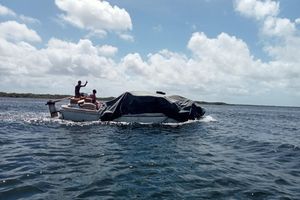
Two people died after MV Blue Pineapple leisure boat capsized along Tudor Creek in Mombasa on September 12, 2026.
Photo credit: Karim Rajan | Nation Media Group
“We were heading to Fort Jesus. The cruise was okay, but on coming back around English Point Marina waters, we saw huge waves. That’s where we were overpowered and the boat turned down. All of us fell into the water, but the captain and crew managed to rescue us,” said Ms Kethy Baraza, a survivor and sister of one of the deceased.
Ms Baraza said she tried to save her sister after the boat overturned but was unable to pull her out of the water. The tragedy occurred on September 12, involving the leisure boat MV Blue Pineapple.
A few weeks before, two other people died after another boat overturned at sea in Watamu, Kilifi County, following a sudden change in weather. Five tourists were rescued and taken to hospital.
Kenya Maritime Authority (KMA) Director General Omae Nyarandi said preliminary investigations showed that strong winds caused the MV Blue Pineapple to capsize. He said the vessel was duly licensed and had been inspected and found to be safe.
“The boat was inspected and duly licensed by KMA, so it was safe. This is an accident that happened, but we are still investigating. We have the preliminary investigative report so far. We are not ruling out negligence, but there were strong winds and the boat capsized,” said Mr Nyarandi.
The account of one of the survivors, Captain Volca Dunga, illustrates how quickly conditions can deteriorate at sea. Captain Dunga said he noticed threatening weather around the Shelly Beach area and suggested that they begin their return to Mombasa.
But as they headed back, the vessel was overwhelmed by heavy waves.
“I told my visitors we should start preparing to return to Mombasa Beach. I used the same route we had used, but the waves overpowered me and that is what caused the accident and we capsized,” he said.
Passenger boats parked at the Jomo Kenyatta Public Beach in Mombasa in this photo taken on September 18, 2026.
Photo credit: Kevin Odit | Nation
Beyond the circumstances of individual accidents KMA faces a wider challenge in the scale of the fleet it is expected to regulate.
KMA data cited by Mr Nyarandi indicates that there are 32,000 registered boats operating in the Coast region. But the authority does not have the capacity to physically inspect all of them.
“We inspect approximately 2,000 to 3,000 annually. We issue guidelines, and we will do the same on boat manufacturing to ensure they meet the standards. This will ensure even if we are unable to inspect, there are guidelines to be followed,” he said.
He added that the Authority had already begun inspections in the North and South Coast, targeting passenger-carrying boats ahead of the expected heavy rains.
“We are all aware that we are expecting El Niño, and this will lead to a lot of winds around this region and even the lake. As KMA, we have already started conducting inspections of all the boats. This week a team is in North Coast and South Coast conducting inspection of boats and issuing licences,” he said.
He urged operators to check Kenya Meteorological Department weather advisories before venturing into the sea. The Authority has further warned residents and maritime users along the Kenyan coast to prepare for adverse weather and sea conditions expected between September and December 2026.
In a public notice dated September 21, KMA said the anticipated conditions could include strong winds, rough seas, high waves, heavy rainfall and reduced visibility. It added that the weather conditions could pose risks to vessels and people undertaking activities at sea and along the coastline.
Mombasa Governor Abdulswamad Nassir ordered immediate inspections of vessels operating along the Coast following the tragedy. He urged operators to service and inspect their vessels; monitor weather advisories and ensure passengers wear life jackets throughout their journeys.
“I have engaged the authority to undertake immediate and rigorous inspections of the seaworthiness of all vessels ferrying members of the public along our coastline,” he said.
Mombasa County Commissioner Mohammed Noor similarly called for strict inspections ahead of the El Niño period.
For the hotel and tourism industry, however, safety begins even before a visitor boards a boat.
A cargo boat passing through the Manda Bruno channel in Lamu.
Photo credit: Kalume Kazungu |Nation Media Group
Kenya Association of Hotelkeepers and Caterers (KAHC) Coast executive, Dr Sam Ikwaye urged tourists to use hotels and operators licensed by the Tourism Regulatory Authority (TRA).
“We always tell tourists to book with hotels licensed by the Tourism Regulatory Authority. You are bound to get such challenges if the vessels and the captain are not licensed,” said Dr Ikwaye.
He also raised concerns over gaps in beach management and emergency response, saying the absence of a comprehensive beach management framework leaves some safety responsibilities unclear.
“We have not passed beach management regulation; it is a very rich policy document. It would give daily updates on the sea. Kenya Coast Guard are limited. Counties should have those legislations because beach management is devolved,” he said.
Dr Ikwaye called for stronger enforcement by the Tourist Police Unit and KMA, saying authorities needed to do more to prevent further loss of life at sea.
For boat operators, preparation for bad weather goes beyond licensing and inspection. Mr Mohammed Ferooz Khan, director of Tudor Sports Marina, said boat owners had been advised to prepare early for the expected rains.
He said vessels should carry bilge pumps and life jackets, while his marina uses a separate safety boat to accompany leisure vessels carrying tourists.
“The last El Nino affected our business; we had to close for a short while until the rains subsided. This time, it is different because we have started our advisory and precautionary measures early. No disaster should happen during cruising; we should not lose lives. It is sad when disasters strike.
“But we have an internal rescue team. We accompany all our leisure boats carrying tourists with a safety boat, which is the most crucial thing. We ensure all the visitors wear life jackets,” he said.
The September tragedies are not isolated. Last year, a dragon boat carrying 22 participants capsized during the East Africa Ocean Festival at Tudor Water Sports Club in Mombasa. Three people died while 19 were rescued.
Other similar drowning incidents were reported in Lamu and Kilifi Counties. With El Niño rains expected to bring heavy rainfall, stronger winds and rougher seas, the test will be whether the systems meant to protect people at sea can respond to conditions that can change within minutes.