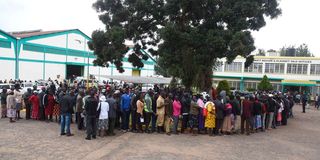
The government faces a tough balancing act in increasing crop production and achieving food security due to an acute shortage of subsidised planting fertiliser, despite plans to import 12.5 million 50kg bags worth Sh15 billion this season.
The low-cost fertiliser, retailing at Sh2,500, is currently unavailable in most National Cereals and Produce Board (NCPB) depots across key maize-growing zones.
This comes as farmers begin the planting season, with the Ministry of Agriculture attributing the shortage to logistical challenges and rising demand for the input.
Maize farmers in the North Rift region stormed NCPB depots to protest the shortage, saying it was disrupting their planting schedules.
“The shortage of fertiliser is likely to compromise our planting programme, which will result in low yields,” said Joel Kosgei from Cheptiret in Uasin Gishu County.
The country requires about 650,000 tonnes of fertiliser annually, but some farmers may be forced to plant without applying nutrients due to the high cost of commercial inputs.
The planting season in the North Rift, the country’s traditional food basket, typically begins between February and March. However, erratic weather patterns are likely to delay the exercise until April, which agricultural experts warn could lead to reduced yields.
“Many farmers have been forced to revise their planting calendars due to unusually early rains, the acute shortage of subsidised fertiliser, and the circulation of fake products by cartels within the distribution chain,” said David Kemboi from Moiben.
The government has so far distributed 3.2 million 50kg bags of fertiliser since December 2025 through NCPB depots and last-mile distribution centres.
“The onset of long rains earlier than expected has caused panic among farmers, triggering a rush to purchase planting fertiliser. However, we want to assure them of a steady supply of this vital input,” said Gilbert Rotich.
The Kenya Kwanza administration allocated Sh12 billion for fertiliser subsidies last planting season, but distribution was marred by scandals that led to the dismissal of former Agriculture Cabinet Secretary Mithika Linturi in a Cabinet reshuffle.
Workers offload the government's subsidised fertiliser from a truck at the National Cereals and Produce Board, Eldoret depot in Uasin Gishu County on March 18, 2026. The OCP fertiliser, which is preferred by maize farmers, is out of stock.
Photo credit: Jared Nyataya | Nation Media Group
“The government should put in place stringent measures to protect farmers from cartels that infiltrate the fertiliser distribution chain and sell fake inputs. Such scandals undermine the goal of achieving food security,” said Ruth Kemboi Maraba of the Kenya National Farmers Federation.
Farmers have also petitioned the government to adhere to the Maputo Declaration, to which Kenya is a signatory, which requires at least 10 percent of the national budget to be allocated to agriculture.
Principal Secretary for Agriculture Paul Kipronoh Ronoh said the government plans to scale up fertiliser distribution to meet rising demand during the planting season.
“We have put in place proper distribution channels through cooperative societies and other outlets to ensure more farmers receive inputs ahead of the planting season,” said Dr Ronoh.
According to President William Ruto, the country spends about Sh500 billion annually on food imports. His administration aims to reduce this through subsidised farm inputs and mechanisation to boost local production.
However, efforts to streamline fertiliser distribution through NCPB outlets last season were undermined by scandals.
Subsidised fertiliser is currently being distributed through NCPB depots, farmers’ cooperative societies, last-mile centres, and approved agro-dealers.
Kenya’s fertiliser sector has also attracted global competition, with companies such as PhosAgro, Maaden, and OCP Africa controlling significant market share.