Hello

Your subscription is almost coming to an end. Don’t miss out on the great content on Nation.Africa

Ready to continue your informative journey with us?

Hello

Your premium access has ended, but the best of Nation.Africa is still within reach. Renew now to unlock exclusive stories and in-depth features.

Reclaim your full access. Click below to renew.

Caption for the landscape image:

Kitengela’s endless wait for fresh water

Scroll down to read the article

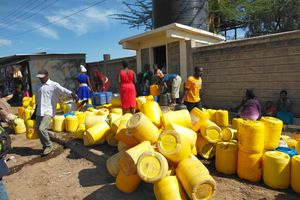
Kitengela residents queue for water at a public kiosk near Kitengela Police Station.

Photo credit: File| Nation Media Group

Under the scorching September sun, Newton Angufa, 33, pushed his handcart along the Namanga highway, delivering salty water to customers in Kitengela.

For the past five years, this has been his daily grind—starting at 6 am, competing with other vendors at private boreholes for the scarce commodity.
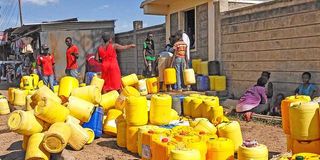
“A jerrycan of salty water sells for Sh20–30 depending on distance. I make three trips daily, each carrying 55 jerrycans. It is tough but it pays,” said the father of one, sweat dripping as his assistant trailed behind.

Kitengela, a fast-growing township famed for its nyama choma and nightlife, remains crippled by water shortages.

Thirteen years into devolution—and six years after a presidential directive promising a permanent solution—residents still queue for water.

In 2019, retired President Uhuru Kenyatta ordered the Ministry of Water and Kajiado County to reroute a Nairobi Water and Sewerage Company pipeline to kiosks in Kitengela.

The county was to spend Sh20 million on eight kiosks, with water priced at Sh3 per 20-litre jerrycan. Only five kiosks were built; just three operated briefly before drying up by 2022. Residents blame water cartels.

“For a short while, we could queue for cheap water. Then the kiosks went dry, yet private vendors still truck in water from Nairobi and sell at high prices,” said Nancy Lokolia, a resident.

A spot check by the Nation found kiosks deserted or misused.

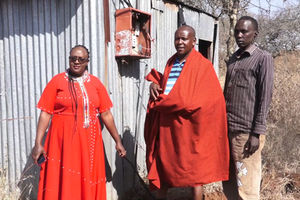
One near Kitengela Police Station is now surrounded by illegal structures; another near the sub-county hospital remains locked and dusty.

Locals say some were converted into stalls before public outrage forced them to close.

Today, salty water costs Sh20–30 per jerrycan, while fresh water sells for Sh30–50.

Shortages often feature in campaigns, yet little changes once leaders assume office.

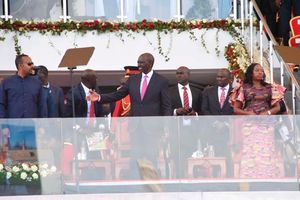
During the 2024 Madaraka Day celebrations, Governor Joseph ole Lenku claimed millions of litres had been secured from Nairobi Water for Kitengela and Ong’ata Rongai. Residents dismiss this as empty talk. “We hear leaders saying Kitengela has water. That’s not true—we are suffering,” said Alfayo Onchiri.

The county has also clashed with the Export Processing Zone Authority, which runs its own pipeline. Efforts to take it over stalled in 2022. County Water Executive Michael Semera now says a new pipeline from Mlolongo is planned, with a capacity of two million litres daily, though no timeline has been given.

A 2019 Ministry of Water survey estimated Kitengela’s population at 500,000 with a demand of 30,000 cubic metres daily.

The population has nearly doubled, but private boreholes supply only 5,000 cubic metres, leaving a massive deficit as drought and climate change deepen the crisis.