Seven of the eight minors charged in the deadly fire at Utumishi Girls Academy have approached the Director of Public Prosecutions (DPP) seeking to negotiate plea bargains in a case arising from a tragedy that claimed the lives of 16 students.
The negotiations are at different stages, with some proposals having been rejected by the prosecution while others are still under consideration.
Kibera High Court Judge Diana Kavedza on Thursday, November 12, directed the parties to expedite the negotiations and return to court with written plea agreements, if any, by December 15, 2026.
"We give you one month to see how far we have gone," the judge said.
The court heard that negotiations between the prosecution and several of the minors had commenced, with some of the accused expressing willingness to plead guilty to the charges.
"We are on the verge of completing plea bargaining talks," the prosecution told the court.
However, the State said some of the proposals submitted by the minors were unacceptable, including requests by some of them to be converted into prosecution witnesses.
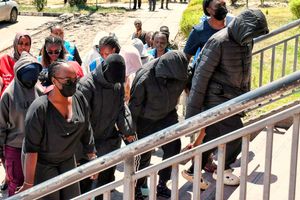
Students arrested on suspicion of arson over a fire at Utumishi Girls' Academy Senior School in Gilgil that killed 16 students and injured 79 others, arrive at the Naivasha Law Courts on June 2, 2026.
Photo credit: Reuters
The prosecution told the court that one proposal sought to have three minors, identified as subjects 5, 6 and 8, turned into State witnesses, but the terms were not agreeable.
The court also heard that other minors had expressed interest in pleading guilty, with discussions ongoing on the proposed terms.
One of the proposals was awaiting a response from the Office of the Director of Public Prosecutions, while another request to plead guilty was being considered pending approval by the DPP.
The State said it was opposed to plea negotiations involving subject one, maintaining that the minor should remain in the proceedings as an alleged child offender.
For the other accused, the prosecution said it would respond to their proposals and establish whether an agreement could be reached.
Plea bargaining is a process through which an accused person and the prosecution negotiate an agreement on how a criminal case should be resolved. It may involve an accused person agreeing to plead guilty to an offence in exchange for concessions from the prosecution, subject to the court's approval.
Justice Kavedza urged the parties to fast-track the process, noting the need to avoid prolonged proceedings involving minors.
The judge also raised concerns about access to the children by their parents and lawyers, seeking to establish whether they were being visited twice a month.
The prosecution told the court that it had not received any information indicating that the minors had been denied access to their parents.
Justice Kavedza declined to prescribe specific visitation dates, citing security concerns and the need to protect the identities and welfare of the children.
Utumishi Girls students suspected of causing dormitory fire that killed 16 of their colleagues at Naivasha Law Courts on June 2, 2026.
Photo credit: Boniface Mwangi | Nation Media Group
She said visits should be facilitated without rigid scheduling, allowing parents and lawyers flexibility while ensuring the minors' security.
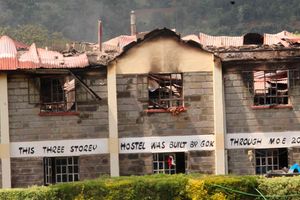
The eight minors are facing murder charges arising from the fire at Utumishi Girls Academy, which claimed the lives of 16 students.
The case will be mentioned on December 15, when the court expects an update on the negotiations and any written plea agreements reached.