The families of two Kenyans held as prisoners of war in Ukraine have renewed their appeal to President William Ruto for help securing their release, as human rights organisation activists demand urgent diplomatic intervention to bring them home.
For the two families in Mt Elgon, the passage of time has brought little comfort. Thousands of kilometres away, their sons remain caught up in a war they say they never intended to fight, leaving their loved ones in Kenya struggling with uncertainty and anguish.
Mr Evans Kibet Sullo, 37, and Mr Haron Pachenje, 31, left their homes in Bungoma County for Russia in search of opportunities to improve their lives. Instead, both ended up in the Russian military and were captured by Ukrainian forces during the ongoing Russia-Ukraine war.
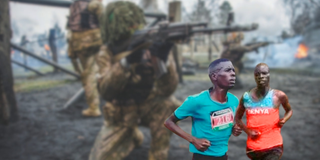
Evans Kibet Sullo, 37, and Mr Haron Pachenje, 31, left Mt Elgon for Russia in search of better opportunities but ended up on the battlefield, where they were captured by Ukrainian forces
Photo credit: NMG
Now, their families are appealing to President William Ruto to intervene and secure their release and safe return to Kenya, with human rights organisation Vocal Africa joining their appeal to the government.
For the family of Mr Pachenje, the journey began with what appeared to be a promising employment opportunity.
His mother, Ms Gladies Chelimo, and uncle, Mr David Meng'wa, said he had travelled to Russia after securing a deal for a driver's job. But the promise of employment gave way to an ordeal that has left the family traumatised.
Ms Chelimo said they were struggling to cope with the news that their son was being held in a foreign country, with little certainty about when he would return.
“We hope that the government can help us bring him back. What he wanted turned into unending suffering, both for him and us, his family here at home,” she said during a press briefing in Kopsiro.
The family described Mr Pachenje as a hardworking man who was a breadwinner and had been relied upon by his relatives.
An undated photo of Haron Pachenje, 31, from Mt Elgon area in Bungoma County, who is also trapped in Ukraine as a prisoner of war.
Photo credit: Pool
For the family of Mr Kibet, the ordeal has been equally painful.
The 37-year-old Kenyan athlete was living and training in Iten before travelling to Russia in July 2025 for what was supposed to be a two-week athletics competition.
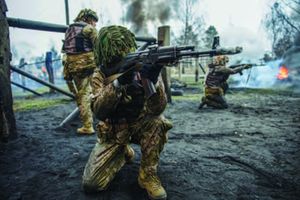
Instead, he was recruited into the Russian military and deployed to the frontline, where he was eventually captured by Ukrainian soldiers.
Last year, the Nation exposed how the athlete had been duped into travelling to Russia before finding himself on the battlefield.
His brother, Isaac Masai, said little had been done to secure his release, leaving the family desperate for government intervention.
“We are really affected by what our brothers are going through and it pains us every single day. All we want is the government to help us bring them back,” Mr Masai said, speaking on behalf of the families.
Mr Kibet's mother, Jane Mneria, said the family continued to hope that her son would return home safely, despite the emotional toll of the prolonged uncertainty.
She was particularly concerned about his daughter, who is sitting her Kenya Certificate of Secondary Education (KCSE) examinations while the family struggles with the news of his detention.
“I am so emotional and even feeling for his daughter, who is sitting for her KCSE exams. It has been so difficult for her since we got the sad news of his ordeal in Ukraine,” she said.
The families' appeal comes weeks after they marked Mashujaa Day last month by honouring the two men as their personal heroes.
An undated photo of Evans Kibet Sullo, a Kenyan athlete from Mt Elgon in Bungoma County who went to Russia for competition, but is currently held in Ukraine as a prisoner of war.
The gathering, held at Land B in Kopsiro and organised by Vocal Africa, was an emotional tribute to men the families described as victims of circumstances beyond their control.
Like many other young Kenyans, the two had left home hoping to secure better economic prospects and support their parents, siblings and communities. Their families now say those hopes were shattered after they were allegedly deceived by unscrupulous recruitment agents into joining the Russian military.
They are among Kenyans who have been affected by the recruitment of foreign nationals into the Russia-Ukraine conflict. Some have reportedly been killed, others captured and held as prisoners of war, while many remain unaccounted for.
According to Vocal Africa, reports presented to Parliament indicate that five Kenyans are officially confirmed to be held as prisoners of war in Ukraine. The organisation says its wider tracking efforts indicate that more than 290 Kenyans have been irregularly recruited into foreign military operations, often through deceptive job offers, with dozens killed or missing in action.
“It is unacceptable that Kenyan families should continue suffering while their sons remain trapped in a foreign war that is not theirs,” the organisation said.
Vocal Africa demands diplomatic intervention
Vocal Africa Executive Director Hussein Khalid called for the release and safe repatriation of the two men and all other Kenyans being held as prisoners of war.
“We appeal for the release and safe repatriation of the two and all other Kenyan nationals being held as Prisoners of War, in accordance with applicable international humanitarian law,” Mr Khalid said.
The organisation urged the government to urgently engage the authorities in Ukraine and Russia to establish the whereabouts of all affected Kenyans and facilitate their safe return.
It also called for an immediate end to the deceptive recruitment and deployment of Kenyans to foreign military operations, as well as the repatriation of those still in Russia or under Russian military control.
Mr Khalid said the government should investigate and prosecute recruitment agents and networks accused of misleading vulnerable young people into joining the war.
The organisation further wants a clear communication mechanism through which affected families can receive regular updates on their relatives, alongside consular, legal and psychosocial support.
“The two are among hundreds of other young Kenyans who left their homes with hope, courage and determination to improve the lives of their loved ones. They deserve protection, not abandonment. Our message today is simple: Bring our sons home,” Mr Khalid said.