For one family in Kionganyo, Nyaribari Chache, death brought not only sorrow but also an unexpected financial burden.
They had carefully set aside Sh10,000 for a coffin, confident that the amount would secure a modest casket for their departed relative and facilitate the release of the body from the mortuary last Thursday.
Instead, they were confronted with a painful reality that deepened their grief. Upon visiting local coffin makers, they discovered that the same basic coffin now costs Sh25,000 - more than double what many families in the county had long been accustomed to paying.
The revelation sent them back to the drawing board. Amid the anguish of bereavement, they were forced to reassess their funeral budget, striking out planned expenditures and making difficult sacrifices in a desperate effort to bridge the widening financial gap.
Across the Western Region, where funerals are more than ceremonies and serve as sacred communal rites that honour the departed, the soaring cost of coffins is transforming a cultural obligation into a daunting economic challenge.
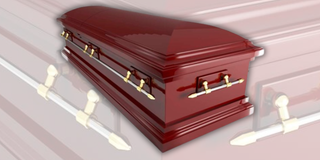
Coffin makers attribute the sharp rise in prices to mounting economic pressures, including the escalating cost of living, rising fuel prices, expensive transportation and the increasing cost of raw materials such as timber, nails, upholstery fabrics and finishing accessories.
The consequences are troubling. A dignified send-off, once regarded as a basic expression of respect for the dead, is increasingly becoming a luxury reserved for those with deeper pockets.
In Kisii, coffin prices have surged dramatically, forcing grieving families to dig deeper into their pockets at one of the most difficult moments of their lives.
“Coffins are the last thing you want to bargain for. But now, even grief has a price tag,” said Ms Alice Moraa, who recently buried her mother in Bobasi.
Coffin makers attribute the sharp rise in prices to mounting economic pressures, including the escalating cost of living.
Photo credit: Pool
Dealers in Kisii Town say that a basic cypress or softwood coffin that sold for between Sh7,000 and Sh10,000 last year now costs between Sh10,000 and Sh20,000.
Mid-range half-glass caskets made from veneer or hardwood have risen from about Sh30,000 to Sh60,000.
Premium executive coffins crafted from full-glass mahogany now retail for as much as Sh80,000, while some high-end models cost more than Sh250,000.
“Power saws we use to cut timber run on petrol and diesel.When fuel prices go up, everything costs us more. Then there is imported hardwood and varnish, whose prices have also increased. When those costs rise, what can we do? We have no choice but to adjust our prices,” said Mr John Bosire, a coffin maker on Old Naivas Street in Kisii Town.
Other dealers point to the rising cost of imported timber and persistent inflation as additional factors driving prices higher.
For many families in Gusii, who depend on community contributions to meet funeral expenses, the increase has translated into longer fundraising drives and growing debt burdens. Some families are forced to settle for cheaper coffins, take out loans or appeal for assistance simply to give their loved ones a dignified burial.
Mr Kennedy Odhiambo, a coffin maker in Kakamega Town, also linked the increase in prices to rising fuel costs.
“When the price of fuel went up, the cost of everything increased. We raised our prices by between Sh1,000 and Sh5,000,” said Mr Odhiambo.
A standard coffin, commonly known as a flat-roof model, now costs between Sh10,000 and Sh30,000, while a high-roof coffin sells for between Sh40,000 and Sh100,000, depending on the materials used and the level of craftsmanship. Coffins designed for infants and children range from Sh5,000 to Sh8,000.
Coffin makers are also grappling with another challenge that they say has cost them many customers. They were barred from operating around hospitals by the County Government of Kakamega.
Nevertheless, they remain optimistic that the completion of the multi-billion-shilling Level Six Kakamega County Referral Hospital will revitalise their business.
“We want the county government to construct proper sheds for our business. The completion of the hospital will be good for business because there will be fewer referrals from Kakamega to Kisumu or Eldoret,” said Mr Odhiambo.
As fuel costs remain volatile, dealers warn that coffin prices could climb even further in the coming months.
At the same time, many bereaved families are increasingly turning to funeral service providers who manage the entire burial process for a single fee, rather than sourcing services from multiple providers. The arrangement is often viewed as both more convenient and cost-effective.
For example, a funeral service package from Nairobi to Kisumu can cost around Sh200,000. The package typically includes a hearse carrying three people, a family vehicle with a capacity of seven passengers, lowering gear, a gravesite carpet, a trolley, a gazebo tent for the casket and transportation of the body to its final resting place.
As the cost of living continues to rise, even the final journey has become markedly more expensive, leaving many families struggling to balance cultural expectations, personal grief and financial reality.