When Francis Mutunga retired from teaching 12 years ago, he poured his savings into planting 400 hybrid coconut trees on his farm next to the Shimba Hills National Reserve in Kwale County.
But today, only 10 trees remain after the rest were trampled and uprooted by elephants.
“Just when they were ready to produce, elephants came and destroyed everything. Eight years of hard work gone in a single night,” Mr Mutunga says.
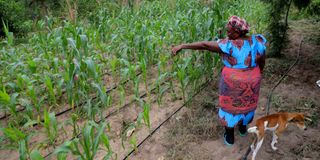
Christine Mutinda shows her lemons in this photo taken on 26 May 2025 at Kidongo in Shimba Hills, Kwale County. Farmers complain about the waste of fresh produce due to a lack of markets and a fruit processing plant.
Photo credit: Kevin Odit | Nation Media Group
The retired teacher is among dozens of farmers in Msambweni and Kinango sub-counties who accuse the government of dragging its feet in compensating victims of human-wildlife conflict.
The delays have sparked growing frustration in a region where wildlife frequently roams into homesteads and farms, often causing massive destruction.
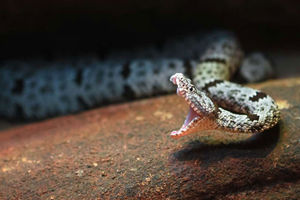
Elephants, baboons, snakes and even leopards have made survival a daily struggle for residents in this area. Locals are now calling for the government to devolve part of the compensation process to the county to help fast-track claims.
Desperation is pushing many farmers to clear trees around their farms to reduce animal intrusion, accelerating deforestation in an area once known for its lush forest cover.
“They accuse us of destroying the environment, but we are just trying to survive. If I do not clear the trees, I’m inviting more snakes and baboons,” says Mr Mutunga.
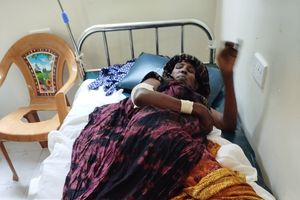
Marauding elephants, monkeys, baboons, hyenas and sometimes lions would descend on farms, leaving a trail of destruction and sometimes death.
Photo credit: Eric Matara | Nation Media Group
He adds that it has been eight years since he filed a claim with the Kenya Wildlife Service (KWS), but “I have never received a shilling.”
“They tell us to co-exist with wildlife, but how do we live with animals that destroy our livelihoods?” he asks.
His situation is mirrored in neighbouring lands where farmers are equally fed up with persistent wildlife intrusions.
Mr Jonathan Nzombo, another farmer whose produce was destroyed, had turned to farming as his retirement plan. Now, he is thinking of venturing into something else.
“After farming, we have to abandon everything to guard our farms so that wild animals do not destroy our crops. We are told not to harm the animals, yet we are left to suffer when they destroy our property. What choice do we have?” he says.
“We have lost everything, even the will to grow food. There is no benefit to living near this reserve. No roads, no hospitals, not even clean water. What has conservation done for us? It’s not just about the money—it’s about justice. If the animals must live, then so must we,” he adds.
In addition to wildlife challenges, Mr Nzombo says the poor road network and lack of value-added industries compound their problems. While Shimba Hills is a biodiversity gem and tourist attraction, residents say they shoulder the burden without reaping any benefits.
A fruit processing plant whose construction was commissioned in 2020 has stalled, leaving farmers at the mercy of middlemen.
Mr Pius Mwangela, a retiree from Kipambana village, is among the many farmers who had banked on the fruit factory. After retiring in 2019, he invested in a 13-acre fruit farm targeting the facility.
“Immediately after retiring, I came back home and started this farm. I thought I was making a smart move by targeting the fruit processing factory, but the project has stalled indefinitely,” he said.
Kenya Wildlife Service, however, says it is not responsible for the delays in compensation.
“We are not in control of when they will be paid. That is up to the national government through the Ministry of Tourism and Wildlife,” said Senior KWS Warden in Kwale County, Titus Mitau.
According to KWS, once a complaint is made, a site visit is conducted to confirm the damage. If verified, an assessment is done to determine the value of the loss often with the help of agricultural officers in cases involving crop destruction. The report is then submitted to a compensation committee chaired by the County Commissioner.
Johnstone Nzomba, a Bixa farmer in Shimba Hills, Kwale County, in this photo taken on May 27 2025. Kevin Odit
Photo credit: Kevin Odit | Nation Media Group
“We are only the secretariat. The committee makes recommendations which are forwarded to our headquarters and then to the Ministry. The Ministry is the final authority and determines if and when payment will be made,” Mr Mitau explained, adding that the compensation timeline also depends on the availability of funds.
He noted that unlike in the past when victims would be called to the District Commissioner’s office to receive compensation in person, payments are now wired directly to recipients' bank accounts.
Tourism and Wildlife Cabinet Secretary Rebecca Miano said the government has disbursed over Sh2.8 billion since 2023 to compensate victims of human-wildlife conflict across the country. Just last week, she oversaw the disbursement of Sh60.38 million to 24 families whose relatives died in human-wildlife incidents between 2014 and 2020 in Kilifi. The CS acknowledged the backlog in compensating victims but assured that the matter is being treated as urgent.
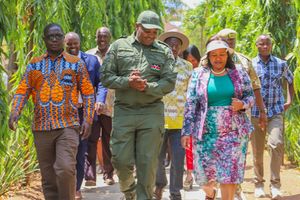
From right: Tourism CS Rebecca Miano, Baringo Deputy Governor Felix Maiyo and Baringo County Deputy Speaker Kipruto Kimosop during the World Wildlife Day, which was marked at Lake Bogoria on March 3, 2025.
Photo credit: Florah Koech I Nation Media Group
“The government does not regard these support reimbursements as favours or gifts but as a constitutional right that deserves every verified claim,” she said. “The Ministry of Tourism is keen on the full implementation of the Human-Wildlife Coexistence Fund, which provides a platform for broader partnerships to ensure sustainability and financing for long-term solutions in wildlife management.”
In the Coast region, counties such as Taita Taveta and Kilifi, like Kwale, continue to bear the brunt of human-wildlife conflict due to their proximity to Tsavo National Park.