At a time when anxiety is building across the world over tightening fuel supplies linked to tensions in the Middle East, fears of a very different transport crisis are unfolding on Lamu Island.
The sudden closure of the only donkey healthcare facility has sparked panic among residents, threatening to paralyse their primary mode of transport. In a place where donkey hooves, not car engines, keep life moving, the loss of a donkey hospital is as alarming as a fuel shortage elsewhere.
On a sunny morning on Lamu Island, Mr Mahmoud Suleiman Hamid is speeding along the cabro-paved seafront, accelerating his heavily modified motorbike with a shaky, makeshift wooden rack strapped across the back.
On it lies his sickly, emaciated donkey, its body stabilised against Mr Hamid’s back while its head droops, breathing heavily and laboured.
Mahmoud Suleiman Hamid with his sick donkey strapped to his motorbike, arrived at the Lamu Donkey Sanctuary Clinic on Tuesday, March 24, 2026.
Photo credit: Kalume Kazungu|Nation Media Group
For almost an hour, Mr Hamid, a resident of Bajuri area, had maneuvered through the narrow streets and pathways of Lamu Old Town, his shoulders aching, fuelled only by the desperate hope of reaching the Donkey Sanctuary on the island before it was too late.
On arrival at the facility, he calls out for the veterinary officer, only to discover the door is locked, with a notice of service disruption posted on the gate by the facility’s management.
“My donkey collapsed. I had to strap it to my motorcycle just to rush it here and save its life. Now, there are no services, no updates. It’s frustrating,” said Mr Hamid.
Mahmoud Suleiman Hamid with his sick donkey strapped to his motorbike, arrived at the Lamu Donkey Sanctuary Clinic on Tuesday, March 24, 2026.
Photo credit: Kalume Kazungu|Nation Media Group
His frustration reflects the hundreds of cases that Lamu Island donkey owners have endured since the temporary closure of the facility last week.
The Donkey Sanctuary in Lamu, an affiliate of the Donkey Sanctuary of the United Kingdom (UK), is a clinic where these animals are treated. It is also referred to as the Donkey Hospital.
The management notice showed that its closure was due to urgent health and safety concerns following a structural assessment of the building.
“We are actively putting measures in place to minimise this disruption, and arrangements are underway to resume essential services as soon as possible. A clear plan for continued service delivery will be communicated in due course,” stated the notice in part, dated Friday, March 20, 2026.
The facility’s veterinary doctor, Obadiah Sing’oei, affirmed that they were working around the clock to ensure restoration of services as soon as possible.
“The donkey sanctuary has not ended services in Lamu. It’s just a temporary closure and disruption of our normal services to pave the way for us to renovate the building housing our offices. It developed cracks owing to the ongoing heavy rains,” he said.
He added, “There’s no cause for alarm. In fact, we have a meeting with the community this afternoon to discuss how we shall be doing ambulance services and outreaches.”
Residents are pushing for immediate alternative mechanisms to be put in place to ensure continuity of clinical services for their beasts of burden even as the management seeks to resolve the building issue.
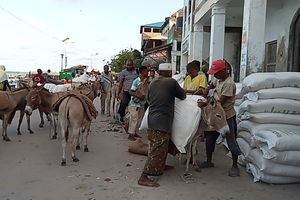
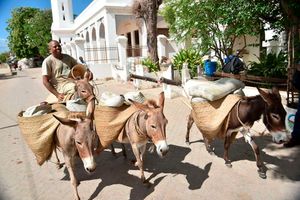
A herd of donkeys getting loaded with building materials at Lamu Island's Seafront area on Tuesday, March 24, 2026.
Photo credit: Kalume Kazungu|Nation Media Group
“They know this is the only donkey hospital we have been relying on for decades to save the lives of our donkeys. Why don’t they establish temporary makeshift offices, provided our animals are treated?
“You can imagine this is the sixth day my donkey has stopped eating. It has severe colic and respiratory infection, causing wheezing breath, plus those open wounds and injuries. I fear it might die,” said Mr Hamid.
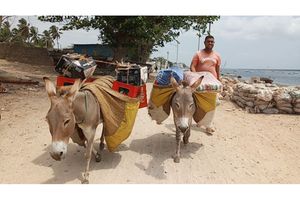
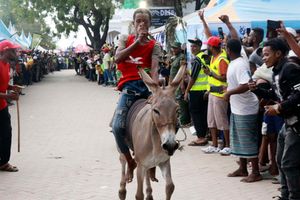
Donkeys are an integral part of Lamu’s culture and heritage. They are a key means of transport for people and goods in Lamu Old Town, a World Heritage Site listed by the United Nations Educational, Scientific and Cultural Organization (Unesco).
Here, vehicles and other modern modes of transportation are largely not permitted, with movement, especially of motorcycles, limited to a few specific areas. Therefore, the existence of the Donkey Sanctuary on the island is crucial as it also helps sustain Lamu’s World Heritage status.
Mr Ali Salim, a donkey owner, expressed disappointment over the unexpected closure of the donkey hospital, noting that within the five-day period that has passed, some of his colleagues have already lost their animals due to lack of treatment.
“Without our donkeys, we can’t work. We’re now left devastated following the abrupt service disruption. Let them hear our cries and restore the services,” said Mr Salim.
Former Lamu County Director for Livestock and Cooperative Development, Ms Jamila Mitsanze, pleaded with the county government of Lamu to consider establishing an alternative donkey clinic that will complement the functions of the Donkey Sanctuary.
She noted that the clinic is a non-governmental organisation (NGO) that has been doing a tremendous job for Lamu, but donkey owners have no alternative whenever it experiences disruptions.
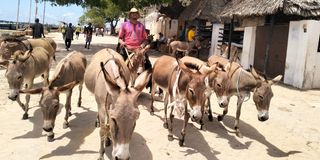
A pace of donkeys walking past the closed Lamu Donkey Sanctuary on Tuesday, March 24, 2026.
Photo credit: Kalume Kazungu|Nation Media Group
She further advised donkey owners in the archipelago to come together and form a cooperative society that would help them in times of need.
Ms Mitsanze, a donkey rights champion, added that it is more worrying to lack a healthcare facility, even if temporarily, bearing in mind the mistreatment the animals usually go through. She blamed donkey owners for flogging, denying their animals food, and overworking them, leading to regular health issues.
“I urge the handlers to stop abusing their animals as they help them earn good money daily. Respect the donkey’s rights, take care of them by feeding, treating and allowing them to rest. Love them as well,” said Ms Mitsanze.
Lamu County Director of Veterinary Services, Mr Felix Rachuonyo, urged patience from the community as the matter is being addressed.
Mr Rachuonyo acknowledged that the facility had recently written to him seeking help in securing an alternative temporary space that would allow them to continue offering services to the community.
“The donkey sanctuary isn’t leaving. It’s going nowhere. It’s here to stay. People should appreciate and celebrate the achievement of that centre,” said Mr Rachuonyo.
He added, “As a department, we’ve stepped in to assist the centre whenever cases of emergencies arise. We have more than 10 donkey extension officers within Lamu Old Town and Shella. We’re in fact organising a community meeting possibly this week where we’ll be updating them on what’s actually happening and the way forward.”
Records show that the Donkey Sanctuary Kenya was started in 1987 by Elizabeth D. Svendsen. The institution advocates for the welfare of donkeys by ensuring their rights are respected.
Part of the institution’s functions includes taking care of sick, orphaned, old, and abandoned donkeys free of charge. The Lamu Donkey Sanctuary centre also holds frequent outreach campaigns where donkey owners are trained on how to handle their animals.