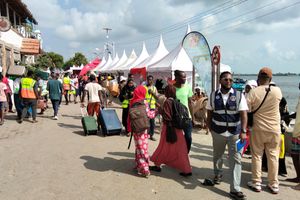
The hospitality and transport sectors in Lamu are experiencing an unprecedented economic boom, hitting full capacity as thousands of visitors, guests and tourists flock to the island for the annual Lamu Cultural Festival.
This year’s event, which commenced on Thursday, marks the 24th edition. It will end on Saturday.
The Nation established that by the second day of the festival on Friday, hotels, guest houses, Airbnb and Swahili villas within Lamu Old Town and Shella were already fully booked, delivering a massive windfall to local businesses, boat operators, airlines and artisans.
Owing to the high demand for accommodation and space inadequacy in hotels and restaurants, many guests attending the festival have been forced to turn to Lamu island residents and homeowners for rooms.
Ms Keziah Mumbi, the general manager for Lamu Palace and Petleys Inn Romantic Hotel Group Kenya Limited, told the Nation on Friday that as is customary during every annual cultural festival, they were experiencing a massive influx of guests.
“This is always a tremendous blessing for us as hoteliers. Yes, our hotels are currently fully booked, and it is exciting to see that this surge is largely driven by domestic tourists, alongside content creators, social media influencers, and other creatives who have secured their spaces early to capture the magic of the festivities,” said Ms Mumbi.
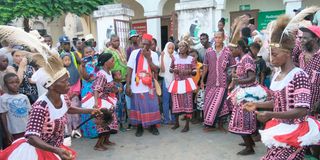
Lamu Governor Issa Timamy (centre in khaki trousers) joins Bajuni elders in dancing the Goma la Lamu to mark 24th edition of the Lamu Cultural festival on Thursday, November 26, 2026.
Photo credit: Kalume Kazungu | Nation
A room in a hotel like Petleys Inn goes for between Sh6,400 to Sh8,400 per night (bed and breakfast).
Mr Gabriel Kombe, the manager of Lamu Sunsail, a hotel situated at the seafront area of Lamu Old Town, noted that almost 90 percent of the rooms were already booked by the end of the very first day of the festival on Thursday evening.
He expressed optimism that they will attain 100 percent occupancy before the end of the festival on Saturday night.
“Since the festival commenced on Thursday, business is booming ,with guests flocking into town in huge numbers. We’ve a total of 17 rooms at Sunsail Hotel and by the first day, they were already booked to almost full capacity,” said Mr Kombe.
“We’ve regularly run out of food before, even before 10pm. We’ve had to restock constantly and shift to nearly 24-hour operations just to keep up with the crowds,” said Mr Kombe.
During normal periods and seasons, rooms at Sunsail Hotel go for between Sh3,000 and Sh4,000 per night.
“During this cultural period, our rooms are running at a flat rate of Sh5,000 per night because demand is high and guests are readily available. We expect to reach 100 percent occupancy before the cultural festival concludes,” said Mr Kombe.
On transport, airlines flying to Manda Airport in Lamu were already fully booked in the early days before the cultural festival commenced.
Amu Island Tour and Travelling Company Limited Director Shee Babshee Muhaji said the situation remains the same, fully booked through to Sunday, November 29,2026 with no available space to book at the moment.
“My agency deals with both accommodation, ticketing and general tours. As we speak, airlines are fully booked, no coming to Lamu or going back until Sunday,” said Mr Babshee.
Mr Elijah Miano, the Kenya Airports Authority (KAA) Acting Corporate Communications Manager told the Nation on Friday that the three days of the Lamu Cultural Festival are experiencing exceptionally high passenger traffic across their terminals.
“Most scheduled flights are already fully booked, and several airlines are actively considering increasing their flight frequencies over the three-day event to accommodate the surge of visitors traveling in for the cultural festival,” said Mr Miano.
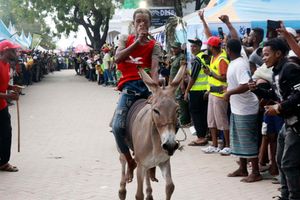
Dhow race competition to mark the 24th edition of the annual Lamu Cultural Festival on Friday, November 27, 2026.
Photo credit: Kalume Kazungu | Nation
“As part of the sponsors, KAA is happy to support this event and remain committed to backing it in the coming years. The festival brings strong tourism and business activity to Lamu Island, driving growth across local accommodations, transport, and trade so residents benefit directly. Supporting it feels like giving back to the community, because the rewards generated by the festival flow right back to the people of Lamu,” said Mr Miano.
On both road and water transport, the rush is the same.
Mombasa-Malindi-Lamu drivers are making extra trips, and coxswains from Mokowe Main Jetty and Manda Airport to Lamu Island and Shella are packed, a sharp turn from the quiet pre-cultural months when boats and vehicles struggle to fill up.
“On normal days, we charge between Sh1,500 and Sh1,800 from Mombasa to Lamu, but since the cultural festival started, our fare is now fixed at Sh2,000, nothing less,” said Ahmed Omar, a shuttle Nissan driver plying the Mombasa-Malindi-Lamu route.
Lamu County’s Culture, Tourism, Trade and Investments executive, Ms Aisha Miraj, said beyond celebrating the rich heritage of the Unesco World Heritage site, the vibrant influx of domestic and international tourists has cemented the festival as a vital economic lifeline for the coastal community.
Giriama dancers perform during the 24th edition of the annual Lamu Cultural Festival on Thursday, November 26, 2026.
Photo credit: Kalume Kazungu | Nation
Ms Miraj noted that the ongoing Grand Lamu Cultural Festival 2026 has once again demonstrated the growing appeal of Lamu as one of Kenya’s leading cultural and tourism destinations.
She said she was delighted by the remarkable influx of visitors, both local and international, who have so far travelled to Lamu to experience the rich cultural heritage, unique traditions, hospitality and diverse tourism attractions.
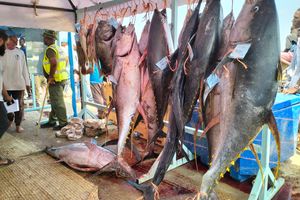
“The impressive turnout is a clear indication that Lamu continues to attract attention as a destination of choice for cultural tourism. This increased number of visitors is a major boost to our local economy. Our hotels, restaurants, tour operators, transport providers, artisans, traders, fishermen and other small-scale businesses are experiencing increased economic activity. We’re proud that the festival continues to position Lamu on the national and international tourism map,” said Ms Miraj.
Beyond entertainment, the Mega Lamu Cultural Festival is a powerful platform for cultural preservation, community empowerment, destination marketing and economic growth.
Ms Miraj described Lamu as not just a destination but rather, an experience, a heritage and a story worth sharing with the world.
She said as a county, they remain committed to building on such a momentum just to ensure that tourism continues to create sustainable opportunities and prosperity for the people of Lamu.
“We invite you all to explore more of our beautiful destination, experience our Swahili culture and enjoy the warmth and hospitality of our people,” said Ms Miraj.
Lamu Cultural Festival is an annual event held in Lamu Old Town to celebrate the rich cultural heritage, history and traditions of the Lamu Archipelago, majorly occupied by the Swahili people.
Founded in 2001, the festival coincides with Lamu’s status as a Unesco World Heritage Site.
The theme of this year’s Festival is: “Lamu: The Archipelago of Stories-Narrating Cultural Heritage and Navigating the Future.”