Premium
One suspected dead as mystery illness strikes Lamu’s Boni Forest
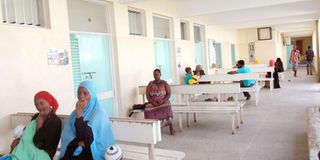

A mystery illness has struck Boni Forest villages in Lamu County, with one suspected death recorded over the weekend.
Lamu County Government Health Department has confirmed the unclassified flu-like Febrile illness that has continued to spread amongst children under five years as well as the elderly.
Villages affected include Kiangwe, Mangai, Basuba, Milimani, Mararani and Bodhei, all located inside the dense Boni Forest.


On Saturday, a five-year-old child died and was buried in Kiangwe Village after a week of suffering from the flu-like-related disease.
Symptoms presented include high fever (sudden increased body temperature), fatigue and flu accompanied by mucus discharge, coughing and vomiting.
At Kiangwe, at least 600 households live in the village with almost every family having recorded a case of the suspicious disease.
In Mangai, more than 30 out of the over 200 households have been affected while at Basuba, 15 out of the over 90 households have been affected by the disease.
Kiangwe village elder Abala Lapa Msuo told the Nation on Monday that the disease seems to be infectious as it keeps getting transmitted through person-to-person contact.
The effects of the disease began to be witnessed last month, something that forced some of the affected villagers to use herbal medication.
“We’re about 650 households here in Kiangwe and every house here has a case of one ortwo family members suffering from this mysterious, unknown illness. We’re happy that medics have arrived this morning and treatment is ongoing,” said Mr Msuo.
Former Boni Forest Senior Chief Yusuf Nuri admitted that the outbreak of the mysterious disease has caused panic among Boni Forest residents, noting that most of the villages have no access to health facilities.
No health facilities
Out of the six Boni Forest villages, only Kiangwe and Mangai have dispensaries in operation. The rest have no health facilities after some were closed down, others vandalised during the peak of Al-Shabaab attacks in Lamu in 2014.
Mr Nuri called on both government and non-governmental organisations to consider distributing mosquito nets to the Boni residents.
He said almost all the villages are and nearby forested areas are experiencing significant mosquito invasions, raising the risk of disease outbreaks.
“Because of our villages’ proximity to Boni Forest, we’ve in recent times witnessed massive invasion by mosquitoes in our homes. Most of us, the Boni people, don't sleep under mosquito nets since we don’t have them in the first place. It’s better we’re assisted with such items,” said Mr Nuri.
Lamu Deputy Governor Mbarak Salim, who doubles as the county health executive, confirmed the reports of the mysterious disease affecting Boni Forest villagers.
Dr Salim said medics have already been sent to the concerned villages to treat residents affected by the disease, which he likened to malaria, besides distributing mosquito nets and medication to affected residents.
He said preliminary investigations had ruled out Malaria as the cause, noting that it is unclear whether the child had died due to the disease.
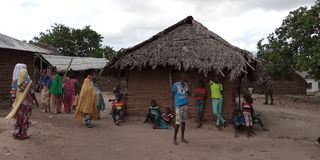
Children at Kiangwe Village in Boni forest in Lamu East receiving donations from well-wishers.
However, he asked members of the public to be patient as health officials work to identify the exact causes and curb the disease spread.
“It’s true. There’s an unclassified flu-like Febrile illness affecting children under five years. Preliminary investigations ruled out Malaria as the cause. It’s unclear whether the child who died was due to the disease. Meanwhile, we’ve sent some medications and mosquito nets. Samples will be taken to Kemri for further analysis tomorrow,” said Dr Salim.
Touching on matters of the disease affecting the elderly, especially those aged 60 years and above apart from the children under five years in Boni Forest, Dr Salim said that is likely possible due to the fact that the aged always have a declining immune system.
“It’s not surprising seeing the elderly getting affected by the illness owing to a weak immunity, though we haven’t received a case on our end so far,” said Dr Salim.
Children living in and around Kenya's terror-prone Boni Forest in Lamu County, have for several years faced severe health challenges due to a combination of insecurity, lack of infrastructure, malnutrition, and limited access to healthcare.
The Boni Forest region has been under tight security surveillance owing to the ongoing multi-agency security Operation Amani Boni (OAB).
The operation was launched by the National Government in September 2015 with the key objective being to flush out Al-Shabaab militants believed to be hiding inside the dense Boni Forest.
The operation is conducted by the Kenya Defense Forces (KDF) in conjunction with the Nation Police Service and the National Government Administration Officers. KDF is, however, designed as the lead agency.
Due to a limited number of health facilities in Boni Forest, residents in the area, particularly in isolated, security-compromised zones like Mangai, Milimani, Basuba, Bodhei, Kiunga, Hulugho and surrounding areas, have heavily relied on free medical camps organized by the KDF as a primary source of healthcare.
Due to persistent security threats and the displacement of health workers, the military's Civil-Military Cooperation programme provides essential curative and preventive services, including vaccinations for children and treatment for women and the elderly.
Follow our WhatsApp channel for breaking news updates and more stories like this.