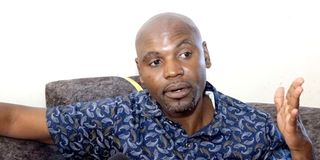
While opening up for the first time since his release, nearly 13 years later, Mr Yesse has revealed harrowing details surrounding his capture and detention by members of the al-Shabaab militia. He says he was in captivity for 19 months, held in different detention cells in Somalia.
About two months earlier, he had reported to his new workstation at Burder, in Wajir South sub-County, but was allocated duties in Gerille, a few kilometres from the Kenya–Somalia border. He was in the company of area Registrar of Persons Fredrick Wainaina, together with other government officials, undertaking a vetting exercise for the issuance of Identity (ID) cards in the region.
“The vetting team was composed of the inspector in charge of Divisional Administration Police officers, the District National Intelligence Service officer, area chief, sub-chief and elders. The District Registration Officer was the secretary of the committee and took minutes while the District Officer chaired the Committee and had the final say on who could be registered for issuance of national ID cards,” he said.
Al-Shabaab fighters.
Photo credit: File | AFP
After the conclusion of the exercise on the third day, approximately 100 heavily armed Al-Shabaab militants laid an ambush on the Administration Police post, overpowering the officers before taking over the camp. They had AK-47s, other machine guns, as well as rocket-propelled grenades. He remembers feeling an eerie coldness as the wind blew across the area, which had suddenly gone quiet.
“We continued the exercise, not knowing that the people who were actually there for the vetting were al-Shabaab operatives. They were monitoring us all the time and it was naive from our end because I later came to learn that the militants had been spotted crossing into the area,” he said.
Mr Yesse reveals there were prior intelligence reports about the sighting of the assailants in the area and their pending attack, but they were forced to continue with the vetting exercise due to political pressure.
As chairperson of the District Security Committee at the time, he claims he also received a chilling security update a day before the attack, which indicated that more Al-Shabaab gunmen were amassing forces right across the border in a village less than three kilometers away, preparing to stage a major attack in Gerille.
At around 4 pm, he says another intelligence report came through, indicating that the group had decided to halt the attack at Gerille until the vetting exercise was over. They suspected that the Al-Shabaab top brass had apparently called off the attack, as they felt there was no need to disrupt an exercise helping members of their own sub-clan, the Marehan.
At the time of the attack, he confirms that he had 15 Administration Policemen, 11 civilian support staff, the vetting committee members, and some villagers. Dozens lost their lives, including fighters from the terror group.
He says three of them were captured, including District Registrar of Persons Fredrick Wainaina and their local driver, who was released after a few days. Only he and Mr Wainaina were taken to Somalia, where they were held captive for one year and seven months.
“From week one, I was in chains permanently. And then from around the sixth day, we went to Mogadishu and I remember 90 percent of the time, we were in animal-like conditions. We relieved ourselves inside the same cells; the conditions were very filthy,” he recalls.
Photographs of Yesse Mule Edward (left), then the District Officer for Burderi in Wajir South District and another victim abducted by Al- Shabaab in January 11, 2012, and held hostage in Somalia, posted in the social media in January 19, 2013.
Photo credit: File | Nation Media Group
They were served only two meals a day: black tea in the morning for breakfast and an early dinner. He says he was moved to more than 15 holding cells, where they were forced to record different videos expressing Al-Shabaab’s demands to the Kenyan government through the Ministry of Foreign Affairs and pleading with the State to intervene and secure their release.
“When we did the first videos, I thought that was the end of our lives. It was the beginning of negotiations to have the Kenya Defence Forces move out of Somalia. You could see gunmen all dressed up in uniforms, but there were two of them with knives, hanging conspicuously at their waists. They had hospital gloves on their hands, clearly indicating that they were the executioners,” Mr Yesse said.
While in detention, he also says that some of the Al-Shabaab fighters who identified themselves as Mujahideen often visited them in their cells, questioning them about different security matters that he could not reveal. He described them as being in neat civilian clothes and wearing what seemed like expensive colognes.
At one time, two of the Mujahideen interrogators knelt next to him, giving him a sharp gaze in a moment of silence. He says one of them spoke with a heavy American accent while the other had a good mastery of both English and Kiswahili, with notable Sheng slang spoken mostly in Nairobi.
He added that they had good knowledge of Kenya’s history and geography and could elaborately describe Kenyan towns like Mombasa, Eldoret, Kisumu, Nakuru, and others. After the interrogation, they asked him to narrate his journey from the day of the attack in Gerille until their arrival in Mogadishu.
Mr Yesse also claims that there were other Kenyan and foreign nationals detained by the militants. Some were even paraded and allegedly executed in broad daylight.
“You could tell from the torture. I remember one of the torturers was a lady, you could tell from their voices crying. I think they were crushing their private parts,” he recalls.
It took six months of negotiations between the Al-Shabaab operatives, local administrators, and elders from the region to secure their release.
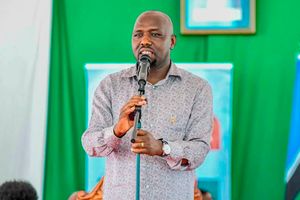
“I credit my release to former President Uhuru Kenyatta; he took it personally. He learned of my case from former Nairobi Governor Mike Mbuvi Sonko, who was close to my parents,” he said.
Edward Mule Yesse, father of former Wajir DO Yesse Mule who had been kidnapped by Al-Shabaab. His father confirmed his release to the press at his home in Buruburu Nairobi, on July 30, 2013.
Photo credit: File | Nation Media Group
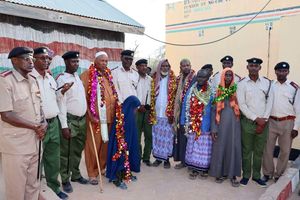
After his release in 2013, he was reunited with his family and promised support by senior government officials at the Ministry of Interior, including a nomination for national honours and awards, which never came to pass.
“For the medal, it’s still there with them 10 years later, maybe someone is enjoying seeing it in his office. We are the forgotten heroes,” he added.
It has taken him more than 10 years battling both the emotional and psychological trauma resulting from the horrific ordeal he endured at the hands of Al-Shabaab terrorists. He exited civil service with only the scars of terror and the empty promises given to him by the very people he entrusted with his dedication to duty and service to the Kenyan population.