After murder and terrorism convictions, Mackenzie now found guilty of manslaughter

Pastor Paul Mackenzie with his wife Rhoda Maweu, who were both convicted of 238 counts of manslaughter charges relating to deaths in Shakahola Forest that happened between January 2021 and September 2023, after the Judgement delivered by Chief Magistrate Alex Ithuku before the Mombasa Law Court.

Jailed cult leader Paul Mackenzie has been convicted of manslaughter over the deaths of 123 people in Shakahola Forest but acquitted in 115 other counts involving the deaths of the remaining victims, in a judgment that exposed how he orchestrated a fasting programme that claimed hundreds of lives.
The High Court found that Mackenzie was the architect of the programme, having issued the directive to fast to death, determined the order in which followers would die, and moved them to secluded sites to avoid scrutiny.
“His liability does not rest on his sermons, which are his to preach, or on the earlier teaching against schools and hospitals. It rests on proof that he gave the direction to fast to death, set the order in which people were to die, directed the faithful to move to secluded fasting places, and took part in what followed these steps,” said High Court Judge Alex Ithuku.


Justice Ithuku cited testimony from witnesses in different villages who said Mackenzie personally announced the fasting instructions and the order of deaths. One witness testified that Mackenzie explained he would be the last to die, a detail corroborated by another witness.
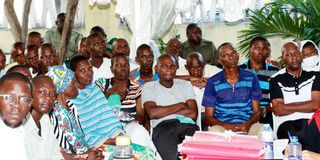
Pastor Paul Mackenzie and 92 others who are facing 238 counts of manslaughter charges relating to deaths in Shakahola Forest that happemed between January 2021 and September 2023, listen to the judgement delivered by Chief Magistrate Alex Ithuku before the Mombasa Law Courts on November 27, 2026.
The court also established that Mackenzie prohibited followers from borrowing food from neighbours. Children who escaped the fasting sites were brought back to him, and he slapped one boy after he was presented for running away.
He further ordered the exhumation and relocation of bodies as police approached the settlement and refused, over the telephone, to release a deceased woman’s body for burial in her home county. Telephone records also showed him summoning followers to Jangwani and urging them to return quickly.
The judge rejected the argument that Mackenzie was not responsible for the fasting instructions because parents communicated them to their children, noting that they had attended the meeting where he issued the directive.
Mackenzie did not fast alongside his followers. Instead, he placed himself last in the order of those expected to die while continuing to eat.
Applying Sections 20 and 21 of the Penal Code, the court found that he procured the unlawful acts and omissions of those who implemented his instructions and led a common purpose in which starvation deaths were a probable consequence.
The court rejected the defence argument that deaths in Shakahola resulted from drought, poverty, or voluntary fasting, finding that followers were deliberately deprived of food despite the availability of supplies.
A water pan in the settlement held approximately 18,000 cubic metres, enough to sustain 16,000 people for three months. Investigators also found food in several homes, with witnesses confirming that supplies remained available even as people starved.
“Healthy men with food were found a few steps from emaciated women without it. People do not starve beside a full reservoir and a stocked granary by accident,” said Justice Ithuku.
The custody fast
The court established 124 deaths caused solely or substantially by starvation. Of these, 123 occurred in Shakahola, while the remaining case involved Joseph Juma Buyuka, who died in hospital on June 19, 2023, after refusing food and water while in custody at Watamu.
However, the judge cautioned that the recovery of bodies from the forest did not automatically establish starvation as the cause of death. The prosecution had to prove the cause in each individual count beyond reasonable doubt.
The court rejected the prosecution’s attempt to use the wider circumstances of the Shakahola operation to fill gaps in cases where post-mortem examinations had not established a definite cause of death.
It distinguished starvation deaths from those involving violence, disease, and other medical complications. In 14 counts involving head injuries, blunt-force trauma, or manual strangulation, the court found that although the deaths were unlawful, the prosecution had not established who inflicted the injuries, when they occurred, or whether they were connected to enforcement of the fast.
Deaths linked to postpartum complications, tuberculosis, HIV and Aids and other medical conditions were also not sufficiently connected to starvation or the alleged denial of medical treatment. The court consequently found these counts unproved against the accused.
The court rejected the defence portrayal of Shakahola as a settlement of independent believers who made personal decisions about fasting. Instead, it found an organised programme whose methods were evident in the community’s language, rules, timetable and enforcement.
Followers called themselves “wateule”, meaning the chosen ones, while outsiders were referred to as Mataifa, reinforcing a distinction between the community and the outside world.
However, the court noted that criminal responsibility depended on individual conduct, not mere membership in Good News International (GNI), residence in the forest or association with Mackenzie.
The court identified issuing or communicating instructions to fast until death, guarding followers, preventing them from leaving, beating those who resisted, withholding food, and obstructing rescue efforts as acts capable of establishing criminal responsibility.
“Being a member of the GNI, believing what Mackenzie taught, and also living at Shakahola, attending the meetings, being related to the deceased or being in place, and burying the dead, is not a crime,” the court said.
The judge held that common intention could be inferred from conduct during the unlawful operation, even without proof of a prior formal agreement. However, the prosecution had to establish the unlawful purpose, each accused person’s participation, and the connection to the deaths.
According to the court, the number of victims and the gravity of the charges could not substitute for individual evidence.
“What the gravity of the charge is, the number of the dead, and the inverse uniformity of the charge cannot do is fill a gap in that chain. The titles do not decide it, but conduct does,” said the judge.
The court illustrated the distinction by noting that a guard who prevented a starving person from leaving or stopped food from reaching them occupied a different position from someone merely watching a farm or water pump. Similarly, transporting a weak person to a fasting site could amount to facilitating deprivation, while carrying a corpse to a grave did not, by itself, establish responsibility for the death.
A preacher who repeated the fasting instructions played a more direct role than someone who merely attended a meeting. A cook who fed guards was not automatically criminally responsible unless it was proved that the person knowingly helped sustain the confinement.
The judge also recognised that an accused person could withdraw from the programme, with evidence of threats against those who abandoned it being relevant to the assessment of responsibility.
“Those who directed or enforced the programme share the common purpose and are responsible for every starvation or death route in this case of adults and children alike,” said the court.
However, an adult who merely participated in the collective fast could only be held responsible for adults who died in it, not children who were not parties to the pact. Parents who knowingly withheld food from their children or stood by as they starved could also be held responsible for their deaths.
The four cases Mackenzie has faced
Compiled by: Brian Ocharo
Case and court | Charges | Verdict | Sentence | |
1 | Murder | Murder of 191 victims (190 children and one adult) | Guilty | 200 years (handed down November 6) |
2 | Manslaughter | 238 counts of manslaughter, with 94 co-accused | Guilty on 123 counts; acquitted on 115 | Pending (maximum is life imprisonment) |
3 | Terrorism | 5 counts: organised criminal activity, two counts of radicalisation, facilitating a terrorist act, possessing an article connected to terrorism | Guilty on all 5 counts | Pending (maximums: 15, 30, 30, 20 and 20 years) |
4 | Children’s Court | 6 counts: 1 assault causing actual bodily harm, 5 cruelty to a child | Guilty on all 6 counts | Pending (maximum 5 years for assault, 10 years for each cruelty count) |
Follow our WhatsApp channel for breaking news updates and more stories like this.


