As the country gears up for the 2027 General Election, Mombasa and neighbouring Kwale County are approaching a sombre milestone: 30 years since the deadly, politically instigated Kaya Bombo ethnic clashes.
The violence, which erupted in 1997, left hundreds dead or displaced and scarred communities across the Coast.
Today, the events are discussed in hushed tones among survivors. However, the memory has resurfaced amid early campaigns for the 2027 Mombasa gubernatorial race, with politicians trading blame and raising concerns about ethnic polarisation.
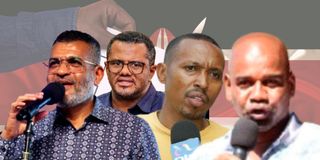
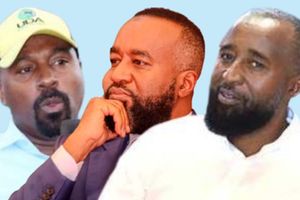
Among those who have declared interest in unseating Governor Abdulswamad Nassir are Nyali MP Mohamed Ali, former Kisauni MP Ali Mbogo and UDA Secretary-General Hassan Omar.
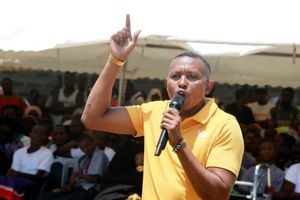
At the centre of the debate is Mr Ali, whose critics accuse him of inflaming ethnic divisions—claims he has consistently denied. The second-term legislator recently reignited the sensitive wenyeji (locals) versus wabara (non-locals) narrative after alleging that rivals were questioning his eligibility to vie for the Mombasa governorship based on his ethnic background.
Victims of the 1997 Kaya Bombo clashes meet under a tree in Ukunda, Kwale County, to discuss next steps in their pursuit of compensation from the national government on February 4, 2026.
Photo credit: Kevin Mutai | Nation Media Group
“There are people who started saying Mohamed Ali is not a local, and that he should go back to his hometown. I’m being told to go back to Mandera, Wajir, and Isiolo. But I want them to know I’m not going anywhere. Any Kenyan has a right to vie to be the governor of Mombasa County,” he said.
His opponents, however, dismiss the claims as political posturing, warning that such rhetoric risks reopening painful chapters in the region’s history.
“Maybe he doesn’t recall the Kaya Bombo clashes . People from different tribes have co-existed in Mombasa for many years, and we cannot allow anyone to introduce ethnic politics,” Mr Mbogo said at a recent public function, echoing sentiments expressed by other leaders.
Victims of the 1997 Kaya Bombo skirmishes in Kwale County.
Photo credit: File | Nation Media Group
The Kaya Bombo violence began in August 1997 in Kaya Bombo village, Kwale County, before spreading to parts of Mombasa, particularly Likoni. Investigations later showed that politicians exploited land grievances and ethnic divisions, mobilising armed youth gangs who styled themselves as “defenders of the Coast” to attack migrant communities perceived to support the opposition.
Tourism—Mombasa’s economic backbone—ground to a halt as images of burning homes and fleeing families dominated national and international headlines. Trust between communities was badly eroded, leaving a legacy of fear and suspicion that took years to rebuild.
Survivors say politicians must tread carefully to avoid a repeat of the violence, which was aimed at suppressing votes against the then-ruling party, KANU.
Findings revealed that on Augus 13, 1997, a local politician ferried youths armed with machetes and crude weapons to Likoni Police Station. They raided the station at night, escaping with guns and ammunition.
By dawn, chaos had spread through villages in Kwale and into Likoni. Using the stolen firearms, the attackers targeted non-locals—killing, maiming and forcibly evicting families from their homes.
Mr Peter Musyimi, then headteacher of Mwakigwene Primary School in Ukunda, recalls ordering pupils and staff to lie flat on the ground as a gun battle erupted between police and attackers.
“The gunfight lasted several hours before the goons were overpowered,” he said.
The gang later retreated into nearby forests, from where they regrouped and launched further attacks, eventually drawing national attention as an outlawed militia threatening public order.
Mr Mohammed Mwalimu, chairman of the Kaya Bombo Community-Based Organisation, says that although the government eventually intervened, the response came too late. He estimates that about 1,300 people were directly affected and are now seeking compensation from the national government.
“The aim was to drive out opposition supporters to tilt votes in favour of KANU. After the non-locals left, the weapons remained with the attackers. The elections ended, and Moi won,” he said.
Victims say three lorries carrying General Service Unit officers were later deployed to conduct a disarmament exercise.
By then, many civilians were killed as security officers raided homesteads in search of guns.
The operation, which lasted more than three months, was marred by allegations of indiscriminate crackdowns and grave human rights abuses, including killings, rape and maiming of civilians.
Fatuma, 58, says she lost her business and was sexually assaulted during the operation after fleeing her home. “They raped me one after the other and beat me, leaving me for dead. They kept asking about guns, which I knew nothing about,” she said.
In 1998, President Daniel arap Moi appointed the Judicial Commission of Inquiry into Tribal Clashes, chaired by Justice Akilano Akiwumi. Its findings—released in 2002 after public pressure—revealed how state-allied politicians, working with some security officers, planned and executed the violence.
The commission found that the attackers underwent military-style training and operated from Kaya Bombo forest, which police feared entering due to beliefs linked to witchcraft.
More than 3,000 people who had sought refuge at Likoni Catholic Church were also attacked, leaving two dead.
The commission recommended investigations against politicians, provincial administrators and security officers implicated in the clashes. Many victims, however, say justice and reparations remain elusive—three decades on.