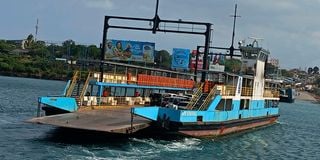
The identity of Likoni in Mombasa County has for decades been shaped by the sea, reachable only by the iconic ferries that shuttle thousands of commuters and vehicles across the channel each day.
Unlike the rest of the mainland in the city, which is seamlessly linked by roads and bridges to Mombasa Island, Likoni stood apart.
The partial opening of the Dongo Kundu bypass last year aimed at easing traffic at the ferry crossing channel, but this daily ferry crossing is still more than just a commute. It is a ritual that defines life here, reinforcing a sense of separation between Likoni and the rest of Mombasa. In that isolation, the area has developed a unique character.
Dongo Kundu Bridge built to ease traffic congestion along the Likoni crossing channel in Mombasa in this photo taken on February 4, 2024.
Photo credit: File | Nation
For those who knew Likoni in its golden years, the memories remain vivid. Sun-kissed beaches, lively clubs, and a bubbling tourism scene that once gave it a name among coastal destinations.
Today, the name Likoni evokes both nostalgia and concern. While development continues to reshape the area, poverty and insecurity cast long shadows over its potential.
More than two decades ago, Likoni Sub-county was a vibrant tourism and entertainment hub, drawing in both local and international tourists with its electric nightlife, pristine beaches, and warm coastal hospitality.
At the heart of it was Shelly Beach, the second-largest public beach on Kenya’s coastline after Jomo Kenyatta public beach that is commonly known as Pirates.
A lighthouse (red) at Shelly Beach area in Mombasa used for navigation of marine pilots accessing the Mombasa port in this photo taken on May 14, 2015.
Photo credit: File | Nation
Likoni’s wide, clean shores welcomed visitors eager for water sports such as deep-sea diving, sailing, and water skiing. On weekends, the beach would come alive with colour. Beach boys offering tours, vendors selling Swahili delicacies, and the occasional traditional drumbeat echoing from nearby gatherings.
“I remember when tourists filled these shores. We had photographers near the ferry, boats for sea tours, and at night, you couldn’t find a seat in the clubs,” says Mzee Juma Hamisi, a long-time resident of Vyemani.
Mzee Hamisi Juma at his home in Vyemani, Likoni, where he has lived for over five decades.
Photo credit: Mishi Gongo | Nation
Indeed, clubs such as Harambee, The Office, and Shallon Club (now known as Shark’s Club) were household names. Nearby stood the majestic Shelly Beach Hotel, one of the oldest in the region, built in 1942 and refurbished in the early 1990s to cater to the growing demand.
It not only hosted international guests, especially from the UK, Germany, and Italy, but also welcomed British soldiers who were training in the area. Then came 1997, and with it, the Kaya Bombo clashes, a violent political period that changed the course of Likoni’s history.
What began as political incitement, calling on local communities to expel ‘outsiders’, quickly turned into deadly ethnic clashes that affected large parts of Likoni and the neighbouring areas of Kwale County.
Kwale became a training ground for militia fighters, and Likoni bore the brunt of their wrath. One night, tourists were attacked by machete-wielding men at Shallon Club.
Guests at Shelly Beach Hotel either fled or cancelled their bookings. Within weeks, tourism plummeted, and the hotel shut down. Over 700 workers, both permanent and casual, were laid off.
“Everything collapsed overnight. Even the beach boys and photographers disappeared. People moved to Diani or left the business completely,” recalls a former hotel worker who asked not to be named for security reasons.
Cottages around the hotel that once offered overflow accommodation also shut down, unable to stay afloat without guests. The ripple effect was severe: a once-thriving economy fell silent.
In 2019, the Shelly Beach Hotel was revived under new management. The refurbished facility now boasts a capacity of up to 800 guests, and business is picking up.
Mr Swaleh Mwalimu, manager of Shelly Chocolate Restaurant, on September 17, 2025.
Photo credit: Mishi Gongo | Nation
At the nearby Shelly Chocolate Restaurant, manager Swaleh Mwalimu stares at empty chairs. The restaurant opened in 2023 with hope, offering meals and drinks along the beach. But months later, he had to stop serving food.
“No one was coming. The food would go stale. Now we only sell drinks, and only make sales on weekends. We had 10 tables. Now we’ve left only two,” he said. The biggest challenge, he says, is insecurity.
“How can you run a business where customers are afraid to visit? We are told to self-employ, but how do you thrive in fear?” asked Mr Mwalimu.
In recent years, Likoni has become notorious for gang violence alongside Kisauni, Nyali, and Mvita Sub-counties. Dozens of teenage gangs roam the streets, armed with pangas and crude weapons.
Names like Loliondo, Chaka Chaka, Vampires, Young Thugs, and Wajukuu wa Bibi strike fear in residents.
“You cannot walk with your phone here. They will attack you even in broad daylight. After 7pm, this place turns into a ghost town,” says Aisha Hamid, a resident.
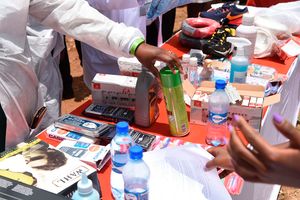
Items recovered after police burst a phone theft syndicate in Likoni on January 18, 2025.
Photo credit: File | Nation
Gang members, some as young as 12, roam around estates and pathways, robbing and injuring people. Several residents bear scars from panga attacks, and others have been left permanently disabled.
In late 2024, Coast Regional Police Commander Ali Nuno held community security forums in Likoni and Ukunda. During one such meeting, over 100 youth gang members surrendered, asking for help to change their lives.
Security officers and political leaders have repeatedly warned parents to take care of their children.
But while some blame poor parenting, others point to deeper issues.
“Most of these boys never went to school. Their parents are jobless. There’s no food at home. If the children see no hope, what do you expect them to become?” says Shamsa Ali, a resident.
Besides this, residents feel left behind in terms of development. Likoni is also among the areas grappling with landlessness, with many squatters in Mombasa.
Over the years, the area has undergone rapid population growth, becoming one of the most populated regions in Mombasa County, with six wards. According to the 2019 Kenya Population and Housing Census report, Likoni had a population of 228,472 people, second only to Kisauni, which had 263,742.
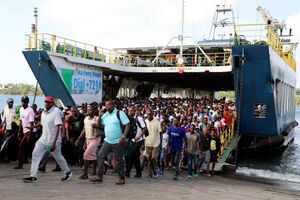
Passengers disembark from MV Safari Ferry at the Island side of the Likoni Channel Crossing on July 14, 2024.
Photo credit: File | Nation
This growth has strained public services. The Likoni Ferry crossing, relied on by over 300,000 people daily, often witnesses long queues, delays, and sometimes dangerous stampedes. Like the rest of Mombasa, access to clean, piped water is a major challenge.
Despite these challenges, Likoni remains attractive to many, especially those seeking affordable housing close to the city. A one-bedroom house in most areas costs between Sh8,000 and Sh10,000, compared to up to Sh20,000 across the ferry in Mombasa Island.
“People live here because it’s cheaper. You can even buy sugar in small portions—an eighth, a quarter—depending on what you have in your pocket,” says Hamadi Omari, a resident of Jamvi la Wageni.
Mzee Hamisi says that ferry breakdowns are part of life now. According to him, people endure it because the cost of living here is manageable.
The sense of community is another reason why many who reside here opt to stay for long. A walk through areas such as Vyemani, Mtongwe, or Jamvi la Wageni reveals open spaces locally known as maskani where young men converge to socialise. Women sit outside their homes, chatting or watching over their children at play.
“Here, everybody knows everybody. It’s like a village in the city,” says Mr Omari.
MV Likoni ferry operates within the Likoni Ferry Channel crossing in this photo taken on August 18, 2024.
Photo credit: File | Nation
Historically, Likoni was home mostly to the Digo community, but over time, it has become a melting pot. Early migrants included the Luos, who worked in the stone quarries, and the Tharakas, who farmed. Today, communities from all over Kenya call Likoni home.
The community is hopeful that programmes initiated by the government and non-governmental organisations to change the area will bear fruit. Among these are organisations working with former gang members, offering skills, training, and rehabilitation.
“We need peace, not only for business, but for our children. We want to dream again,” says Mr Swaleh.
Last week, Kenya Ports Authority (KPA) announced plans to upgrade the Likoni Ferry crossing. The upgrade is scheduled to start in a month and run for 24 months. It will include the expansion and rebuilding of passenger holding bays, widening of landing ramps for smoother vehicle flow, and the construction of pedestrian sky bridges and safer waiting sheds to enhance safety and comfort.
Plans to construct a bridge to replace the ferries are also ongoing, with efforts in place by the government to purchase parcels of land required for the major project.