The Director of Public Prosecutions (DPP) Renson Ingonga has closed the six-year inquest into the 2019 Likoni ferry tragedy in which a mother and her four-year-old daughter died after their vehicle plunged into the Indian Ocean.
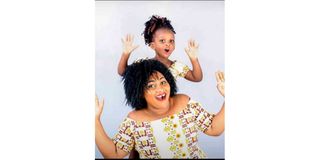
The inquest, opened in 2020, four months after the accident, has sought to establish what caused the deaths of Mariam Kighenda, 35, and her daughter Amanda Mutheu, and whether any individual or institution should be held responsible.
On Wednesday, the prosecution closed its case after presenting evidence from civilian and police witnesses, as well as experts who helped the court reconstruct what happened on the evening of September 29, 2019.
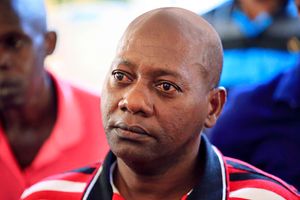
Mohamed Ahmed Salim diving at the Likoni Crossing Channel to search for the bodies of Mariam Kighenda and daughter Amanda Mutheu in October 2019.
Photo credit: Pool
The Kenya Ports Authority, which took over management of ferry operations following the merger with Kenya Ferry Services, had previously sought an opportunity to file additional documents.
Its legal representative was, however, absent from court on Wednesday, leaving uncertainty over whether the documents had been filed.
The prosecution asked the court to proceed with the ruling based on the evidence already presented, while undertaking to notify the KPA legal team should it still wish to submit the documents.
“The court can schedule the matter for a ruling. I will inform the KPA legal team so that, if they wish to bring their documents, they can do so,” the prosecution told the court.
The court set October, for a ruling on the inquest.
The conclusion brings to an end a six-year judicial inquiry marked by difficult questions over ferry safety, the handling of crucial evidence and the effectiveness of the investigations into the deaths.
At the centre of the case is a Toyota Isis, registration number KCB 289C, which carried Kighenda and her daughter as it boarded the MV Harambee at the Likoni side of the channel.
Shortly after the vessel departed, the vehicle began to roll backwards and plunged into the ocean at about 6.13pm.
The ferry could be seen manoeuvring towards the sinking vehicle in what appeared to be an attempt to assist, but the car disappeared beneath the rough waters before a rescue boat arrived about three minutes later.
The medical evidence left no doubt about how the two died with Government pathologist Dr Johansen Oduor establishing that both victims died from asphyxia caused by drowning.
But the inquest went beyond the immediate cause of death, turning the spotlight on the safety systems in place at the ferry and whether the tragedy could have been prevented.
Engineering technician Kennedy Mukhebu told the court that the MV Harambee's prows, critical safety structures designed to prevent vehicles from slipping off the vessel, were defective and could not be raised.
The inquest was told that the victims’ vehicle would not have reversed into the Indian Ocean had the prows been functional.
The issue became more significant when former Kenya Ferry Services managing director Bakari Gowa acknowledged that he knew about the defective prows before the accident.
The car which plunged into the Indian Ocean killing Mariam Kigenda and her daughter Amanda Mutheu, parked at the Kenya Ferry Police Station in Mombasa in this photo taken on October 12, 2019.
Photo credit: Kevin Odit | Nation Media Group
The ferry had not undergone a complete overhaul, with Mr Gowa attributing the failure to undertake critical repairs to inadequate government funding.
The court also heard that a list of repairs had been prepared before the tragedy but that budgetary constraints prevented the recommended work from being carried out. Yet the ferry continued operating before fatal incident.
That evidence placed a broader question at the heart of the inquest; was the tragedy solely the result of a vehicle reversing into the sea, or did failures in ferry safety and management contribute to the deaths?
Corporal Moses Mahiuha, the initial investigating officer, handled the file for about two months before transferring it to the Directorate of Criminal Investigations in Likoni.
He told the court that he believed an offence had been committed and that, had he continued with the investigation, he would have found someone culpable for negligence.
“Yes, there was an offence committed. I would have found someone culpable for negligence had I continued with the investigations,” he said.
However, the investigation was far from complete when the file changed hands, leaving questions about how the inquiry progressed thereafter.
At one stage, the court was presented with incomplete footage of the accident, despite the recording being central to establishing exactly what happened in the final moments before the vehicle plunged into the ocean.
The court later learnt that the footage had been returned to Kenya Ferry Services instead of being preserved as an exhibit, contrary to proper procedure.
“We do not know how the court exhibit ended up at KFS, or who instructed the officer to surrender it,”
KPA Litigation and Disputes Manager Michael Sangoro said when he appeared in court alongside Mr Gowa
The prosecution emphasised that the CCTV footage had remained with KFS until it was submitted in court in an incomplete state, something that was described as a serious irregularity in the handling of a critical exhibit.
It subsequently emerged that the footage had been divided into three parts and that a complete version still existed.
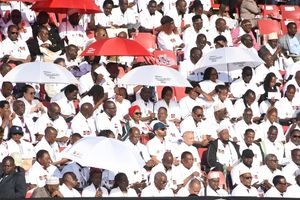
Mourners at Mung'ala village in Makueni County for the burial of Mariam Kighenda and her daughter Amanda Mutheu, who drowned in the Indian Ocean three weeks ago, October 19, 2019. PHOTO | PIUS MAUNDU | NATION MEDIA GROUP
It took the issuance of court summonses and warrants of arrest to compel the production of all the relevant materials needed for the inquest.
Likoni DCIO Reuben Lwambi confirmed having seen the full sequence, including the vehicle reversing before plunging into the ocean.
He acknowledged that returning the exhibit to KFS, the institution at the centre of the inquest, was against procedure and that the omission of crucial details was not in order.
The eventual production of the complete footage helped the court establish a clearer sequence of events and brought renewed scrutiny to both ferry operations and the investigation.
The evidence surrounding the missing footage became symbolic of the wider difficulties that characterised the inquest.
What should have been a straightforward effort to establish how two people died instead became a prolonged search for evidence and answers.
The tragedy also triggered an intense government response. For 13 days, the fate of Kighenda and her daughter remained a national focus as rescue teams battled the deep and turbulent waters of the Indian Ocean to recover the vehicle.
The then Government Spokesperson Cyrus Oguna remained in Mombasa for much of the recovery operation as pressure mounted on the government of President Uhuru Kenyatta to locate the vehicle and recover the bodies.
On the 13th day, the vehicle was finally pulled from the deep waters, bringing to an end a desperate search that had gripped the country.
The recovery of the bodies provided the families with answers about the fate of the mother and daughter, but the question of responsibility remained unresolved.
Six years later, that question is now before the court.
With the prosecution having closed its case, the court will in October consider the evidence and determine the circumstances surrounding the deaths and whether any individual or institution bears responsibility for the tragedy.
The ruling will bring to a close a six-year search for accountability in an accident that exposed vulnerabilities in ferry safety, weaknesses in evidence handling and the challenges of investigating deaths involving public infrastructure.
The inquest dragged on for six years because of a combination of challenges in obtaining crucial evidence, presenting and recalling key witnesses, securing their attendance, and changes in the judicial officers handling the matter.
The proceedings were particularly affected by difficulties surrounding the CCTV footage of the accident, with the court at one point being presented with incomplete footage and later learning that the original material had been returned to KFS instead of being preserved as an exhibit.
The court had to use summonses and warrants of arrest to compel the production of witnesses and relevant materials.
Key witnesses, including Mr Gowa and the Likoni DCIO, were also recalled to clarify issues that emerged during the proceedings.
Mr Gowa was recalled to address questions concerning ferry operations and safety, while the DCIO was required to explain how investigations were handled after the initial investigating officer, Mr Mahiuha, handed over the file.
Frequent transfers of judicial officers further contributed to the delays, extending the inquest into a six-year search for evidence and answers surrounding the deaths of Kighenda and Mutheu.