Police and Kenya Pipeline Corporation (KPC) officials have uncovered a suspected major fuel-siphoning syndicate in Migadini, Changamwe, Mombasa County, after discovering an illegal connection to the corporation’s main petroleum pipeline inside a condemned building.
The discovery has raised fresh concerns about the security and surveillance of critical petroleum infrastructure, with questions about how the suspects established the illegal connection and how long they siphoned fuel without detection.
The illegal connection, which investigators suspect had been operating for several months, was discovered on Monday afternoon following a joint operation involving police officers, Directorate of Criminal Investigations (DCI) personnel and KPC technical staff.
One suspect reportedly escaped arrest during the operation, prompting police to launch a manhunt for those believed to be behind the illegal enterprise.
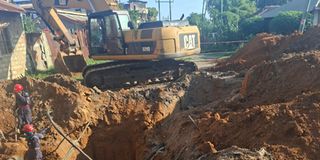
A tunnel allegedly used to siphon fuel from Kenya Pipeline Corporation’s mainline in Migadini, Changamwe, Mombasa County. Police and KPC officials uncovered the illegal connection during an operation.
Photo credit: Anthony Kitimo | Nation Media Group
Preliminary investigations indicate that the suspects had installed a long pipe running from the condemned building to a valve connected to the main KPC pipeline, which transports petroleum products from the discharge facilities at the Port of Mombasa to the corporation's storage reservoirs in Changamwe.
The sophisticated connection has raised concerns about the possibility of an organised network involving individuals with technical knowledge of the pipeline system.
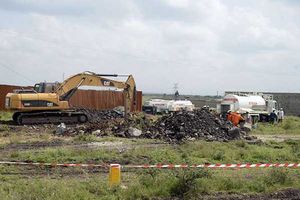
Excavators were deployed to the scene to dig up the surrounding area and establish how the illegal connection was made, including the exact point where the siphoning equipment was attached to the main pipeline.
Investigators are also expected to establish whether the suspects had constructed underground channels or concealed additional equipment to facilitate the illegal extraction and transportation of petroleum products.
Residents living near the condemned building are also expected to assist investigators in establishing how the operation was conducted without attracting attention.
The discovery has exposed possible weaknesses in the monitoring of the pipeline infrastructure, particularly in areas where abandoned buildings and other structures could provide cover for criminal activities.
According to a police report recorded at Chaani Police Post under Occurrence Book number 31/02/11/2026, police received information from one of the KPC terminal managers concerning a suspected illegal connection to the main petroleum pipeline in Migadini, near the general cargo area.
The report indicates that officers from Chaani Police Station, DCI Changamwe and SOC personnel accompanied the KPC technical team to inspect the premises.
A tunnel allegedly used to siphon fuel from Kenya Pipeline Corporation’s mainline in Migadini, Changamwe, Mombasa County.
Photo credit: Anthony Kitimo | Nation Media Group
“Upon arrival, it was established that there was an illegal connection from the main KPC pipeline,” reads part of the police report.
During the operation, officers recovered several items believed to have been used in the illegal installation and siphoning of petroleum products.
The recovered items included a metal clamp, steel crowbar, spade, pipe wrench and pipes, alongside traces of fuel found at the scene.
Police have since commenced investigations to establish the identities of the people behind the operation, how the connection was installed and the possible quantities of petroleum products that may have been stolen.
The latest incident comes amid intensified efforts by KPC and security agencies to dismantle fuel theft networks targeting the corporation's extensive pipeline infrastructure.
On March 18, 2025, KPC launched a nationwide campaign to remove illegal structures and encroachments along its pipeline wayleaves, while also stepping up operations against underground fuel siphoning syndicates.
The exercise, which began at Embakasi near the former Taj Mall site, covered 14 counties along the corporation's 1,342-kilometre pipeline network.
The campaign followed public consultations held in October 2024, community sensitisation programmes and the issuance of two eviction notices requiring affected occupants to voluntarily remove illegal structures by February 14, 2025.
The corporation said the operation was necessary to protect communities and critical national infrastructure from the dangers posed by illegal developments and unauthorised connections to high-pressure petroleum pipelines.
Such activities expose surrounding neighbourhoods to the risk of petroleum leaks, fires and explosions, which could cause extensive damage to property and loss of lives.
KPC also indicated that the clearance programme would be supported by enhanced physical and digital surveillance, perimeter fencing and measures to prevent fresh encroachments after the removal of illegal structures.
However, the discovery in Migadini suggests that criminal networks may still be finding ways to exploit vulnerable sections of the pipeline system despite the ongoing enforcement measures.
Previous incidents involving underground fuel theft have been reported in Mlolongo, Koru in Muhoroni and Kokotoni in Rabai, Kilifi County, where suspected criminals allegedly used concealed valves, underground pipes and hoses to divert petroleum products from the main supply network.
Some of the previous investigations have also raised concerns about possible insider involvement, unauthorised access to operational systems and weaknesses in security arrangements.
Investigators are expected to establish whether the operation involved a wider network, including possible buyers, transporters and storage facilities used to distribute stolen petroleum products.
The corporation has yet to establish the full extent of the suspected theft, while police continue pursuing the suspects who escaped during Monday's operation.