The family of Zimbabwean businessman Wicknell Chivayo has begun the process of taking stock of his vast fortune following his death in a helicopter crash, raising fresh questions about his business interests in Kenya and his close relationship with President William Ruto .
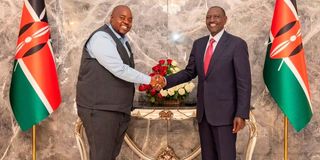
Zimbabwean Businessman Wicknell Chivayo during one of his numerous meetings with President William Ruto.
Photo credit: Pool
Mr Chivayo’s family has registered his estate with Zimbabwe’s Master of the High Court, setting the stage for an exercise to establish the wealth he left behind, the businesses he owned and any debts or claims against him.
However, no person has yet been appointed to oversee the process, meaning the full accounting of his wealth and the distribution of his property are yet to begin.
The development comes amid a US$25 million dispute over property and wealth involving his former wife, Sonja Madzikanda, which was awaiting a decision by Zimbabwe’s Supreme Court when he died.
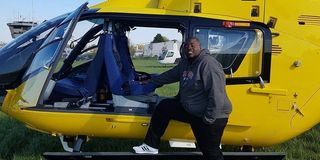
Prominent Zimbabwean businessman Wicknell Chivayo and his wife, Lucy Muteke, died in a helicopter crash on Wednesday evening, September 30, 2026.
Photo credit: Pool
His death has also brought attention to his business connections outside Zimbabwe, particularly in Kenya, where he had developed a highly publicised friendship with President Ruto.
Mr Chivayo became a subject of public debate in Kenya after reports linked a company associated with him, IMC Construction Kenya Ltd, to the proposed expansion of Jomo Kenyatta International Airport (JKIA).
The reports suggested that the company had joined a consortium involving Chinese construction interests for the airport redevelopment, initially reported to cost Sh375 billion.
The claims triggered questions about how the company had entered the project and whether Mr Chivayo stood to benefit from one of Kenya’s biggest infrastructure undertakings.
Prominent Zimbabwean businessman Wicknell Chivayo and his wife, Lucy Muteke, died in a helicopter crash on Wednesday evening, September 30, 2026.
Photo credit: Pool
However, Transport Cabinet Secretary Davis Chirchir dismissed the reports, saying neither Mr Chivayo nor IMC Construction Kenya had participated in the procurement process.
The government put the project cost at Sh154.2 billion and announced a design-and-build contract with China Road and Bridge Corporation (CRBC).
The Consumers Federation of Kenya (Cofek) subsequently went to court, questioning the transparency of the project, the companies involved and the financing arrangements.
In October, High Court Judge Gregory Mutai declined to stop the project, saying claims linking Mr Chivayo to the airport consortium were based on media reports rather than evidence presented in court.
The judge noted that the petitioner had not provided evidence showing that Mr Chivayo was involved in the airport contract.
The case nevertheless kept attention on the ownership of companies associated with major public projects and the need for the government to disclose important contract details.
For Mr Chivayo, the controversy added Kenya to a list of countries where his business activities and political connections attracted public attention. His relationship with President Ruto was particularly visible.
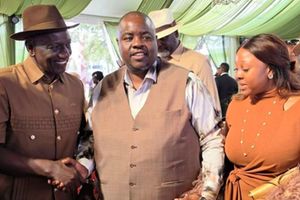
Zimbabwean Businessman Wicknell Chivayo and his Lucy Muteke with President William Ruto during the wedding engagement of Ruto's daughter, Charlene in Narok County.
Photo credit: Pool
Mr Chivayo frequently shared photographs and videos of his encounters with the President, including visits to State House in Nairobi and other private and official engagements.
One of the most widely discussed encounters occurred in August when Ruto personally drove him towards his helicopter at his Kilgoris residence following a traditional engagement celebration involving the President’s daughter, Charlene.
Mr Chivayo shared the video on social media, expressing excitement at being driven by the Kenyan Head of State.
Following his death, Dr Ruto described him as a dear friend and sent condolences to his family and the people of Zimbabwe.
The businessman also cultivated relationships with other African leaders, including Zimbabwean President Emmerson Mnangagwa, Uganda’s Yoweri Museveni, Tanzania’s Samia Suluhu Hassan and Nigeria’s Bola Tinubu.
The late Zimbabwean businessman Wicknell Chivayo with (from left) then-President Lazarus Chakwera (Malawi), His Majesty King Mswati III (Swaziland), President Samia Suluhu (Tanzania) and President William Ruto (Kenya).
Photo credit: Pool
Born in 1982 in Zimbabwe’s Chivhu area, Chivayo rose from humble beginnings to become a wealthy businessman whose interests included energy, construction and infrastructure.
He reportedly left school as a teenager and worked as a wages clerk at a bus company before venturing into business. He later established Intratrek Zimbabwe, which secured government-linked contracts, including the proposed 100-megawatt Gwanda solar power plant.
The project, initially valued at about US$172 million, became controversial after construction failed to proceed as planned despite an advance payment.
Zimbabwe’s power utility cancelled the contract in 2018, prompting a court battle. Intratrek later won a High Court case over the cancellation, and the Supreme Court dismissed the power utility’s appeal in 2023. Mr Chivayo and his company were also acquitted in separate criminal proceedings connected to the project.
He again attracted scrutiny over the supply of election materials for Zimbabwe’s 2023 general election through South African printing company Ren-Form.
Media investigations raised questions about payments allegedly made to accounts linked to him. However, Zimbabwe’s Anti-Corruption Commission said in December 2025 that it had found no evidence linking Mr Chivayo or the electoral commission to wrongdoing in the procurement.
Despite the controversies, he remained a prominent figure in Zimbabwe, where he became known for giving away luxury vehicles, cash and other expensive gifts to musicians, religious leaders, sports personalities and ordinary citizens.
He regularly displayed his lavish lifestyle on social media, earning both admiration and criticism. The registration of Mr Chivayo’s estate marks the beginning of an exercise that could take considerable time, given his business interests, property holdings and outstanding disputes.
According to The Sunday Mail , the family has already held an initial meeting, but no person has been appointed to take charge of the process.
The US$25 million dispute with Madzikanda could further complicate efforts to establish which properties and wealth belong to the estate.
The eventual accounting will also be important in determining the future of companies and investments associated with the late businessman.
In Kenya, one outstanding question is whether Chivayo had direct ownership of local companies or held his interests through other businesses.
His death left questions about his Kenyan business footprint unanswered. As his family prepares to establish the extent of his fortune, attention will turn to the companies, properties and investments he left behind, including any interests he may have held in Kenya.