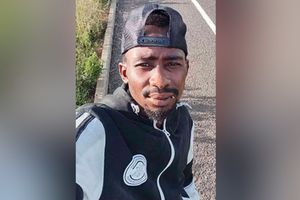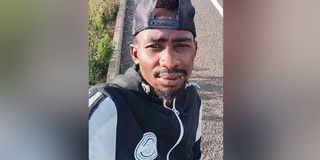
The late Livingstone Mwangi. He was killed by unknown assailants on the morning of Tuesday, December 23, 2025.

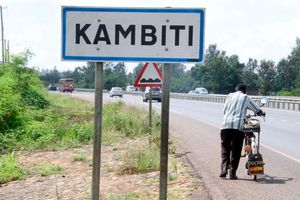
Police in Murang’a South are on the spot over how they are investigating the brutal murder of Livingstone Mwangi on December 23, 2025, with his family expressing fears that justice might be bungled.
Mwangi was profiled in his village as a man with deep knowledge of local criminal cartels. He occasionally interacted with some of the racketeers and helped the media gain insight into their networks.
Orphaned in 2019, the 29-year-old was living with his grandmother, Ms Esther Waigumo, 80, who now demands “proof that the death of my grandson is being investigated in a manner that will lead to justice manifesting itself.”
“As a family, we are aware that our son died in the hands of a powerful cartel that trades in illicit brews, crop and livestock theft, narcotics and killers for hire. His only mistake was his confidence, where he partied with some of the miscreants before he met his death,” Ms Waigumo said.
Of great interest is how investigators will establish the nexus between the murder and the postmortem report, which indicated that Mwangi died while defending himself, leaving his forearms bruised.
The late Livingstone Mwangi. He was killed by unknown assailants on the morning of Tuesday, December 23, 2025.
The report states that he died of blunt trauma occasioned by an attack to the head that fractured his skull, coupled with heavy loss of blood.
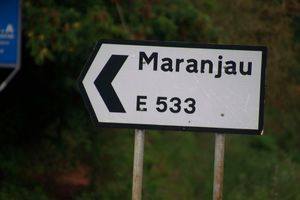
Mwangi was found murdered and dumped near his village home in Maranjau village, with police now accused of exhibiting early signs of dereliction of duty.
However, Murang’a South Police boss Ms Charity Karimi told the Nation that they will leave no stone unturned.
“We understand the existing frustrations and we are working hard to ensure that conclusive investigations deliver justice to the deceased’s family and friends,” the police boss said.
Motive of murder
Ms Karimi said scene-of-crime officers recovered Sh300 and a phone from the body, and that police are verifying whether he had indeed withdrawn the claimed amount and whether he consumed alcohol worth Sh13,700 at the bar.
“So far, we are investigating the crime of murder, but we are not sure whether the motive was robbery with violence or a direct intent to eliminate him,” she said.
She added that police are also looking into the possibility that a fight erupted in the bar, noting that investigative notes so far indicate that the victim fought with another patron.
“We are looking into the possibility that the grudge that built between the two most likely resulted in an attack with a crude weapon, leading to his death,” she said.
According to a preliminary investigative report by Murang’a South detectives, a visit to the bar where Mwangi was last seen alive uncovered two bloodstained spots—inside and outside the bar.
However, contrary to standard procedure requiring scenes under active investigation to be secured to preserve evidence, the bar continued operating unhindered.
The report states that despite obvious cleaning of the scene by the owners before police arrived, officers were still able to collect two bloodstained exhibits.
Ms Karimi said investigations are ongoing and that all these aspects will be placed in their correct perspective.
The report further indicates that the bar had several patrons, all of whom will be traced for the purpose of recording statements.
When the Nation contacted the bar owner, Ms Priscilla Karaya, she said: “Go and get those answers from the government, which is investigating this matter.”
Asked why the bar was cleaned before police arrived and why the waitress was sent on compulsory leave, she said: “It is my business, and decisions are made solely in line with my managerial duties.”
When the Nation visited the scene and the family on December 31, 2025, it encountered Mr James Kimani, who claimed he was among the patrons that night.
“We were about 10 in that bar. Mwangi was there too. We also had the waitress. The owner of the bar later came, and there were also some prison wardens from nearby Maranjau Prison,” he said.
Mr Kimani said he had not yet recorded a statement because DCI officers were asking witnesses to transport themselves to their offices in Kenol town, which would require Sh500 in fare.
“I am fairly familiar with what transpired in that bar. The information is dangerous to my life, and I am contemplating hibernating from this village for fear of my life,” he said.
He added that investigators should have gone to the chief’s office or the nearby Kiambamba police patrol base to record statements, instead of complicating matters by requiring witnesses to cater for transport.
Ms Karimi acknowledged the concern, saying it was a valid point and that arrangements would be made to ensure statement recording is affordable.
No statement from witness
A week later, the DCI had not recorded statements from the waitress or her employer, despite a preliminary statement by one witness indicating that a fight broke out between Mwangi and another reveler at around 11pm.
This fight is viewed as a key component of the tragedy that later befell Mwangi.
The DCI report states that a man estimated to be in his 40s fought with Mwangi and left vowing to exact revenge. This man has since fled the village bordering Maranjau.
What remains a mystery is where Mwangi met his death. He was found near his home in a state investigators describe as “uniquely odd, with aspects of motion.”
While he was expected to have been drunk, the scene suggested he had been walking downhill but was found lying in a position indicating he may have fallen backwards, with his hands neatly placed on his chest.
According to Maranjau village security elder Ms Mary Wanjira, if the postmortem states that he died fighting, then it could not have happened where the body was found.
“It is only 20 metres from my house. I would have heard the commotion, and my dogs would have barked,” she said.
The DCI report states that the scene where the body was found was undisturbed, suggesting that no fight occurred there.
This shifts the focus of investigations back to events inside the bar, particularly the bloodstains found inside and outside it.
“This makes the man who fought with Mwangi of great interest. We believe he has crucial insights into this death. We will continue pursuing him so that he can record a statement,” the report states.
Even as police sought to dispel fears of a possible miscarriage of justice, Mwangi’s widow, Ms Naomi Mugure, 21, revealed that her husband had, on the evening of December 22, 2025, withdrawn Sh14, 000 from a money agent in Maranjau town.
“He proceeded to Pisjoh Bar, which is in the same town. Our home is about 500 metres from the town, and his body was dumped midway,” she said.
Ms Mugure said she knew her husband was alive a few minutes past midnight on December 22, as he called her and informed her that he was still at the bar drinking with friends.
She said she saw his body at 6am when she ventured out to look for him from the bar, “since that bar is known to operate nonstop.”
She said she screamed, and several neighbours who responded to her distress calls agreed that the body appeared to have been dumped, but that the scene was stage-managed to look as though he had collapsed there, despite his cracked skull.
Mr Martin Warui, a tenant in the town, told Nation that there was a major fight inside the bar.
“I heard people scream that there was a man armed with a metallic bar. I saw some customers fleeing into the night,” he said.
He said the bar was suddenly closed at around 2am, followed by clandestine activities, and that he was not surprised to later learn that a man had been found dead near the bar.
“Police need to concentrate on the fight that was inside that bar. It explains the postmortem findings of a cracked skull and bruised forearms from defensive blows. Then they should establish who transported the body to where it was found,” he said.