Hello

Your subscription is almost coming to an end. Don’t miss out on the great content on Nation.Africa

Ready to continue your informative journey with us?

Hello

Your premium access has ended, but the best of Nation.Africa is still within reach. Renew now to unlock exclusive stories and in-depth features.

Reclaim your full access. Click below to renew.

Johnson Sakaja
Caption for the landscape image:

A secret account, silent signatories and Sh151 million that appeared overnight at City Hall

Scroll down to read the article

Nairobi Governor Johnson Sakaja at his office in Nairobi.

Photo credit: File | Nation Media Group

An audit has revealed that millions of shillings were quietly routed into a little-known Nairobi City County bank account almost immediately after it was opened, an account that auditors now say had no documented authority, no disclosed signatories and no financial records explaining its existence or the flow of funds through it.

In the latest Auditor-General’s report on the county government for the financial year ending June 2025, officials were faulted for secretly opening an account titled NCC Imprest Operations Account at a local bank in November 2024, bypassing the standard public finance controls that govern county revenue and expenditure.

Soon after its creation, substantial deposits began hitting the account.

Audit records show that a supplier transferred Sh98.1 million into the account on November 25, 2024, followed by another Sh53.5 million on January 22, 2025.

After minor bank charges, the balance stood at Sh151.7 million by June 30, 2025 money that was never reflected in the county’s formal accounting framework.

“The authority to open the account was not provided, and there was no justification provided for establishing an imprest operations account. Further, the signatories to the account were not disclosed, and no explanation was provided for operating an expenditure account that only received revenue,” read the report. 

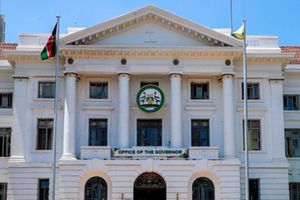
City Hall

The headquarters of the Nairobi City County Government offices on City Hall Way.  

Photo credit: Lucy Wanjiru | Nation Media Group

The account appeared to be structured as an expenditure facility but functioned solely as a revenue channel, receiving large transfers without any corresponding invoices, contracts or supporting statements to establish the nature of the payments.

The Auditor-General noted that no documentation was provided to justify the account’s opening, the necessity of an imprest operations account or the identities of its signatories effectively shielding those controlling the funds from public scrutiny.

“The receipts could not be confirmed as no supporting invoices from the remitting entity or corresponding statements were provided. In addition, the account was not supported by a cash book or bank reconciliation statements for the vear under review,” the report added.

The audit also uncovered deep gaps in how Nairobi City County accounted for millions of shillings in receivables and foreign travel, raising fresh concerns about whether public funds were properly tracked or whether some expenditures occurred at all.

Irregularities were identified in overseas travel and training expenses.

City Hall

City Hall, the Nairobi City County headquarters.

Photo credit: File | Nation Media Group

Of Sh798 million reviewed, at least Sh16.4 million lacked basic documentation such as travel approvals, boarding passes, visa stamps, attendance registers or post-trip reports.

In several cases, per diems were paid beyond approved event dates, accommodation costs were covered despite sponsor commitments and unauthorised rates were applied.

Among the most questionable entries were payments totaling over Sh7.2 million for a sustainability training program in Singapore scheduled for February 2025, a trip for which auditors found no air tickets, visas, insurance records or procurement documents, raising questions about whether the travel ever took place.

The audit further flagged advance payments made before journeys occurred, paperwork prepared after events, duplicate procurement of already contracted services and weak imprest controls  painting a picture of a system where oversight routinely failed.

Auditors also identified Sh16 million in non-exchange receivables that could not be supported with ledgers, invoices, or contracts, making it impossible to confirm their legitimacy or recoverability.

County officials also failed to account for bad and doubtful debts a lapse the Auditor-General warned could overstate both receivables and total assets in the county’s books.

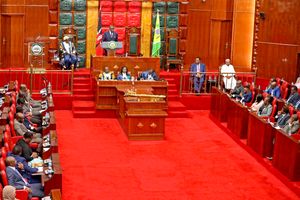
On Thursday, senior officials from the county executive committee appeared before the Nairobi County Assembly’s Public Accounts Committee to answer questions over the audit findings as City MCAs signaled a tougher push for accountability.

The committee’s chairperson and Ngara MCA Chege Mwaura said the hearings were aimed at exposing how public funds had been used or misused  and ensuring that those responsible were held accountable.

“It is important for Nairobi residents to understand how their taxes are being spent,” Mr Mwaura said, adding that the committee was working closely with officers from the Auditor-General’s office and had already drawn up a schedule for implicated officials to appear before it.

Follow our WhatsApp channel for breaking news updates and more stories like this.