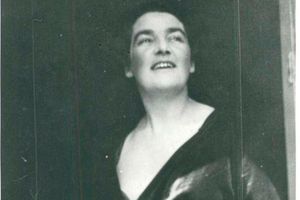
When Lady Delamere was elected Nairobi’s first woman mayor in 1938, she immediately drew attention, not only because of her past good looks, but because she embodied the paradox of being both a trailblazer for women in colonial settler politics and a figure steeped in the social excesses of the ‘Happy Valley’ set: a group that was infamous for its decadent and scandalous lifestyle —heavy drinking, all-night parties, sexual promiscuity, and drug use.
Though her mayoralty was praised as historic, it was clouded by gossip and resentment from some quarters of Nairobi’s European community. Officials had a title for her: The Worshipful the Mayor. By then, as James Fox wrote in the book White Mischief, “she had lost her looks; her face had turned puffy with drink, and she had taken to wearing elaborate headdresses.” Besides that, “she had become exhibitionistic, touchy and unpredictable.” It was claimed that during her birthday party at the Muthaiga Club, “she threw a plate of bacon and eggs at another woman, and had to be removed…she was equally violent on the subject of race, publicly insulting another woman called Sybil Martineau ‘for having African blood’ and also leading members of the Muthaiga Club from trying to bar the Aga Khan, the spiritual head of the Ismaili, from entering the exclusive club.
Gwladys Lady Delamere, the Mayor of Nairobi in 1935.
During her time as mayor, Lady Delamere gave Nairobi a bad image by becoming entangled in the notorious assassination of Lord Erroll, an aristocrat shot dead one night in the city. Before his death, Lord Erroll had confided to the mayor his desire to marry Lady Broughton, the wife of another prominent settler – an affair that may have sealed Lord Errol’s fate. Suspicion soon fell on Lady Broughton’s husband, Sir Jock Delves Broughton, who was charged with the crime. Although acquitted, he later took his own life, leaving the case shrouded in mystery and gossip.
Nairobi city has al
Former Nairobi Mayor Charles Rubia.
Photo credit: File | Nation Media Group
After independence, Charles Rubia, the first African mayor of Nairobi , quickly found himself embroiled in controversy over an attempt to purchase a Rolls-Royce for £10,850—an astronomical figure at a time when the city was drowning in debt. The move, branded “daylight robbery,” drew sharp criticism from Cabinet minister Ronald Ngala, who condemned it as “a gross, careless squandering of public money” and the purchase had to be stopped by State House. Rubia settled for a cheaper model, the Canden Plas Princess which is still in use as Governor’s ceremonial car.
Rubia was hardly the last mayor to face claims of misuse of office. His successors continued the trend, wielding power for personal gain and mixed with notoriety. Kenyatta’s daughter, Margaret, during her tenure, leveraged her position to amass properties and was linked, by western media, to the ivory trade. When it became clear her seven-year mayoral career would be terminated by councillors, she secured an ambassadorial posting, thanks to Jomo, cementing a pattern of public office serving as a springboard for private enrichment.
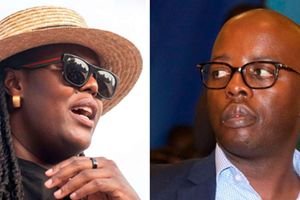
Former Nairobi Mayor Margaret Wambui Kenyatta.
Photo credit: Pool
Her successor, Andrew Ngumba, proved no better. As a leading figure among the “Wa Benzi”, he owned a vast coffee plantation and was a master manipulator. Though he is credited with spearheading several housing projects, including Dandora, his tenure was overshadowed by rampant land grabbing. Together with Town Clerk Simon Getonga, Ngumba maintained control over councillors through strategic handouts. The pattern persisted under Nathan Kahara, until President Moi dissolved the City Council altogether. In its place, he established the scandal-ridden Nairobi City Commission, chaired by Fred Gumo.
The era of single party saw Nairobi sink into chaos as unelected leaders took charge and we had figures such as Brigadier Shigoli, Fred Gumo, Kuria Gathoni, Zipporah Wandera, become Nairobi kingpins.
In the early 1990s, as multiparty reshaped Kenya’s political landscape, Nairobi’s City Hall became a microcosm of the turbulence sweeping the country. Steve Mwangi, who rose to the mayoralty with bold promises, embodied a vision of urban renewal. His flagship Nairobi-We-Want initiative captured the imagination of many city residents, weary of deteriorating infrastructure, mounting piles of uncollected garbage, and a sense of disorder that seemed to have taken root in the capital. Mwangi spoke of a cleaner, more orderly, and more modern city, and for a moment it appeared that Nairobi might be set on a new course.
But vision alone could not insulate him from the fractious politics of the city council. Soon after taking office, Mwangi found himself the target of discontent from within. A faction of councillors accused him of arrogance, of belittling those whose cooperation he desperately needed. This group, styling itself as Club-44 under the leadership of the unpredictable John King’ori, coalesced around the demand for his removal. Their numbers were sufficient to unsettle him, and their determination was sharpened by personal resentments and political rivalry.
The ouster succeeded, and King’ori seized the mayor’s seat. Yet the hopes that change might bring stability or improvement quickly dissolved. King’ori, remembered more for his eccentricities than for administrative skill, proved ill-suited to the demands of managing a troubled city. His semi-literacy became a subject of public embarrassment, and under his stewardship, the city council descended further into chaos. Meetings often devolved into fistfights and shouting matches, spectacles that reinforced the impression of a city government adrift.
There was a swift change in leadership, and Nairobi soon witnessed the rise of John Ndirangu. His tenure, however, became infamous for the scandal in which the mayoral chain was stolen—never to be recovered. The police failed to resolve the case, and with it, a piece of Nairobi’s heritage vanished. The disappearance stood as a stark symbol of Ndirangu’s chaotic and troubled administration at City Hall.
Former Nairobi Governor Evans Kidero.
Photo credit: File | Nation Media Group
With the advent of a new Constitution, Evans Kidero was elected as Nairobi’s first governor. His tenure was marred by controversy, as he faced accusations of defrauding City Hall of Sh58 million alongside former mayor John Ndirangu, former councillor Paul Mutungi, and several ex-accountants—a case still active in the courts. In 2016, an attempt to impeach him collapsed due to lack of quorum in the county assembly. A second bid in 2020, citing incompetence and indecisiveness, was halted after Kidero successfully challenged the process in court.
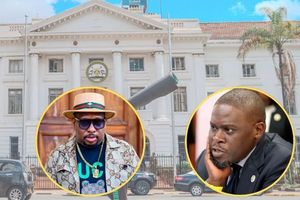
Former Nairobi Governor Mike Sonko.
Photo credit: File | Nation Media Group
The next to take the helm was Mike Sonko, whose flamboyant, “bling-bling” style of leadership quickly made him one of the most colourful figures in Nairobi’s political history. His tenure was marked by extravagant displays of wealth, populist theatrics, and a combative relationship with both the county assembly and national government. Yet beneath the spectacle, allegations of corruption and mismanagement steadily mounted. Investigations into graft and abuse of office cast a long shadow over his administration, eroding public trust and paralysing service delivery at City Hall. Ultimately, his era ended dramatically in 2020 when he was impeached by the Nairobi County Assembly, bringing his controversial reign to a close.
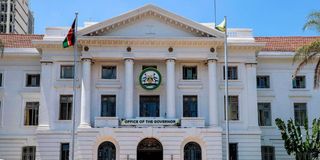
When you look back, corruption within City Hall has always existed since colonial times. In 1956, public outrage over corruption in Nairobi forced the colonial Governor, Sir Evelyn Baring, to appoint Sir Alan Rose to lead a commission investigating graft and malpractice at City Hall. Officials and staff were accused of taking bribes, pocketing secret commissions, and abusing their offices with impunity. If that sounds like 2025, it is because City Hall has hardly changed—still a breeding ground for misconduct and misrule.
On the morning of February 13, 1956, as the inquiry began, the body of Harold Whipp, Nairobi’s City Water Engineer, was discovered near the railway tracks. He had taken his own life. Appointed in 1949, Whipp had perfected the art of kickbacks and is often remembered as one of the pioneers of graft in the City Council, where contractors were routinely paid for ghost projects. Summoned by the Criminal Investigation Department and charged in court, he ended his life just days later becoming both a symbol and a casualty of Nairobi’s entrenched culture of corruption.
Colonial Deputy Mayor Issy Somen had a scandal, too. During construction of affordable housing for Africans in Mbotela and Ofafa, Somen failed to declare his interest in the doors supply when Hutchings Biemer, a company associated with him, was "asked" to supply the doors. The company was later criticised for delivering poor-quality doors. Later, Somen regretted the poor standard of the half-panel doors and admitted they were not suitable for external use. He also confessed that he had a commercial interest in the company supplying the doors.
The building of the Ruiru Dam in 1947 was another scandalous affair. Deputy Mayor Dobbs Johnson should have declared his interest in the contract by revealing he was a director of Smith, Mackenzie, the cement supplier. Johnson had approached Mr Bridger, the City Engineer, towards the end of 1947 and told him he could supply cement. He was given the right to supply 900 tonnes of cement through Smith, Mackenzie & Company Limited, which always paid him on commission.
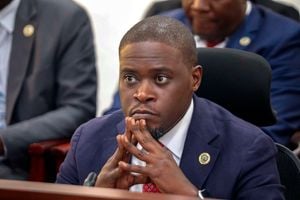
Nairobi Governor Johnson Sakaja.
Photo credit: Dennis Onsongo | Nation Media Group
Thus, Sakaja’s troubled reign is not an anomaly but part of a continuum in Nairobi’s political history. From the days of Lady Delamere’s to the present, City Hall has remained a theatre of power struggles, scandals, and shifting allegiances—a place where the promise of urban governance has often collided with the realities of personal ambition, corruption, and contested authority. It stands less as a symbol of civic order and more as a mirror of Kenya’s turbulent political culture.