Mukuru housing row: Board answers disgruntled depositors
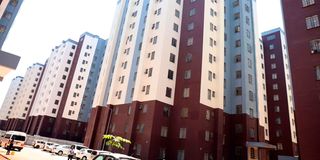
The Mukuru Affordable Housing project in Nairobi on August 28, 2026.

At least 15,142 applicants for social housing units at the New Mukuru Housing Project are yet to secure alternative units after all 4,342 units at the development were allocated, the Affordable Housing Board has said.
The Board said it received 20,426 applications for the social housing units, translating to nearly five applicants for every available home.
Of the 16,084 applicants who could not be accommodated at the Mukuru project, 942 have since selected social housing units in other projects, leaving 15,142 yet to make new selections.


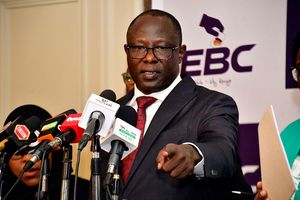
“Each of them was notified and invited to explore social housing units available in other projects and to make new selections,” Affordable Housing Board chief executive Joe Mutugu said in a response to the Nation.
The affected applicants have been notified and asked to explore units available in other projects under the Affordable Housing Programme.
The development comes amid concerns from some Mukuru residents who said they had selected specific units and started saving towards them, only to later receive messages through the Boma Yangu platform indicating that their preferred units were no longer available.
Also Read: Sold out, but to whom? Mukuru families question unavailability of Affordable Housing units
However, the Board said selecting a unit and saving towards a deposit did not amount to an allocation.
“An application for a unit does not guarantee allocation of that unit, and saving towards a deposit does not constitute payment for a unit,” Mr Mutugu said.
According to the Board, applicants must first accumulate savings equivalent to five per cent of the purchase price before they can apply for a specific unit in a project.
The application is then subjected to verification of documents and an assessment of the applicant’s ability to meet the payment obligations before an allocation is made and an offer letter issued.
The Board said demand for the units exceeded supply and that qualifying applications were considered in the order they were received.
“Where applications exceed available units, as they do at every project in the Programme, units are allocated in the order in which qualifying applications are received,” the Board said.
It added that the regulations require an electronic allocation system that records a timestamp for each application and provides real-time tracking.
“Applicants who completed their savings and submitted a qualifying application earlier were therefore allocated first,” Mr Mutugu said.
Once units in a particular category are exhausted, subsequent applications for those units cannot proceed and the applicants are notified.
The Board said applicants who failed to secure their preferred units would not lose their savings or priority status.
“Nothing is lost in the meantime. Registration, savings, and priority status, including the priority accorded to residents of informal settlements, remain intact and carry over to any new selection,” the Board said.
Applicants can use their savings towards a unit in another project or withdraw the money.
The Board said applicants who have not been allocated a unit may withdraw their savings after giving 90 days’ written notice, together with accrued interest and less applicable administrative costs.
The affected applicants will also not be required to start the entire process again.
“Cancellation of an application does not affect an applicant’s position in the Program, and an affected applicant does not restart from the beginning,” the Board said.
Instead, applicants are required to select another unit in another project, with their registration, savings and priority status carried over.
The Board encouraged applicants to log into the Boma Yangu platform and review social housing units available across the Affordable Housing Programme.
The scale of demand has prompted the Board to expand the supply of social housing.
It said two developments are currently progressing — SEPU, with 4,196 units, and Mariguini, with 579 units.
The Board is also seeking an additional 70 acres in Mukuru to facilitate the next phase of development.
“Given the high demand for social housing units, the Board is keen on expanding social housing supply,” Mr Mutugu said.
The Board also rejected concerns that affected applicants would be forced to pay more for alternative social housing units.
“No applicant is being asked to pay a premium on a social housing unit,” it said.
The Board said the Affordable Housing Programme has three income bands, with social housing units targeting households earning below Sh20,000 per month, affordable housing for those earning between Sh20,000 and Sh149,000, and affordable middle-class housing for those earning above Sh149,000.
An applicant can apply for a unit in another category, but the Board said allocation would depend on whether their income falls within the relevant band and their ability to meet the associated payment obligations.
“An applicant may apply for a unit in another category, but allocation in that pool requires that the applicant's income falls within the corresponding band, and the Board is required to assess ability to meet the payment obligations for the unit applied for before allocating it,” he said.
“This is not a barrier placed in applicants' way. The income bands exist precisely so that the lowest-income applicants are not committed to repayments they cannot sustain, and so that social housing units remain reserved for those who need them most. It is also why the Board's response to the demand at Mukuru is to build more social housing rather than to move applicants into categories they cannot afford,” he added.
Follow our WhatsApp channel for breaking news updates and more stories like this.