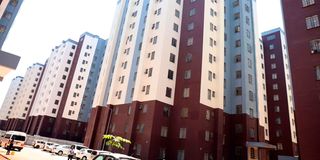
Residents displaced by the Mukuru demolitions are questioning the allocation of Affordable Housing Programme units after some applicants who had selected their preferred homes were informed that the units were sold out.
The beneficiaries say they are now being left in uncertainty despite committing thousands of shillings towards home ownership, with some questioning what will happen to their applications and payments.
Messages seen by the Nation Media Group show that applicants were notified by Boma Yangu that their "preferred unit is sold out" and that their applications would be cancelled to allow them to apply for other available units or a different project.
The messages have sparked frustration among beneficiaries, who say they had already invested in the process with the expectation of securing permanent homes.
Catherine Waithira, one of the affected beneficiaries, says she paid Sh67,000 as a deposit for a one-bedroom house before receiving a message informing her that the unit was sold out.
"We were told to invest Sh67,000 for a one-bedroom house. Then a message came saying that my house had been sold. Now I have a problem: sold to whom? And yet we are the ones who were brought here?" she says.
Catherine Waithira speaks during an interview at the Mukuru Affordable Housing project in Nairobi on August 28, 2026.
Photo credit: Bonface Bogita | Nation Media Group
Waithira says the development has left her with no clear alternative, as she has nowhere else to live.
"It is affecting me because I have nowhere to go and no alternative place to stay. Now where will I go, and where will I start?"
The beneficiaries are particularly concerned about the cancellation of their applications and want to know whether payments already made towards unavailable units will be refunded, transferred to alternative units, or require them to start the process again.
For some, the problem goes beyond losing a preferred house. They say they cannot afford to raise more money for higher-priced alternatives or secure accommodation elsewhere while waiting for answers.
"We are not benefiting from the money we invested because we do not have money. It is the rich who are benefiting from it. We are suffering," Waithira says.
The residents also say they were given Sh30,000 and cards through which they were expected to participate in the housing programme.
Lucy Njue, a resident, says she and her husband invested their savings after being told to contribute towards home ownership.
"We were told to start investing, so we invested the money meant for housing. My husband and I invested in this bedsitter, which is where we live together. But my one-bedroom house has been sold. My question is, how was it sold when I am the one suffering?" she says.
Lucy Njue speaks during an interview at the Mukuru Affordable Housing project in Nairobi on August 28, 2026.
Photo credit: Bonface Bogita | Nation Media Group
Ms Njue says residents were promised a better future after leaving their previous homes but are now struggling with basic needs.
"If it were not for what we received, I don't know where I would be. Life in the village where we used to live was actually good. But now we have come here and we are suffering. Nobody is taking care of us. It is as if we have been abandoned and forgotten. And I have children. So where am I supposed to go?" she said.
Housing Principal Secretary Charles Hinga and Affordable Housing Board CEO Joe Mutugu had not responded to calls and text messages seeking clarification by the time of going to press, despite reminders to the communications team.
An official at the State Department told the Nation : "This is an initial system-generated response where there are more applicants than available units. The allocation process will reassess. The Affordable Housing Board will then guide the affected applicants on the next steps upon the review."
The allocation process has also raised questions about transparency, with some residents alleging that brokers have infiltrated the programme and are buying units.
Isaiah Chris called for a transparent allocation process, saying some residents had borrowed money and used their savings in the hope of securing houses. He questioned whether those buying multiple units were genuinely residents of informal settlements or outsiders taking advantage of the programme.
Pastor Margaret, another applicant, said she paid Sh80,000, Sh32,000 and Sh36,000 in instalments towards a house before receiving a message indicating that the units were sold out.
"I am asking, who bought the house I had already bought? Why should I receive an SMS saying 'sold out' without being told who bought it?" Margaret told a local media house on Thursday.
The residents are also concerned that some alternative houses being offered to them are more expensive than the units they had originally selected.
The residents want authorities to explain how units they had selected could be declared sold out after they had been instructed to pay a five per cent deposit. They are also seeking clarity on the fate of their payments and applications, saying they should not be forced to bear the cost of starting the process again.
For families who surrendered their homes expecting permanent accommodation, the housing promise has instead left them facing another period of uncertainty.