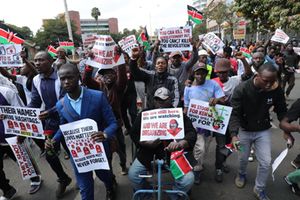
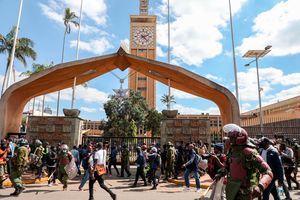
One June 25, 2024, Catherine Wanjeri, a MediaMax journalist, was on duty covering the anti-Finance Bill protests within Nakuru town when she became a victim of police excesses.
Ms Wanjeri was shot with three rubber bullets on the thigh by a suspected police officer while they were following the protests unravelling in Nakuru town.
The K24 journalist was hospitalised for two weeks where she underwent surgery to remove the rubber bullets that had lodged in her body. She nursed the injury for two months before she could walk again without using assistive devices.
Kameme TV reporter journalist Catherine Wanjeri Kariuki writhes in pain after police shot her on the left thigh on July 16, 2024.
Photo credit: Boniface Mwangi | Nation Media Group
Later on, the reporter had to deal with relapse in recovery, trauma and threats to her life after unknown individuals started trailing her.
However, despite reporting the threat at Nakuru Central Police station, the suspects were never arrested forcing her to take precautionary measure of relocating from where she lived.
She resumed her work six months later, where she embarked on a long journey in search for her justice which has remained elusive two years on.
In an interview with Nation, Ms Wanjeri narrated the frustrations that she faced in her push for her justice even as she struggled to cope with life after the deadly experience.
“I was forced to go back to work despite not having fully recovered since I needed to pay my bills. While at it, I also made countless trips to the police and the Independent Police Oversight Authority (Ipoa) offices to find out the progress of my case but was always disappointed with the feedback. The investigations moved at a very slow pace and sometimes it would take demonstrations from my colleagues for us to get an update,” said Ms Wanjeri.
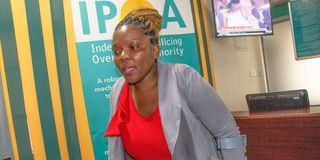
K24 journalist Catherine Wanjeri Kariuki who was shot by the police during the anti-government protest in Nakuru.
Photo credit: Boniface Mwangi | Nation Media Group
Ms Wanjeri lives in fear following threats on her life. She reported the matter to the authorities but has not received any feedback.
“I have been living fear not knowing who exactly wanted to kill me and why they wanted so. I am also not sure whether those who were trailing me are linked to the police who shot me,” she said.
The last two years have been some of the most difficult times of her life; contending with trauma, fear and fruitless push for her own justice.
“I have come to believe that my own government is not willing to support me nor bring the suspects to justice. I gather that the police know the suspect but have always been protecting him,” she said.
The Ipoa appears to have washed their hands off the case after claiming to have forwarded the file to the Office of the Director of Public Prosecution for directions. The ODPP on the other hand claims to be reviewing the file.
On June 9, Ms Wanjeri got another health complication which doctors suspected was linked to the shooting incident. She was hospitalised again and remained at the Intensive Care Unit for two weeks after a relapse in the recovery, just a month after leaving hospital.
“At the moment I cannot cover anything close to protest and any sudden sound seems to affect me. I am always paranoid on many situations even some that appear normal to other people,”
June 25, reminds Ms Wanjeri of an experience that changed her life forever, one that left her feeling unsafe in her own country.