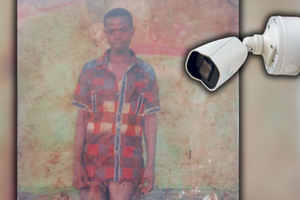
When his lover’s family rejected him as “not good enough,” despite the two having a child together, John Mwangi Githaiga vowed that no other man would have her.
He carried out that vow in the cruelest manner — by slitting her throat, setting her on fire inside his house at Lusiru location in Njoro, Nakuru County and fleeing the scene.
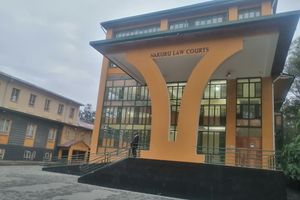
Mwangi was arrested three days later while contemplating suicide and charged with murder. Although he denied involvement, the prosecution linked him to the crime through circumstantial evidence, eventually securing his conviction.
What began as a blossoming relationship between Mwangi and Mercy Njeri Mbatia later soured after her parents disapproved of him.
The two had lived together for nine months and had a baby but Njeri’s mother testified in court that she rejected Mwangi’s marriage proposal because she felt he was “not good enough” for her daughter. Despite her objections, Njeri went ahead and moved in with him.
After nine months, disagreements arose and Njeri left Mwangi’s home to start afresh. She returned to her mother’s house and began a charcoal business.
On the morning of October 13, 2020, Njeri told her sister she was going to Mwangi’s house to collect charcoal but when she she failed to return, she grew worried. Later that morning, around 11am, neighbours broke the devastating news that Njeri was dead inside Mwangi’s house.
Her sister rushed to the scene where she found Njeri’s body lying lifeless. A Nakuru court was told her throat had been slit and her body was partly burnt.
Another witness told the court that while working on his farm, he heard screams from a neighbouring homestead. He rushed over to find Mwangi’s house on fire with neighbours attempting to put it out.
Once the flames were extinguished, they discovered Njeri’s body under a smouldering blanket on a bed. The witness informed the area chief, who then called the police. By that time, Mwangi had fled.
Mwangi was arrested in Mau Narok after police received reports of his whereabouts in Mathangauta area. He was allegedly carrying an insecticide, a sword and a manila rope, suggesting he was contemplating suicide. These items were later presented as exhibits in court.
A post-mortem conducted by government pathologist Titus Ngulungu revealed that Njeri died from massive blood loss caused by sharp trauma to the neck.
In his defence, Mwangi denied ever having a relationship with Njeri or even knowing her. He also claimed he was not in contact with her on the day of the murder saying he was at a rented apartment.
However, Justice Julius Nangea dismissed his defence as an afterthought, pointing out that Mwangi had not disclosed the information earlier to police.
“Such notice need not be formal but may be implied from the accused’s cross-examination of witnesses or otherwise made known to the prosecution to allow for investigations to counter or confirm the defence. The incriminating circumstances unerringly point to the accused’s guilt,” ruled Justice Nangea.
The judge convicted Mwangi, finding the prosecution’s evidence sufficient to prove the charge of murder.