For three decades, Cinnamon was much more than just another elephant in Samburu National Reserve.
To the researchers, wardens, tourists and fellow elephants who knew her, she was perhaps an icon — a tuskless matriarch whose life embodied resilience, compassion and quiet leadership in the Samburu East reserve.
Last week, Cinnamon's long journey came to an end.
The 59-year-old matriarch of the Spices family, and one of the oldest females ever recorded in Samburu, succumbed to injuries from a fractured leg. She leaves behind a legacy that will undoubtedly stand out in the story of African elephants.
"She lived an extraordinary life. She survived poaching epidemics, devastating droughts, and the growing challenges of human-elephant conflict," Save the Elephants, a research and conservation organisation said in a tribute, as they recalled how their research team began monitoring her more than 30 years ago when their long-term elephant research in Samburu first took shape.
Born tuskless, a trait that may have spared her from poachers in a world where many of her kind were slaughtered, she endured a life few others experienced.
Researchers believe that her survival and leadership helped to stabilise her family throughout turbulent decades of drought, poaching raids, and escalating human–elephant conflict.
Over time, Cinnamon became a familiar presence in the organisation's research, teaching scientists invaluable lessons about elephant society, from the structure of matriarchal families to the deep emotional bonds that unite them.
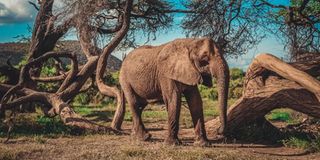
Cinnamon, a 59-year-old tuskless elephant matriarch, and one of the oldest females recorded in the Samburu National Reserve, has died from a fractured leg.
Photo credit: Meha Kumar | Save the Elephants
The great orphan adoption
In 2011, when poachers wiped out almost an entire elephant family, she stepped in where nature had been interrupted by brutality and adopted four calves — Habiba, Hadithi, Layla and Swahili Boy — raising them as her own and astonishing researchers with her empathy.
"She showed remarkable compassion by adopting four orphaned calves after poachers killed almost their entire family," Save the Elephants noted.
The adoption gave the calves a chance of survival and reinforced Cinnamon’s reputation as a nurturer and emotionally intelligent leader.
During the prolonged drought of 2022–2023, Cinnamon disappeared for two years, only to return to the Samburu National Reserve in 2024 alive and well — further testament to her resilience.
This time, however, she will not return.
What remains are the seven calves she gave birth to, the orphans she has nurtured since 2011, and the valuable insights she provided researchers into survival and care in the animal kingdom.
David Daballen, Save the Elephants' Director of Field Operations, eulogised Cinnamon, describing her as a “tolerant and amazing leader” who had shaped the lives of countless elephants in the Samburu National Reserve.
Having spent several years tracking and studying Cinnamon, Daballen said that she had managed to evade the deadly wave of poaching that had decimated elephant populations in northern Kenya. Instead, she had risen to become one of the most respected leaders of her herd.
“She has been leading other elephants for years, guiding a family of 15 or more,” he said.
According to Daballen, Cinnamon’s role grew even more during the height of poaching between 2009 and 2013, when she stepped in to adopt and nurture orphans who were not even blood-related, ensuring they found safety and guidance.
“She raised orphaned calves until they matured and could navigate the wild independently. She played a key role in passing down knowledge to other elephants. She was always there for the orphans,” Daballen noted, describing Cinnamon as a matriarch whose compassion extended beyond her own family.
Although elephants use their tusks as both weapons and tools, Cinnamon’s lack of them spared her from poachers and allowed her to live one of the longest lives ever recorded for a wild elephant in Samburu.