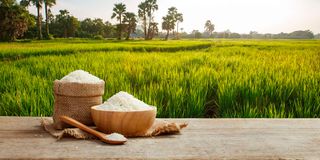
Agriculture remains the cornerstone of Kenya’s economy, with farmers growing a variety of crops to feed their families and earn a living.
However, for rice farmers in Taveta, Taita Taveta County, the promise of profit has remained elusive. Despite cultivating thousands of acres, local farmers say they are yet to see meaningful returns.
They cite soaring input costs, a rigid market structure, and minimal government support as key obstacles undermining the viability of their venture.
The stalled construction of a Sh45 million rice milling plant in Taveta has left hundreds of farmers grappling with mounting losses and a market flooded with cheaper, “better-processed” rice from neighbouring Tanzania.
Due to the lack of modern milling equipment, farmers are forced to sell their paddy rice at poor prices—sometimes as low as Sh40 per kilo—to brokers from Tanzania, as well as Mwea and Kisumu.
The Tanzanian traders process, grade, and package the rice across the border, then re-export it to Kenya at premium prices, flooding border markets while local farmers remain trapped in a cycle of loss and exploitation.
Despite cultivating over 1,115 hectares of rice in Madarasani, Buruma, Majengo, Kimorigo, Patani Hill, and Marodo twice a year, farmers in the area say they have yet to reap meaningful returns from their labour.
With an estimated yield of 35 bags of 90 kilogrammes per acre, the farmers say they are forced to sell their paddy rice at throwaway prices to brokers due to the lack of local processing infrastructure.
Uswi Cooperative Rice Farmers Association chairperson Dishon Mzozo said even the National Cereals and Produce Board (NCPB), where they used to sell their paddy rice, no longer has a store in Taveta.
He added that they were directed to take their produce to Voi, which is over 100 kilometres away.
“Due to all these challenges, the brokers take advantage of our situation, process the rice in their factories, and bring it back to Kenya packaged and polished,” he said.
He added that the farmers need a lot of training on rice farming, from seedbed preparation to harvesting.
Currently, only one ageing machine is available at Kimorigo for processing rice in the region. Donated by the Japanese government through JICA in 2016, the diesel-powered unit can handle just three tonnes per day and lacks the capacity to grade or polish the rice.
“It mixes whole and broken grains and cannot polish the rice. We end up selling unprocessed rice at a loss, and most of the rice milled here is just for home consumption,” said Stephen Mzirai, chairperson of the Kimorigo Rice Farmers Association.
He also said they rely on agricultural inputs from Tanzania and Voi, where fertilisers and seeds are more accessible and affordable.
Mr Mzirai noted that the county’s depot at Timbila stocks fertilisers suited for maize farming, leaving rice growers with few options.
The farmers, who grow Komboka and Saro 5 rice varieties, said getting the seeds is also a challenge.
“We have to go to Tanzania for the Saro 5 variety and to the Voi NCPB depot to buy urea fertiliser. In Taveta, agrovets sell fertiliser at Sh5,000, while the government has subsidised it at Sh2,500,” he said.
Most of the farmers in the area still rely on manual cultivation methods, making the process labour-intensive and costly.
“We are doing all the hard work, but the profits go to brokers across the border. It’s disheartening,” said Mr Mzirai.
The farmers have appealed to both the county and national governments to intervene and help them access reliable markets and modern equipment.
Mr Mzirai said the stalled construction of the milling plant has dashed their hopes of breaking free from the cycle of exploitation.
“Without a modern facility to process and grade our rice, we will remain at the mercy of foreign brokers and a market that favours imported brands,” he said.
In response, County Executive for Agriculture Dawson Mzenge said the department is in the process of leasing the plant to a private investor.
He noted that they are finalising the expression of interest to allow the investor to run the plant, which is 90 percent complete.
“We have identified two investors—one to run the rice milling plant and the other the banana plant. We are at the valuation stage and will soon reveal them to the public,” he said.
Mr Mzenge added that the county is working with the national government to desilt canals in the rice farms to mitigate flooding and expand the area under rice cultivation.
“Taveta has the potential to produce more rice. Even the road is now passable, and as you are aware, previously farmers could only access their farms on foot or by motorcycle,” he said.
A visit to Taveta Market along the Taveta-Holili border paints a grim picture, as rice from Tanzania dominates the shelves, attracting buyers with its aroma and taste, while local farmers struggle to sell their produce.
“We stock different types of rice, but the Tanzanian variety, known as kienyeji , moves faster than any other brand,” said Masdeen Mutua, a trader at the market.