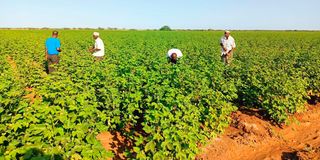
Caption for the landscape image: The rise and fall of Hola’s cotton empire Friday, August 08, 2025 Scroll down to read the article Cotton farmers from pastoralist communities at Hola Irrigation Scheme inspect their farms. Photo credit: Stephen Oduor | Nation Media Group By Stephen Oduor Correspondent Nation Media Group Summary Article Related What you need to know: Before the year 2000, Hola thrived on a flourishing cotton industry anchored by the renowned Hola Cotton Ginnery.t its peak in the 1970s, the ginnery processed nearly half of Kenya’s cotton, drawing produce from Hola and Bura. Once a town on the rise in Tana River County, Hola stood at the cusp of prosperity before its fortunes dramatically changed. Before the year 2000, Hola thrived on a flourishing cotton industry anchored by the renowned Hola Cotton Ginnery. PREMIUM Tana River's irony of food scarcity in a land of plenty The county also boasts of a 79km coastal strip in Kipini. PREMIUM Hardy rice variety brings hope to Hola farmers The rice variety can withstand the area’s semi-arid climate and has better yields compared to other varieties. Uncharted irrigation path that could tackle chronic food insecurity Investing extensively in food production such as irrigation farming is one of President William Ruto’s main recommendations for reducing reliance on rain-fed agriculture . Recommended for you PREMIUM Drone strikes stall two fuel tankers bound for Kenya PREMIUM Family’s Russia hope shattered by DNA confirmation of Shakahola death PREMIUM Civil servants face vetting over Sh6.2bn payroll fraud PREMIUM The Coast question: Who will inherit Raila’s loyal base? Login to join the discussion Please enable JavaScript to view the comments powered by Disqus. In the headlines Elections News Counties Business Opinion Sports Life & Style Health Podcasts Photos Newsletters Puzzles PREMIUM Civil servants face vetting over Sh6.2bn payroll fraud State renews push to identify irregular recruitment and weaknesses in management of public funds. PREMIUM Machetes, extortion and fear: Inside Homa Bay’s gang crisis Local business operators bore the brunt of the lawlessness. PREMIUM Mosiria exposes bitter fallout with Sakaja Nairobi County Chief Officer declares intention to challenge Governor Sakaja in 2027.
PREMIUM Tana River's irony of food scarcity in a land of plenty The county also boasts of a 79km coastal strip in Kipini.
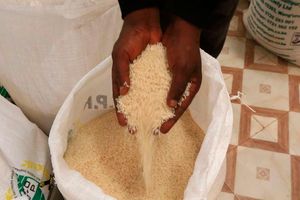
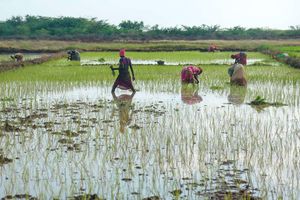
PREMIUM Hardy rice variety brings hope to Hola farmers The rice variety can withstand the area’s semi-arid climate and has better yields compared to other varieties.
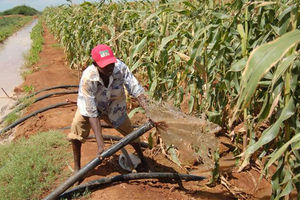
Uncharted irrigation path that could tackle chronic food insecurity Investing extensively in food production such as irrigation farming is one of President William Ruto’s main recommendations for reducing reliance on rain-fed agriculture
PREMIUM Civil servants face vetting over Sh6.2bn payroll fraud State renews push to identify irregular recruitment and weaknesses in management of public funds.
PREMIUM Machetes, extortion and fear: Inside Homa Bay’s gang crisis Local business operators bore the brunt of the lawlessness.
PREMIUM Mosiria exposes bitter fallout with Sakaja Nairobi County Chief Officer declares intention to challenge Governor Sakaja in 2027.