In remote villages across Turkana County, donkeys are more than beasts of burden; they are lifelines.
Donkeys play a critical role in the daily lives of Turkana residents, especially in transportation and logistics across arid and semi-arid areas. But rising cases of theft and brutal slaughter have pushed local owners to adopt technology in a bid to save their animals.
A new Artificial Intelligence-based system called Punda Wangu is offering hope by tracking donkey ownership and helping reunite stolen animals with their rightful owners.
Donkey owners in Turkana County are embracing the new technology to tackle rampant theft and illegal slaughter, which has drastically reduced the local donkey population.
With support from the Institute of Pastoralism Development and Research (IPDR), the new AI-powered Punda Wangu App has been developed to track donkey ownership and prevent theft.
Residents like Mr Emmanuel Kisike have already suffered devastating losses in the wake of the growing donkey skin trade.
In 2018, Mr Kisike lost seven of his donkeys, three of them skinned alive and left for dead, becoming one of many victims of Turkana’s growing and brutal donkey skin trade.
“The thieves just took the skin and left the meat,” he said.
Mr Kisike recalls how the theft of donkeys escalated sharply after the establishment of a donkey abattoir in 2017, with some locals lured into the trade by the promise of quick money.
“Even in major towns like Lodwar, this practice continues. No one has been prosecuted since I lost my donkeys. We have protested and participated in forums to protect our animals, but nothing is changing,” he noted, adding that illegal slaughter has only worsened over the year despite protests and community forums, fueled by a black market for donkey hides and the lure of quick money.
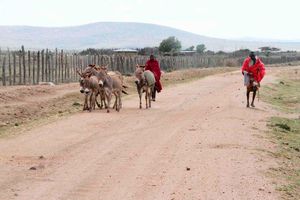
A resident of Loima near the Kenya–Uganda border Mr Paul Elimlim, said donkeys in remote villages often roam freely, making them easy targets for thieves.
“Although our donkeys have unique markings, there has never been a coordinated system to prove ownership. This is why thieves skin the donkeys in the bush and leave the meat behind. The skin is highly sought after by a secretive syndicate and is in high demand in China for making Ejiao, a traditional Chinese medicine,” Mr Elimlim said.
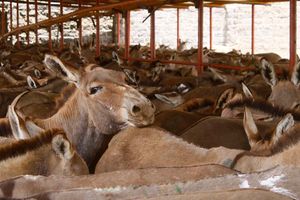
Four people found transporting suspected donkey meat have been arrested in Makutano area of Kirinyaga County.
Photo credit: File | Nation Media Group
He said past efforts to curb theft, including forming vigilante groups, staging protests and collaborating with local administrators, have not yielded long-term results.
One protest even led to the closure of the Sh200 million Lodwar-based Silzha Abattoir, which was allegedly facilitating the illegal donkey skin trade.
“We now need structured technological innovations to support enforcement. All donkey owners should embrace the Punda Wangu tool, which aims to ensure all our animals are documented,” he said.
The new system includes a dedicated call centre. Once a donkey is reported missing, the owner sends a photo that is added to a central database.
Field agents then use the AI-powered tool to match the image with photos taken in the field. If a match is found, the donkey is reunited with its owner.
IPDR Director Mr Mariko Akileng explained that the main objective of the Punda Wangu system is to monitor and report theft for prompt action by security agencies.
“We are currently engaging locals to allow us to take photos of all donkeys in Turkana. We know it will work because each clan uses unique markings. With the help of AI, we will use these features to trace missing donkeys,” Mr Akileng said.
“Technically, Punda Wangu acts like a library for donkey welfare issues,” he said.
Beyond theft tracking, the system will also provide accurate data on donkey populations.
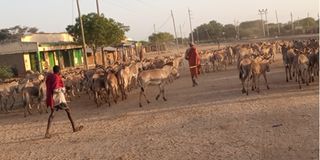
Donkey owners in Turkana County during their past efforts to fight donkey theft and illegal slaughter, through protests at villages and towns.
Photo credit: Sammy Lutta | Nation Media Group
Mr Akileng noted that this would help veterinarians, especially when local disease names, often in native languages, need to be translated using the AI tool.
He warned that the illegal donkey hide trade continues to threaten not only the donkey population in Turkana but also the economic stability of communities that rely on the animals for survival.
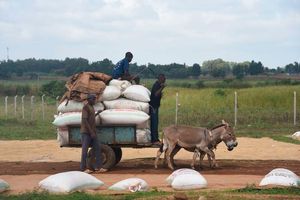
“We are worried about losing our donkeys. They are vital to our livelihoods. They carry children, fetch water, and transport goods and young livestock during migration,” said Ms Maximilla Lokwatuba from Napetet village.
Organizations such as the Agency for Cross-Border Pastoralists Development (APaD) and Brooke East Africa have been instrumental in raising awareness about the dangers of the donkey skin trade and promoting better donkey welfare across the region.