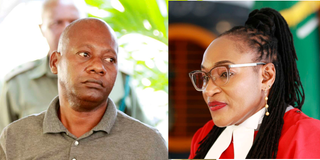
Prosecutors in the case against cult leader Paul Mackenzie and his co-accused had asked High Court judge Diana Kavedza-Mochache to sentence him to death.
One of her reasons was that, given the cult's belief that death would reunite them with Jesus, a death sentence might have been welcomed by the convicts.
Live: 200 years for cult leader Mackenzie over Shakahola massacre
“For persons who regard death as deliverance, a death sentence may be perceived not as punishment, but as a triumph and a form of martyrdom,” the judge said as she delivered her sentence on Friday.
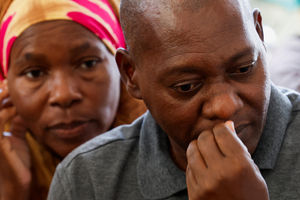
Lady Justice Diana Kavedza Mochache reads the sentence for cult leader Paul Mackenzie and 28 other co-accused who were convicted over 191 deaths in Shakahola Forest, Kilifi County.
Photo credit: Kevin Odit| Nation Media Group
According to the judge, the death penalty would have failed to achieve deterrence, “particularly where the convicts regard death as a pathway to heaven and reunion with Jesus and their deceased children”.
In considering the prosecution's plea for a death sentence, Justice Kavedza referred to the Supreme Court's 2017 decision, commonly known as the Muruatetu case, which outlawed the mandatory death penalty while leaving room for its application in exceptional cases.
“Indeed, if any case in the history of this country approaches that threshold, this is it,” the judge said. “Nevertheless, the court declines the invitation to impose the death penalty on any of the victims. In so doing, the court expresses no opinion on the wider debate concerning the constitutionality or desirability of capital punishment, which, as the prosecution correctly submitted, falls outside the scope of these proceedings.”
Justice Kavedza further argued that punishment should be felt as a tangible loss, meaning that sending the convicts to the gallows might, in some way, have rewarded their beliefs.
“Mackenzie categorically expressed an intention to continue fasting, whether in custody or upon release. Convicts 18, 25, 28 and 30 similarly indicated the intention to follow the same course in the hope of reuniting with their deceased children,” the judge said.
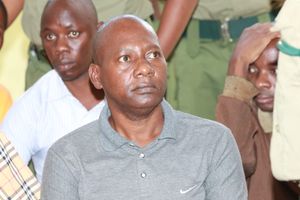
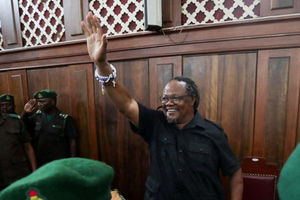
Cult leader Paul Mackenzie (right) and 28 other suspects were convicted in the 191 deaths in Shakahola Forest, Kilifi County.
Photo credit: Kevin Odit| Nation Media Group
She also noted that executing the convicts would eliminate the possibility of their disengagement from the cult and rehabilitation.
“It would also extinguish the possibility that a living convict may disclose the location of the remains of the missing children. The families that are still waiting for answers are better served by preserving that possibility by any other form of sentence,” the judge said.
Justice Kavedza acknowledged that the sentences could, in practical terms, amount to life imprisonment for most of the older convicts.
High Court judge Diana Kavedza-Mochache (right) refused to issue a death sentence for cult leader Paul Mackenzie.
Photo credit: NMG
“The court is mindful that for the older convicts, the sentences imposed may, in practical terms, amount to imprisonment for the remainder of their natural lives. That consequence, however, flows from the gravity of the offending and the sentences warranted by the individual culpability. It is not the purpose of concurrent and consecutive sentences,” she said.