More than 400 lives lost. Families shattered. Fortunes surrendered. A preacher whose deadly influence went unchecked. Shakahola was more than a forest of mass graves. It was a tragedy of manipulation, institutional failure and the exploitation of faith. In a special six-part series, the Nation goes beyond the horror to uncover the people, money, machinery and failures behind Kenya's deadliest cult tragedy.
This is the second instalment; in case you missed the first one, check it out here.
For seven years, Paul Mackenzie’s radical and deadly activities concerned police, court officers, security committees and child protection agencies.
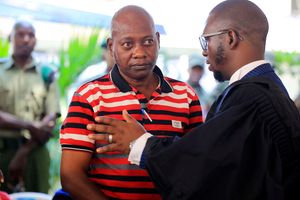
Pastor Paul Mackenzie follows proceedings when High Court Judge Justice Wendy Kagendo visited his homestead within Shakahola Forest in Malindi Sub-county June 24, 2026.
Photo credit: Kevin Odit | Nation Media Group
Reports of missing relatives, children forced into Shakahola Forest, and a court order for exhumations preceded the discovery of mass graves.
Before that discovery, authorities did little to intervene. Radicalised followers were allowed to follow Mackenzie into Shakahola Forest, where hundreds met only starvation, assault and death.
Interior CS Kipchumba Murkomen and PS Raymond Omollo did not respond to Nation’s queries on whether the government failed to act on several warning signs over years that could have saved hundreds from starvation, torture and death.
On October 19, 2023, a Senate Ad Hoc Committee investigating the tragedy pointed to years of missed opportunities to save lives, with only a few fragmented interventions by State agencies.
Initial complaints centred on children being kept out of school, adults abandoning employment and followers rejecting medical treatment after radical teachings.
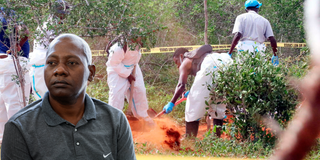
Bodies exhumed from mass graves in Shakahola forest, Kilifi County are loaded into a vehicle on May 12, 2023.
Photo credit: File | Nation Media Group
Mackenzie directed his followers to quit their jobs, reject healthcare and oppose government programmes, including deworming campaigns, the national census and the Huduma Namba.
Other allegations included holding people hostage, trespassing and subjecting followers to inhumane conditions.
Kilifi County’s security committee summoned Mackenzie to explain his teachings and allegations of torturing followers.
“Evidence availed to the Committee indicate that Kilifi County Security Committee had prior knowledge of Paul Mackenzie’s activities but failed to act on the information,” the report stated.
Previously, Mackenzie had run-ins with the law over allegations involving education, radicalisation, child neglect and the distribution of films promoting extreme beliefs.
On March 14, 2017, he was charged with offering basic education at an unregistered institution, his Good News International Ministries in Malindi. He entered a plea bargain with the Office of the Director of Public Prosecutions and was fined Sh20,000 with a directive to maintain good behaviour.
A map showing villages that were carved out of Shakahola Forest by adherents of a suspected cult, many of whom were allegedly convinced by their leader to fast to death or murdered.
Photo credit: File | Nation Media Group
On October 17, 2017, he was charged in Malindi Criminal Case 790 of 2017 with radicalisation, operating an unregistered school, practising as an unregistered teacher and failing to provide children with basic education.
He was acquitted on October 29, 2021, for lack of evidence.
That year, 43 children aged between one and 13, including three of Mackenzie's children, were rescued from his church in Mayungu. They had been denied education, but were receiving Mackenzie’s radical teachings.
In a separate incident, the State sought to detain Mackenzie and 20 others after 73 children were found at a church.
The court ordered age assessments for four suspected minors, issued care and protection orders and allowed the other suspects to be detained for seven days.
On November 15, 2019, the Kilifi County Court Users Committee discussed allegations of child radicalisation through Mackenzie's church and television station.
The matter was escalated to the National Government Implementation Committee and the Communications Authority. The station's license was subsequently revoked, but the committee received no feedback on its proposal to deregister the church or Cabinet's decision on the same.
Pastor Paul Mackenzie when he appeared before a Mombasa court on November 10, 2025.
Photo credit: Kevin Odit | Nation Media Group
In another 2019 case, Mackenzie was charged with incitement, possession and distribution of unclassified films, and operating an unlicensed film studio.
He denied the charges and was released on Sh500,000 cash bail or a Sh1 million bond. The case was scheduled for defence hearing on June 26, 2023. By this time, Mackenzie had been arrested and was in custody pending conclusion of investigations into the Shakahola deaths.
But while the cases moved through the courts and different government agencies dealt with separate complaints, the danger was becoming more immediate.
A missing-person report made at Likoni Police Station on March 6, 2022, under Occurrence Book number 26/6/03/2022, concerned Sylvia Adoyo Mwende, who was reportedly taken to Shakahola after visiting Mackenzie.
According to his testimony, he recovered a burial permit in Sylvia's name and a handwritten account indicating that she had died at Shakahola and had been buried without her body being taken to a mortuary.
The case raised questions about whether the burial permit had been verified with the assistant chief who supposedly issued it, and whether the grave had been investigated or the body exhumed.
By March 2023, reports of children in danger in Shakahola had reached Lango Baya Police Station. Francis Wanje, who was searching for his grandchildren, obtained court orders to exhume the bodies of two children believed to have been buried in the forest.
Police took five days to visit the area after a report concerning an eight-year-old boy and the suspected graves.
Officers who accompanied Wanje and Victor Kaudo of the Malindi Human Rights Centre allegedly received a phone call and exited the area, leaving the two civilians behind.
The Senate could not establish who made the call. An exhumation order issued on March 21, 2023, was only implemented on April 14, 2023, when the scale of the tragedy emerged.
In 2023, the State moved to court over the deaths of two children allegedly starved and suffocated before being buried in shallow graves in Shakahola, accusing Mackenzie of killing them.
It sought his detention for 14 days, but Mackenzie was released on Sh10,000 cash bail and ordered to report to police when required. The DPP’s application to review the decision was dismissed by the High Court.
A worker digs the ground to exhume bodies from the mass-grave site in Shakahola, outside the coastal town of Malindi, on April 25, 2023.
Photo credit: AFP
On April 17, 2023, the State obtained orders to exhume 14 unidentified bodies for post-mortem, toxicology and DNA tests. It also sought to detain Mackenzie and 13 others over offences including murder, manslaughter, child cruelty and neglect.
Seven suspects were detained for 14 days and the others for one week. On April 25, 2023, the court authorised further exhumations on the 800-acre land Mackenzie and his followers had occupied.
The government subsequently deployed security and rescue teams to search for survivors and recover bodies.
The Senate inquiry would later conclude that the criminal justice system failed to deter Mackenzie's activities.
It noted that the State only acted after persistent efforts by victims' families, local human rights organisations and the media over years.
The report was also critical of the conduct of former Kilifi County security officials, saying they had a duty to protect the lives and property of residents, “a duty they failed to perform to the expected standard”.
The Senate questioned the transfer of the entire Kilifi County security committee after the tragedy, arguing that officers suspected of culpability should have been suspended and investigated, rather than moved to other stations.
Several officials, including former police commanders and the Lango Baya police chief, also failed to appear before the committee despite summonses.
The inquiry further exposed gaps in religious oversight, citing an outdated Societies Act, the Registrar of Societies’ limited regional presence and the absence of a mandatory system for reporting violations by religious institutions.
The former National Steering Committee on Nyumba Kumi said a proposed community intelligence system linking village-level reports to national security agencies had never been fully implemented, weakening early detection and response.
Supkem National Chairperson Al-Haji Hassan Ole Naado.
Photo credit: File | Nation Media Group
The recommendations that followed went beyond investigations into Mackenzie. The Senate called for investigations into anyone who directly or indirectly aided or abetted the atrocities. It also urged the development of clear guidelines to help county security committees identify harmful religious doctrines, monitor religious institutions and act promptly on intelligence reports.
Shakahola exposed the tension between religious freedom and the State’s duty to protect citizens from abuse. Warning signs, including children being denied education, rejection of medical care, missing people and suspected deaths, had reached police, courts and security agencies.
While no single complaint revealed the scale of the unfolding tragedy, authorities had several opportunities to connect the reports, investigate the activities and intervene before the mass graves were discovered.
Hassan Ole Naado, National Chairman of the Supreme Council of Kenya Muslims, said the Shakahola massacre could have been prevented had the government acted decisively on early warning signs.
Having appeared before the Senate committee investigating the tragedy and served on the Shakahola task force, he accused authorities of applying selective justice in their response to Mackenzie’s activities compared with suspected Islamic extremism.
“The government could have stopped it,” he said, arguing that radicalisation leading to the deaths of children and adults should have attracted the same urgency as other forms of extremism.
Paul Mackenzie's son not sad after father's murder convictions, says he was a victim at 12
Mr Naado said the State should have recognised that teachings promoting the denial of basic rights, including education and healthcare, were warning signs of radicalisation rather than ordinary religious differences. He argued that followers drawn into such groups were also victims who needed protection and rescue.
“Those who have been radicalised should be saved from the groups that are pursuing other interests,” he said, adding that authorities must act early to prevent further loss of life.
Kilifi County Spokesperson Jonathan Mativo said that “the issue was purely handled at the national government level,” adding that the county was locked out by the Directorate of Criminal Investigations.
“Security is not a devolved function,” he added.