For years, Turkana residents have watched oil investors arrive with promises of jobs, new businesses and a transformed future, only to see oil exploration stall, deadlines slip, and companies leave.
Now, as new investor Gulf Energy prepares to revive petroleum activities in the South Lokichar Basin in December, thousands of residents are once again being asked to make way for the oil project. Affected residents want first things settled first- compensation for land and property earmarked for compulsory acquisition.
The National Government has signalled the start of the compensation process for locals whose land and developments are earmarked for compulsory acquisition ahead of the planned resumption of petroleum activities in December.
About 3,600 Project Affected Persons (PAPs) are facing compulsory acquisition of their land and developments under the Turkana Oil Project. The National Land Commission (NLC) has already begun community engagements expected to inform the issuance of compensation awards, with Sh200 million set aside by the National Treasury for the first phase covering affected development structures.
But for communities that have lived through the highs and lows of Turkana's oil story, the latest promise comes with a familiar question: will compensation finally reach those whose land and livelihoods are affected?
Residents and local leaders are demanding transparency beyond payments. They want clarity on the value of compensation, where displaced families will be resettled, and whether communities will be adequately protected as the oil project moves into its next phase.
The concerns are particularly acute in communities that have already experienced displacement and disruption during years of exploration.
NLC takes compensation process to communities
NLC says its field teams are already on the ground, engaging affected communities, verifying documentation and preparing to serve compensation awards.
Last week, its officials first met Turkana County Commissioner Julius Kavita and the Turkana County Department of Lands and Physical Planning, led by Chief Officer Leah Losuru. The officials then held community barazas with Community Land Management Committees (CLMCs) in Nakukulas and Kapese in Turkana East and Turkana South constituencies, respectively.
A police officer guards crude oil storage tanks at Amosing in Turkana East sub County April 24, 2026.
Photo credit: Sammy Lutta | Nation Media Group
The meetings were intended to brief residents on the planned compensation process and explain the documentation required to facilitate payment.
Mr Jacob Kipaa, from the NLC Directorate of Valuation and Taxation, said the commission's field team was already on the ground and would continue engaging affected communities. He said compensation awards would be served once the documentation required for payment had been verified.
“The NLC field team is already on the ground and will continue engaging affected communities, serving compensation awards upon verification of documentation required for payment. The engagements were aimed at ensuring PAPs are adequately informed and that the compensation process is undertaken in a transparent, orderly and participatory manner,” he explained.
The Sh200 million allocation is expected to cover the first phase of compensation for affected development structures.
For residents, however, the renewed compensation process has revived memories of the optimism and disappointment that followed the discovery of crude oil in Turkana.
The oil boom that raised hopes
Lokichar resident Patrick Lomongin remembers when the discovery of crude oil in 2012 changed the fortunes of a town whose economy had largely depended on motorists travelling along the Kitale-Lodwar road.
Oil exploration brought an economic transformation, with increased job opportunities and growth in businesses in sectors such as hospitality, transport and mobile money banking. For a while, the oil industry appeared to offer Turkana a path towards a different economic future.
But Mr Lomongin said he later realised that all was not well as successive governments struggled with unmet deadlines to move the Turkana oil project from exploration to commercial production.
The uncertainty was followed by Tullow Oil suspending activities in Turkana and eventually exiting Kenya.
For residents, the departure was not simply the end of an investment chapter. It represented the collapse of expectations that oil wealth would transform the lives of communities living around the oil fields.
“Our hopes of state-of-the-art public facilities, including roads, schools, hospitals and empowered local businesses through oil-related revenue shares and benefits from export and compensation for land and environmental damages were dashed when Tullow Oil exited, with locals left poor and without being compensated,” Mr Lomongin said.
He said Turkana residents risked experiencing similar difficulties unless proper legal frameworks were put in place to balance national resource ownership, environmental protection and community equity.
The concern comes as the government and new investor Gulf Energy prepare to resume petroleum activities.
‘Compensation is not a favour’
Former Senator Malachy Ekal said the government and Gulf Energy should heed calls for a transparent compensation process. He said compensation for families living around the oil wells was provided for under the Constitution and should not be treated as a favour to affected communities.
“Compensation of families around the oil well is well guided by the Constitution and it is not a favour. If people are displaced from where they live, those people should be compensated for leaving their habitation to go and live elsewhere. You can't just tell people to leave without assuring them of the compensation or where to go,” Prof Ekal said.
He said leaders from Turkana East and Turkana South constituencies, led by their respective Members of Parliament, together with the wider Turkana County leadership, including Governor Jeremiah Lomorukai and Women Representative Cecilia Ngitit, should speak in one voice in demanding compensation for affected residents.
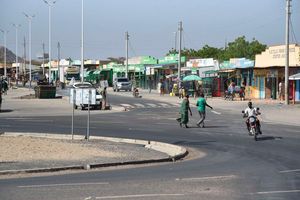
A settlement along Lokichar-Amosing road in Turkana East sub County on April 24, 2026.
Photo credit: Sammy Lutta | Nation Media Group
He said the issue was particularly urgent given the December target for resumption of oil production.
“You can't chase people away from their ancestral land to go and live on trees; they should be given what will enable them to settle somewhere. If the government has told people that it will compensate them so that they move to a different location, that should be done before the planned oil production stage starts in December,” Prof Ekal said.
Residents want resettlement details
For opinion leaders in Turkana South and Turkana East, the compensation process must also answer a question that goes beyond the amount of money paid to affected families: where will displaced people go?
They want information about compensation and resettlement made public so communities can understand what will happen to people whose land is acquired for petroleum activities.
Dr Daniel Ing'olan from Turkana East Constituency said the political leadership should be seeking clarity from the national government and Parliament.
“Where are the people to be relocated from land earmarked for petroleum activities supposed to go?” he asked.
He said the question should be taken up by political leaders in the National Assembly and Senate, who should seek clarity on the compensation process.
“Positions such as MPs should not be misused for selfish interest where a small group of affected people has known or guaranteed benefits because they support the current leadership,” Dr Ing'olan said.
He also said people volunteering to advocate for a proper compensation plan should not be ‘crucified’ by the current leadership, which he alleged was openly taking sides either with the government or Gulf Energy. His concerns are rooted in what he described as the experience of families displaced from traditional grazing fields and ancestral homes during earlier oil exploration.
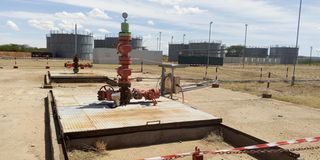
A gate at Amosing well site in Turkana East sub County on April 24, 2026.
Photo credit: Sammy Lutta | Nation Media Group
Dr Ing'olan said families initially displaced from their traditional grazing fields and ancestral homes during oil exploration at the Ngamia, Amosing, Twiga and Ewoi oil fields had been living in abject poverty because of the lack of a clear compensation plan.
Community land at the centre of the dispute
The demand for clarity comes against a wider debate over how community land in Turkana will be protected and managed as the county moves towards commercial petroleum production.
For residents who have already experienced oil exploration, compensation is tied not only to the value of individual homes, structures or parcels of land, but also to questions of ancestral land, grazing areas, relocation and the long-term benefits that communities expect from petroleum resources.
Mr Lynus Ebenyo from Turkana South Constituency said affected residents should receive their rightful compensation and resettlement in accordance with the Community Land Act.
He said the process should be completed on time so affected families can make arrangements for their lives instead of being left uncertain about their future.
“It is important that the affected people get what they were promised when the process of compulsory land acquisition began on time so that they can support their lives and be allowed to move on normally,” he said.
Gulf Energy takes over the next chapter
The compensation debate comes as Gulf Energy prepares to take the South Lokichar project into its next phase.
In April, when Gulf Energy broke ground at Amosing village in Turkana East Sub-County, State House Deputy Chief of Staff Josephat Nanok said he was pleased to witness a new development in a process that began 17 years ago with exploration.
“I am happy we got oil, and now we are in the process of ensuring that we take it to the market. I have known the company for a very long time while they were doing other petroleum activities. As a Kenyan company, it is a plus, and we should advocate for building our own multinational company,” he said.
Mr Nanok also urged the Turkana County Government executive and assembly to ensure that community land is registered to avoid future conflicts. He said locals should be able to reinvest benefits from compensation in developing their remote villages.
His remarks also pointed to the wider economic changes expected once the project enters its commercial phase.
“Let's plan towns and centres, as the commercial stage will bring investors to the county who will also focus on oil-related businesses. I will ensure that there are no fishy deals at the national level when I am there. Gulf Energy should also continue engaging local leadership,” he said.