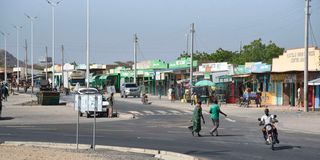
Lokichar in sun-scorched Turkana County presents a polished image of a town transformed by oil wealth.
The busy petrol stations, modern hotels, bars, numerous bustling business premises, social amenities and well-paved roads that cut through the once sleepy town stand as symbols of oil-driven prosperity.
Nicknamed “oil city” after Tullow Oil discovered crude reserves, Lokichar, with its modern outlook complete with street lighting, may impress visitors, but a journey along the Lokichar-Lokori road that leads to the oil fields and neighbouring villages tells a far uglier story.
Beyond the town’s busy streets and smooth tarmac roads, a harsh reality of neglected and starving villages living at the mercy of bandits unfolds.
As oil bubbles underneath the ground they walk on, awaiting extraction, families in neglected villages lying deeper within the South Lokichar Basin are thirsty and starving. Their livestock roam dry pastures, and herders are always on the lookout for bandits.
Under the unforgiving sun and searing temperatures, the true picture of drought emerges as women from Nakukulas and Lopii villages haul 20-litre jerrycans along the tarmac road, their feet caked in dust and backs bent in desperation. Bandits stalk grazing fields and water points.
Water tanks erected at intervals along the road are often either empty after residents and their livestock have drained them or overcrowded when freshly replenished.
A scenic view of the roads in Lokichar town along the Lodwar-Lokichar-Kainuk-Kapenguria-Kitale-Eldoret road on February 16, 2026.
Photo credit: Jared Nyataya | Nation Media Group
Residents say decades of neglect, limited water supply, poor roads and insecurity have left them at the mercy of both drought and armed raids, even as new oil projects promise billions in investment.
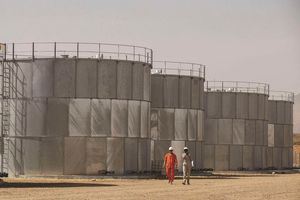
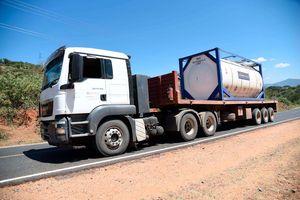
The Lokichar-Lokori tarmac road, built to facilitate the movement of crude oil between Lokichar and the Amosing oil storage site under the Early Oil Pilot Scheme, crosses seasonal rivers that can cut off access without warning. When floods come, water trucks cannot pass, and villages wait days for supplies.
Insecurity fears make life even harder. Last month, raiders attacked Lopii village and stole more than 400 heads of cattle. Families in Nakukulas now live in constant worry that they could be next.
Nakukulas is among the few villages benefiting from the Nakukulas Reticulation Water Project, a partnership between Turkana County government and Tullow Oil to serve pastoral communities as part of drought response.
Yet locals still do not know when water will finally be piped to their homes, and properly constructed troughs capable of serving large herds of camels and cattle remain a pressing need.
“We want adequate water that can also support irrigation so that women can grow nutritious vegetables. At the moment, we are facing drought, and our children are starving because milk production is low and access to vegetables and fruits is poor,” said Ms Margaret Ekaato, a Nakukulas resident.
Lopii village, also located along the Lokichar–Lokori road, was bypassed during the tarmacking works. It is accessible only via a poorly maintained 15-kilometre stretch that locals say is controlled by bandits. For safety reasons, development partners must hire security escorts to reach the area or cancel support missions altogether.
A view of the road leading to Lokichar town along the Lodwar-Lokichar-Kainuk-Kapenguria-Kitale-Eldoret road on February 16, 2026.
Photo credit: Jared Nyataya | Nation Media Group
The village’s sole water source is a concrete tank filled by a bowser, an insufficient supply for both people and livestock.
Women and girls say insecurity has robbed them of freedom, and they live like wildlife without reliable water and with little food.
“I don’t have freedom. I cannot decide when or where to fetch water because bandits are everywhere. The water delivered by trucks is only enough to quench thirst. Our dignity is compromised, even bathing is a luxury,” said Ms Jane Nawoi from Lopii.
Residents say they feel abandoned by government authorities, who are only now re-emerging amid plans to resume petroleum activities.
“We want the anticipated water piping from Turkwel Dam to cover all villages in Turkana East, including Morulem, where irrigation schemes can support farming. Women should be able to supply vegetables to workers’ camps during commercial oil production,” Ms Nawoi said.
“Ever since oil was discovered, we have not had piped water. It is time for Gulf Energy, the new operator, to drill boreholes in all settlements and pipe water to homes and public institutions. This would transform our lives if the national government also improves security,” she added.
A view of the roads in Lokichar town in the semi-arid Turkana County, on the Lodwar-Lokichar-Kainuk-Kapenguria-Kitale-Eldoret road on February 16, 2026.
Photo credit: Jared Nyataya | Nation Media Group
Ms Nawoi added that if communities are displaced to pave the way for petroleum activities, they must be resettled in secure areas, with full compensation.
Residents are also calling for major projects befitting oil-rich villages, among them a modern technical training college, upgraded schools and a Level Six hospital. They cite health complications, including unexplained miscarriages, which they believe require better-equipped medical facilities.
Daily alerts warning of suspected bandits near grazing fields and seasonal riverbeds around Lopii, Nakukulas, Lokwamosing, Lokori, and Kahuruko cause constant anxiety.
“Intelligence helps us plan with national police reservists and local administrators on possible response routes in case of attack,” he said. Last month, he lost his friend Emuria Loripon to bandits who ambushed them at a grazing field and stole more than 400 cattle.
In Lokwamosing village, a natural spring provides a steady water supply for livestock but has become a magnet for bandit raids.
“We are fortunate to have a spring but it exposes us to frequent attacks,” said Mr Stephen Ekadeli.