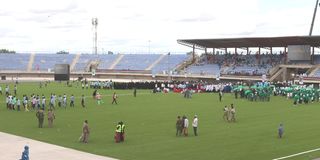
The successful construction of Wajir Stadium in a record three months has shone light to sporting activities in a county classified as arid, located in far northern Kenya.
This is the first stadium in the vast north-eastern region to be built to international standards.
The 10,000-seater facility incorporates a standard football pitch, an eight-lane athletics track, modern changing rooms, VIP lounges, terraces with seating, ample parking and a borehole for water supply.
Attendees during the Madaraka Day celebrations at Wajir Stadium on June 1, 2026.
Photo credit: Manase Otsialo | Nation
Speaking to Nation.Africa, Wajir Governor Ahmed Abdullahi said the stadium would encourage rapid growth of local talents.
“There is a lot of sporting talent here and this stadium will be a boost. We have been in the finals of an inter-county tournament for the last three years yet we didn’t have such a facility. The youths’ skills are going to improve because now we have the right facility,” he said.
Kenyans at Wajir Stadium on June 1, 2026 ahead of the Madaraka Day celebrations.
Photo credit: Billy Ogada | Nation
In Wajir, football teams have always played in dusty fields, making it difficult for them to have proper control of the ball on a modern football pitch.
“Our ability to compete in the national tournaments means football talent is across the country and we will be producing and contributing players to our national team the Harambee Stars,” he said, adding that the new stadium had excited residents. “It is not just about football, but we have interesting and able athletes from Wajir who will be using this stadium to build their talents.”
According to North Eastern Regional Commissioner John Otieno, the Wajir stadium meets international standards and is meant to host national and international events.
“It will be very interesting to play on the artificial turf unlike before where I have played on bare ground. Our playgrounds are so dusty that sometimes we start by sprinkling water before we play,” said Adan Hussein, a footballer.
Attendees following proceedings during the Madaraka Day celebrations at Wajir Stadium on June 1, 2026.
Photo credit: Billy Ogada | Nation
The new look Stadium has thrilled sports lovers, with the majority declaring their intention to register more teams to play locally.
The first event at the Stadium was the hosting of the national Madaraka Day celebrations. A football match has been scheduled for later the same evening.
For decades, public gatherings and sporting events have been held on undeveloped grounds such as the Wajir Baraza Park and Orarey grounds.
“This is an asset for sports development in the county. I am excited and I travelled all the way from Mombasa to come and witness this transformation back at home,” said Abdullahi Shurie.
Attendees during the Madaraka Day celebrations at Wajir Stadium on June 1, 2026.
Photo credit: Manase Otsialo | Nation
The Ministry of Defence has been in charge of the construction, with the support of other ministries including Interior and Sports.
Mr Hussein Aden, a football enthusiast, says a stadium in Wajir town is more than just a field with stands. “This is going to serve as a hub for sports, culture, and community development in a county that has long lacked modern recreational facilities.”
Ms Halima Adow, who owns a shop next to the stadium, sees the facility as a business opportunity. “During games and cultural festivals, the stadium will attract teams and visitors and I will be here making money.”
Just like Ms Adow, hotels, boda-boda riders, food vendors, and small businesses are reaping benefits from visitors attending this year’s Madaraka Day fete.
Mr Hassan Abdullahi said, “This (the stadium) is good because it will strengthen our unity and identity. It will be a place where residents from different clans and backgrounds come together to cheer, celebrate, and build shared pride.”