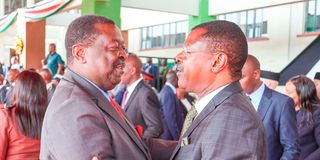
Leaders from Western Kenya have fronted Prime Cabinet Secretary Musalia Mudavadi or National Assembly Speaker Moses Wetangula as choices for President William Ruto's running mate position in the 2027 General Election.
The more than 30 elected Members of Parliament, senators and governors, who met on Sunday, at a Naivasha Hotel, also declared their support for President William Ruto, ahead of the polls.
The move further complicates matters for President Ruto, with Nyanza and Coastal regions also having staked a claim to the deputy president seat currently held by Prof Kithure Kindiki.
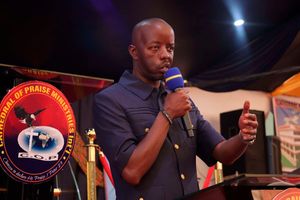
In a joint statement read by Lugari MP Nabii Nabwera, the leaders framed their push not just as a regional claim to power, but as part of a broader strategy of political balance in shaping the country's leadership.
Lugari MP Nabii Nabwera, a member of the National Assembly Public Accounts Committee, during a session at Bunge Tower, Nairobi, on April 22, 2026.
Photo credit: Dennis Onsongo | Nation Media Group
"We the leaders of Western region gathered in a spirit of unity and shared purpose, we re-affirm our unwavering support for the re-election of President William Ruto. Under his leadership, the Western region has witnessed meaningful development and we believe that continuity of leadership is essential to safeguard the gains already made and unlock the full potential of our region," stated Mr Nabwera.
"We also demand for the position of running mate ahead of the 2027 General Election, because we have good numbers and capability for the slot," added the Lugari legislator, signalling a coordinated push for the position by the Western Kenya leaders.
The leaders said, as the 2027 polls beckon, the Western Kenya region would consolidate its bargaining power and ensure its leadership is represented at the deputy presidency level.
A source who attended the meeting told the Nation , that the leaders unanimously endorsed the two senior politicians from Western as suitable running mate candidates due to the position they hold in the country.
"All the leaders present endorsed the two as preferred running mates. We vowed to coalesce and unite behind them ahead of the 2027 polls. We will not accept attempts to undermine them, “revealed the source.
The move is seen by political observers as part of a wider plan to counter growing influence of youthful leaders from the region like Nairobi Senator Edwin Sifuna and George Natembeya.
The leaders also indicated that the region would, in the coming months, approach political negotiations with a firm demand for the country's second -highest office, framing it as both a matter of regional unity and political inclusion.
Mr Wetang'ula emphasised the importance of unity, stating: "We must all unite as a region and move as one voice ahead of the 2027 polls. We have the numbers, all we need is unity."
The move comes amid early political realignments across the country, as elections draw near.
Other leaders who have been floated as possible running mates to President Ruto from other regions include; Homa Bay Governor Gladys Wanga, Mining Cabinet Secretary Hassan Joho and Kirinyaga Governor Anne Waiguru.
The support for the duo comes as negotiations between the Orange Democratic Movement (ODM) and the United Democratic Alliance (UDA)appear to shape pre-election coalition arrangements.
The endorsement comes as UDA leaders associated with DP Kindiki mobilise support for his candidature as Dr Ruto's running mate.
Deputy President Kithure Kindiki.
Photo credit: File | Nation Media Group
A survey conducted two weeks ago by Trends and Insights for Africa (Tifa) revealed that Prof Kindiki is still the leading choice as President Ruto's running mate in the 2027 polls, with 59 percent support, far ahead of Gladys Wanga (12 percent) , Oburu Oginga (3 percent) and Hassan Joho (3 percent).
For about two decades, Mudavadi and Wetang'ula have towered over Western Kenya's political scene, shaping national alliances and steering the region's political direction.
The two viewed as the most senior and influential politicians in the Luhya community have commanded respect for their experience, political acumen and roles in shaping the region and country's governance landscape.
Mudavadi and Wetang'ula took over Mulembe Nation leadership after the death of former Vice President Michael Wamalwa in 2003 and since then they have been seen as the defacto kingpins of the Luhya community.
Mudavadi, who first entered Parliament in 1989, has held numerous senior roles, including Vice President, Finance Cabinet Minister and Party Leader of Amani National Congress, an outfit he founded, earning a reputation as a moderate and experienced statesman.
Wetang’ula, on the other hand is a seasoned politician and Ford Kenya party leader, has similarly been influential, leveraging his roles in government and his partnership with Mudavadi to secure Western’s place in national politics.
After the 2022 General Election, the duo landed plum positions in the Kenya Kwanza administration, having backed President William Ruto and the two men have been holding significant sway in regional and national politics.
However, in recent months their dominance of the Western Kenya region has been contested by a new wave of emerging leaders with fresh energy and grassroots connections.
Figures such as Trans Nzoia Governor George Natembeya, senators Edwin Sifuna(Nairobi), Godfrey Osotsi (Vihiga)and Saboti lawmaker Caleb Amisi have become a thorn in the flesh for Mudavadi and Wetang'ula in the past months, questioning their leadership style and threatening their grip of the Western Kenya region.
Edwin Sifuna observes a moment of silence for Vincent Ayomo, who was shot in Kitengela Rally during the Linda Mwananchi Rally at Amalemba grounds in Kakamega on February 21, 2026.
Photo credit: Alex Odhiambo | Nation
But even as the push happens behind the scenes, the leadership style of MrMudavadi and Wetangula has been brought to question.
"Mudavadi and Wetangula have a reason to get worried as leaders and people have begun questioning their leadership style. The electorate feels there is little to show for the region, even when the two hold senior government positions. They risk losing popularity in the region," Mr Peter Wafula told the Nation .
Governor Natembeya and Senator Sifuna have in recent months intensified their criticism of the region's top leaders, accusing Mudavadi and Wetang'ula of lacking " political independence" and abandoning the electorate.
They have positioned themselves as an alternative voice for leadership in Western Kenya and political observers say their stars are shining bright.
Political analysts say the choice of President Ruto's running mate will depend on several factors including; regional vote blocs, coalition stability and the ability of potential candidates to demonstrate real electoral influence.
"Those angling for the position of running mate, must demonstrate that they can deliver votes from their regions. They must show that they can mobilise and deliver votes from the regions they are drawn from like the Western Kenya,Nyanza, Coast or Mt Kenya," stated Prof Tom Nyamache, a political analyst and don at the Turkana University.
"The endorsements are just subtle audition platforms, but the leaders being fronted must prove their electoral value, “added Prof Nyamache.
According to lawyer and political analyst Steve Kabita, President Ruto must consider numbers in his choice of running mate.
"As 2027 beckons, President William Ruto is keen with numbers. The running mate must come from a vote-rich bloc. Although other things like regional balance will be considered, numbers are very crucial, “explained Mr Kabita.