Hello

Your subscription is almost coming to an end. Don’t miss out on the great content on Nation.Africa

Ready to continue your informative journey with us?

Hello

Your premium access has ended, but the best of Nation.Africa is still within reach. Renew now to unlock exclusive stories and in-depth features.

Reclaim your full access. Click below to renew.

Nation inside - 2026-03-31T075936.475
Caption for the landscape image:

Kenyan returnees: They had good jobs abroad, why did they come back?

Scroll down to read the article

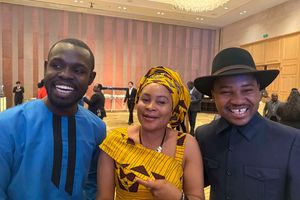
Kenyan returnees Yvonne 'Koko' Metet, Jackline 'Jacque' Gachoka and Magdalene Wambui.

Photo credit: Pool

In December 2010, Jackline Gachoka travelled to the UAE for what was meant to be a month-long vacation. She ended up staying for 10 years.

“I’d taken leave to go and visit my boyfriend,” she says. “While there, he suggested I try looking for a job.”

Though sceptical, she began searching for job opportunities in graphic design, her area of expertise at the time. For a while, nothing came through until a chance encounter at a coffee shop.

“We were having coffee at Starbucks when one of the waiters, who was also a friend, introduced me to someone who was looking for a front desk lady for his Pilates studio,” she recalls. “I did the interview there and then and got the job.”

She used the remainder of her vacation to settle in and resign from her job back in Kenya. In January 2011, she entered a new chapter, working the front desk at fitness studio, Real Pilates in Dubai.

“I was there for ten years,” she says. “Over time, I grew from the front desk to customer service supervisor and eventually to manager, which is the position I held when I left.”

She and her boyfriend later married and had two children. Life was good, but it had its challenges.

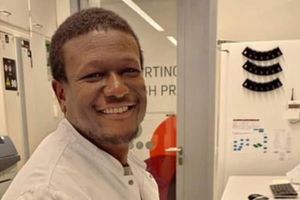
Jackline 'Jacque' Gachoka,

Jackline 'Jacque' Gachoka, General Manager at Dojo Wellness Club, spent 10 years in Dubai before coming back home. 

Photo credit: Pool

“Dubai is very expensive, especially when it comes to rent,” she says. “When we started having children, we had to get our own apartment, and those came with strict contracts.”

These contracts typically lasted a year and required a minimum income, which at the time was approximately 6,000 dirhams (Sh211,735). Oftentimes, one also needed proof of a family unit, with some buildings being dedicated solely to families.

Rent was paid in cheques, one huge lump sum every three months, and a bounced cheque was considered a criminal offense.

“We were paying 5,000 dirhams (Sh176,446) per month, which meant 15,000 dirhams (Sh529,340) in one go,” Jackline says. “And that’s just rent. Gas was about 4,000 dirhams (Sh141,157), electricity 700 dirhams (Sh24,702) and Wi-Fi another 700 (Sh24,750).”

And though her six-hour shifts were quite flexible, aligning schedules with her partner, who worked longer hours, proved difficult.

“I remember a time when he was on the night shift, and I was on the morning shift. We would meet at the train station to say hi before going our way.”

Later, when the children came, having alternating shifts became the better option as it allowed one spouse to handle household responsibilities while the other worked. Otherwise, they would rush home from work, exhausted but with a list of things to do: pick up the children from daycare, prepare dinner, clean, prepare for the next day, and the cycle continued the next day.

“It was a tiring cycle,” she says. “And you find that you have only one day off.”

Raising their children abroad also had its own challenges.

“Most Kenyans carry their pregnancy until about six or seven months, then come back to Kenya to give birth. They raise their babies for about six months before returning to Dubai,” she says. “Without insurance, childbirth can be expensive, and you also need to prove that you are in a union on the day of delivery.”

Recovery and childcare added further strain, prompting Jacque to fly in her friend from Kenya at some point to help until her child turned one and could join daycare.

“My baby’s first bath was done by a Ugandan lady who used to do my hair,” Jacque says. “She’s the one who taught me how to give that African massage-type bath. You can read these things on the internet, but nothing beats one-on-one instruction. Being so far away, I missed a lot of that.”

Finding a daycare that understood an African child’s needs was another hurdle that was only overcome when they moved into a neighbourhood with a strong Kenyan community.

Her social life was also not spared. Between conflicting schedules and extravagant costs, meeting friends was difficult. Jacque, an extrovert, confesses that what kept her grounded was staying connected to her Kenyan circle.

“There was constant communication. We even sent each other flowers and gifts for special occasions across the two countries,” she says. “I also made a point of visiting home every year.”

These visits were made easier by an employment contract that covered her flights and offered her double pay during leave.

Despite the challenges, however, Jacque had never considered moving back home until 2020, when Covid-19 hit. Her industry was among the first ones to shut down, and employees were placed on compulsory leave.

“At first, I was happy to have some time off,” Jacque remembers. “But two weeks turned into three months, and in Dubai, we were not allowed to leave the house at all.”

This meant that food and essentials were delivered to their doorstep. The confinement, especially with children, quickly became overwhelming. When she saw that movement in Kenya, though restricted by a curfew, was still possible, the idea of returning became very real.

“I’d also noticed that my children had adopted some of the cultures in Dubai. My son, for instance, had started shaking his head like an Indian, and would bow down to pray whenever the call from the mosque came through,” she says. “I also wanted to raise them somewhere where they could play outside freely and interact with the natural elements. In Dubai, it’s hot for most of the year, and the heat can be so high that you cannot even walk outside. They were constantly indoors.”

Jacque weighed her options and eventually decided to resign and find a flight home.

When the airlines opened up, Jacque and her children were on the first flight back, their airfare covered by one of her former Pilates clients.

“It was sad and abrupt. It was even harder because no one could welcome me back since we had to go into quarantine,” she says, noting that her first month back was quite depressing.

It took a while to re-integrate into the Kenyan system, but with support from friends and family, it became a little easier. After a couple of businesses failed, she struggled to find both purpose and a means of survival, relying on savings and some rentals to stay afloat. That was until another chance encounter led her back into the wellness industry.

Today, Jacque is the general manager at Dojo Wellness Club, Karen, happy and thriving.

“The biggest challenge in Kenya is that the systems are not as efficient,” she says. “For now, I feel stable in my career, and I am trying to build something so I’m content, but my dream country is Australia. When the systems here frustrate me, thoughts of moving come up. But you think about how lonely it gets in those countries, and honestly, there’s more to life than work.”

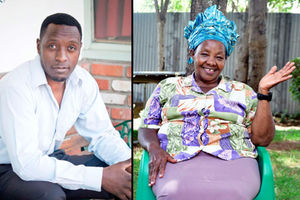
Magdalene Wambui,

Magdalene Wambui, teacher, lived in the Kingdom of Cambodia for 15 years, before coming back to Kenya in 2025.

Photo credit: Pool

Magdalene Wambui, 38, lived in the Kingdom of Cambodia for 15 years.

“I went there in 2010 in search of greener pastures,” she says. “I had just finished high school and started college when some family members living there invited me to join them.”

Finding work was initially difficult due to the language barrier (Khmer is the official language), but also because job opportunities were often prioritised for locals.

“Cambodia is relatively poorer compared to Kenya,” she says.

She eventually secured a role supervising the sanitation department at a school where she oversaw cleanliness, security and feeding programmes. But Magdalene quickly discovered that she enjoyed being in the classroom, sharing knowledge with the children.

Taking a leap of faith, she pursued teaching, gradually building her skills and qualifications. Over time, she became fully certified and went on to teach in several schools across the country.

“I had the best time in Cambodia,” she says. “There is a really big expat community and a strong sense of togetherness.”

The work hours were manageable, her social life was vibrant, and the cost of living was quite low.

“A dollar in Cambodia could stretch really far. With $20 (Sh2,597), I could go out with my friends, eat good food, get a massage and still go back home with some change.”

The affordability also fuelled her love for travel.

“In my time there, I visited 10 different countries,” she says. “I could hop on a flight to Malaysia and back for only about $100 (Sh12,985).”

But as she grew older, her priorities started to change.

“I used to come home at least twice a year, and I realised I wanted to be closer to my family. I wanted to watch my niece grow up.”

Professionally, she also felt like she had hit a ceiling.

“I felt like I had outgrown the environment,” she says. “I wanted to expand my horizons.”

With many of her friends also moving away, the idea of returning home became harder to ignore.

“My biggest worry was sacrificing the quality of life I was accustomed to. I knew how expensive Nairobi is, how difficult getting a job could be and how one needed an above-average income to live comfortably,” she says.

After returning to Kenya, Magdalene spent a year working with social media brands to sustain herself before securing a teaching position at an international school in Tanzania, where she is currently based.

“Life here is just as pricey as Nairobi, and I’ve had to adjust to the colder weather as Cambodia was much hotter,” she tells Nation Lifestyle. “But I’m absolutely loving it. I’m closer to home and back to doing what I do best.”

Yvonne 'Koko' Metet,

Yvonne 'Koko' Metet, owner of Dollar B cakes, spent three years in the UK before coming back home.  

Photo credit: Pool

Yvonne Metet, 32, went to the UK in 2022 to pursue a Master’s degree in agri-food technology. Drawn by the shorter study period and the ease of visa application, she initially saw the UK as a stepping stone to Australia, Canada or the US.

“From the onset, I wasn’t planning to stay in the UK,” she says. “I was open to it if I ended up liking the place, but if not, I was okay with coming back home.”

As a student, Yvonne was allowed to work 20 hours a week. Like many other Kenyans, she found herself in the healthcare sector. She graduated with distinction and later applied for a graduate visa, which allowed her to remain in the UK for two years while searching for a job that could sponsor her legitimate stay.

“I wanted roles in my field, and they were there, but they were not willing to sponsor, especially because the immigration rules kept changing,” she says. “Most companies willing to offer a sponsorship were in healthcare.”

The offer was to either work as a caregiver for five years to qualify for an Indefinite Leave to Remain (ILR) or return home. Having worked in that industry before, she had an idea of what it would demand.

“Caregiving is not easy. It requires you to be physically, mentally and emotionally stable,” she says. “You are on your feet for 12 hours caring for the elderly: attending to their personal needs, listening to them when they’re in distress, cleaning, doing laundry, it’s an endless, draining loop. I would often find myself in tears before my shifts.”

The experience forced her to confront a difficult question: was she willing to live like that for five years just to secure paperwork?

“I was in a very dark place,” she says. “When I realised I couldn’t do it, I quit.”

Family also weighed heavily in her decision.

“I had two children back home, and with the changing immigration laws, even after all that work, I still wouldn’t be able to bring them over. So I chose to return.”

Back in Kenya, Yvonne, now popularly known as ‘koko’, runs Dollar B Cakes and Koko Essentials, a cereals business.

“It takes time to make it abroad,” she says. “Whether you choose to go or come back depends on the season you are in, and there is no wrong choice.”

Follow our WhatsApp channel for breaking news updates and more stories like this.