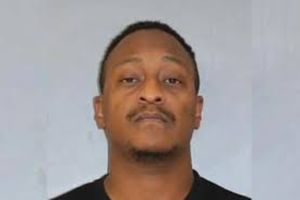
Late last year, federal agents in North Carolina arrested 38-year-old Kenyan Stanley Amalemba Ambeyi in an undercover operation. Ambeyi was accused of offering $150 (about Sh19,000) to someone he thought was a 15-year-old girl, for sex.
Unbeknownst to him, he had all along been chatting with an undercover police officer posing as a minor. He now faces a lengthy jail term if convicted.
His case is not isolated. In the past three years, at least a dozen Kenyans have been arrested or charged in the United States over sex-related offences, many involving minors or online exploitation. Community leaders say the trend is eroding the reputation of an otherwise hardworking diaspora.
These arrests should have sent a strong message to Kenyans living in the US against breaking the law, especially when Operation Take Back America—an initiative to deport illegal immigrants from the US—is being implemented.
Mr Stanley Ambeyi who was arrested in the US.
Photo credit: Photo | Pool
This month, Martin Njogu Njoki, 43, failed to appear in court in a sex crime case after allegedly assaulting an underage girl while he worked as a Lyft driver. To date, his whereabouts remain unknown.
On April 14, Mr Njoki, whose last known address was in Renton, was charged with indecent liberties and unlawful imprisonment. According to the charge documents, he allegedly forced a 16-year-old girl to have sexual contact with him during a ride.
Court documents reveal that in the wee morning hours of February 17, an 18-year-old man ordered a Lyft ride for his 16-year-old girlfriend from his SeaTac home to her Bellevue home. Documents state that 20 minutes later, the girl called the man and told her that the Lyft driver had touched her.
She told investigating officers that she was at her boyfriend’s home until about 4 am when he ordered a Lyft for her to return home. When the Lyft arrived, she opened the front door as she wanted to sit there, but there were some items on the seat. She then opted to sit at the back, but Mr Njoki insisted that she sit in the front seat.
During their conversation, the girl mentioned that she had sneaked from home, and Mr Njoki referred to her as a “bad girl”.
As they neared her home, Mr Njoki told the minor that he liked her. She told the police that she had to be polite because she knew she was in the hands of the man who she felt was bigger and older than her.
According to documents, Mr Njoki then asked the minor, “Do you kiss and tell?” and then asked her if she would like to kiss him. She then told Mr Njoki that she was uncomfortable, but he kept asking her about kissing.
In April, Mr Njoki was arrested by the police and arraigned. He was released on a $150,000 (Sh19.4 million) bond, which was later reduced to $30,000 (Sh3.9 million).
Speaking while reducing the bond, Judge Averil Rothrock ordered that Mr Njoki be placed on home detention if released.
In Texas, a Kenyan IT professional—whose name we withhold for legal reasons—was charged with molesting his two young daughters. Court filings show he allegedly fled back to Nairobi after police began investigating him, sparking an international manhunt.
In July, a Kenyan politician who contested for a parliamentary seat on a UDA ticket was arrested in the US in a human trafficking operation.
Mr Abdullahi Yussuf Sheikh Nur was among 12 people arrested in Eden Prairie, Minnesota. According to the police, the 46-year-old was arrested for attempting to arrange a sex meet-up with a person he believed was a 17-year-old girl, who turned out to be an undercover officer. According to court documents, Mr Nur continued communication even after being told the girl was underage, and was arrested at a golf course.
In Minnesota, a Kenyan Uber driver was sentenced to eight years in prison after pleading guilty to sexually assaulting a female passenger. Prosecutors said he used his job to target vulnerable women, many of them intoxicated or new to the area.
In Boston, another Kenyan man was arrested in 2024 for running a covert online pornography ring. Investigators alleged he coerced women in Kenya to produce explicit content for distribution in the US, a case that blurred the line between cybercrime and human trafficking.
In an effort to establish why there has been a spike in sexual offences cases involving Kenyans abroad, the Nation interviewed community organisers, diaspora associations and leaders who pointed out a number of issues.
Ms Margaret Ruto, a nurse based in Pennsylvania, said that most Kenyans fall for digital traps.
“I have looked at some of the cases, and the arrests stem from online chats and dating apps. What suspects believe are casual exchanges with strangers often turn out to be sting operations run by police,” she said, adding that there is a need to educate Kenyans.
She noted that many Kenyans lack the knowledge that chatting with someone who is underage, even without meeting them, is a federal crime.
She also spoke of isolation, saying that loneliness can lead to risky online behaviour. According to her, the US authorities have intensified.
Ms Ruto, also a human rights activist and current head of Voices for Justice, a community-based organisation in Kericho County, added that in the recent past, there has been aggressive policing in the US, with more sting operations targeting immigrant communities.
Operation Take Back America, according to the US Attorney’s office, is a nationwide initiative to repel illegal immigration, eliminate cartels and transnational criminal organisations, and protect communities from perpetrators of violent crime.
It states that the operation usually focuses on crimes that cause the greatest harm: extensive drug and gun trafficking networks, violent criminals, repeat offenders, and human smugglers.
“The goal of Operation Take Back America is simple: to protect our communities, hold offenders accountable, and ensure that families can live free from fear,” the US Attorney’s office website states.
An official at the US Embassy in Kenya, who spoke in confidence, revealed that they receive distress calls whenever Kenyans are jailed in the US.
“We get desperate calls from families almost every month. The truth is, consular support is minimal once someone is facing a criminal case. The US system is strict, and legal aid is expensive,” said the senior official.
For those who have been arrested in sex-related cases in the US, it is a sobering reminder of how quickly opportunities can collapse into disgrace.
As Kenya’s diaspora grows—now sending home over Sh600 billion annually—community leaders say it is urgent to protect both its image and its members from slipping into legal and moral ruin.
“One case is already too many,” said Ms Ruto. “But when you start counting them, you realise we are staring at a crisis of values.”