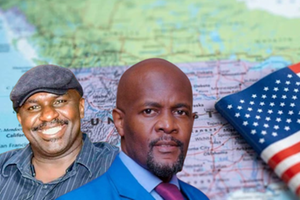
Martin Njogu Njoki, Wilson Tindi, and Samuel Kangethe are three Kenyan men who have been living and working in different parts of the US.
Unrelated, now they share a common thread, having ended up on President Donald Trump’s mass deportation list.
Martin Njoki’s story is set in Washington State, in the uppermost corner of the northwestern United States, specifically in the suburbs of Seattle. He is a 43-year-old man who was charged on April 14, 2025, with indecent liberties and unlawful imprisonment.
According to charge documents, he allegedly forced a 16-year-old girl to have sexual contact with him while he was her Lyft (a taxi-hailing service) driver for a ride from SeaTac to Bellevue in Seattle.
Martin is currently in custody at the King County Correctional Facility on $150,000 (Sh19.4 million) bail. According to the King County Prosecuting Attorney’s Office, Martin has been prohibited from having any contact with minors without exception and must surrender any weapons he might have.
Wilson Tindi, a Kenyan national who was convicted of sexually assaulting a woman while she was asleep in Minnesota.
Photo credit: Pool | Courtesy of Hennepin County
Wilson Tindi, a 42-year-old Kenyan man, was a convicted sex offender who also became a top auditor in the state of Minnesota. He evaded deportation for years. Wilson was convicted of sexually assaulting a woman who was asleep in Minnesota.
He avoided deportation for years after completing his prison sentence. During this period, Wilson secured a job with the Minnesota Department of Education (MDE), where he worked on internal accounting. On June 27, 2025, authorities arrested him on criminal sexual conduct charges from over a decade ago.
Samuel Kangethe’s case is different. Based in Lansing, Michigan, he has no criminal record. Yet Kangethe has decided to return to Kenya because he fears being picked up by Immigration and Customs Enforcement (ICE) and sent to a detention centre in another state or even a prison overseas.
That could leave a bad mark on his record. He is married to and is a father of three children, aged 13, 11, and five; all of whom he has decided to leave behind as he seeks to wipe his slate.
His options were limited. He faced removal after an immigration official ruled his previous marriage was fraudulent in 2014.
@npr Samuel Kangethe has lived in the U.S. for nearly two decades, but an unresolved immigration case has made him deportable. He's decided to return to Kenya, leaving his wife and three children behind. The Trump administration has given an ultimatum to immigrants without a legal status: leave voluntarily or you will be detained and deported. Kangethe is one of thousands of migrants to heed President Trump's call to self-deport.
♬ original sound - npr
Kangethe presented evidence in court to challenge the immigration officials' claims. Because the court case was delayed during the COVID-19 pandemic, it was eventually dropped from the immigration court docket.
His new court hearing was set for January 2026. However, because an immigration judge has not ruled on his case, Kangethe has been left in immigration legal limbo. He is legally deportable and can be arrested and detained at any time, despite having a legal case pending in court.
His decision to leave may have been painful, but it is intended to prevent an unwanted deportation record, as he could find it difficult ever to return to the US.
These cases have elicited various views from the Kenyan diaspora community in the US. Immigration attorney Otieno Ombok says the Kenya US Bar Association—with over 200 Kenyan immigration attorneys—is available to support Kenyans facing removal proceedings or needing their immigration status adjusted.
And knowing a lawyer could save you, according to Prof Kefa Otiso of Bowling Green University.
“All Kenyans should make sure that they know a lawyer they can call on short notice to defend them when they get into legal trouble. Self-deportation is a good option when existing legal options have been exhausted,” Otiso said.
He advised that those who wait to be deported often face lengthy re-entry bans. Potential ban lengths vary from five years to 20 years, or even permanent bans, depending on the specific circumstances of their removal and previous immigration violations.
California-based peace and conflict resolution expert Mukulima Muriuki says there are other options, such as seeking immediate legal counsel from organisations like the National Immigration Law Center or the Kenyan Embassy, “to understand your rights and explore relief options such as asylum or voluntary departure.”
“Document all interactions with authorities and avoid signing anything without advice to prevent triggering deportation.”
The three cases show that Kenyans can encounter immigration trouble in any of the 50 US states, especially with Trump’s aggressive efforts to advance mass deportation in light of his campaign manifesto.
However, some Kenyans intend to use President William Ruto’s trip to New York this week, for the United Nations General Assembly (UNGA), to beseech him to push diplomatic levers on the immigration issue.
“The Kenyan government can enhance consular services through the Kenyan embassy for case-by-case legal aid. It should also develop repatriation programmes with job placement and grants to support returnees amid rising deportations.”
However, there is no certainty that Trump will ease up on the immigration issue. As leaders descended on New York, he issued another executive order on Friday, September 19, raising the fees for employers seeking to hire foreign workers from $1500 to $100,000 for foreign-based employers to secure the requisite visas.
A White House explainer said employers had abused the visa regime by replacing rather than supplementing local workers with foreigners.
It means Kenyans may either have to ensure their paperwork is in order or blow their own whistles by leaving voluntarily, all of which costs money.