'In the name of God, I am innocent': Mediheal's Mishra denies organ trafficking claims
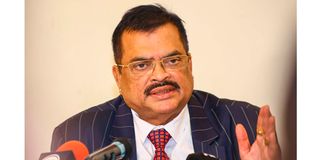
Mediheal Group of Hospitals Chairman Dr Swarup Mishra speaks during a press briefing at a hotel in Nairobi on July 29, 2025.

In the name of God, I am innocent. If anyone has evidence of organ trafficking at Mediheal, let them come forward. I know that one day the truth will vindicate me, because all I have ever done is help make Kenya a better place by offering quality and affordable healthcare services."
These were the emotional words of a worn-out and tearful Dr Swarup Mishra — the chairman and director of Mediheal Group of Hospitals — as he defended the institution against serious allegations yesterday.
The medical entrepreneur, flanked by his legal team, was responding to recommendations by an 18-member task force that Mediheal be investigated for potential criminal involvement in organ trafficking and possible violations of national transplant laws and ethical standards.
"Please be just to us, because Mediheal doesn't belong to Mishra—it belongs to Africa and Africans," Dr Mishra pleaded. "We employed 2,300 people whom we have had to let go because of the current challenges. If we are guilty of this, we will carry that cross, but in the name of God, we are not."
The task force that was established by Health Cabinet Secretary Aden Duale found that Mediheal charges significantly higher fees than other hospitals, with mean bill amounts of Sh2,313,324 compared to Sh990,743 at other facilities. That is a difference of more than Sh1 million per case.
Investigators noted that the hospital’s 100 per cent price premium raises questions about cost-effectiveness, affordability, and accessibility of care.
"Such extreme billing fees suggest potential billing irregularities or outlier cases that warrant investigation," the task force stated in its findings.
During meetings with the committee, Mediheal’s management explained its tiered pricing structure: Kenyans were charged Sh2 million, African patients US$25,000, and international patients from outside Africa US$34,000.
The report said there were "alarming disparities in payment patterns that raise significant ethical concerns about potential organ commercialisation.” Dr Mishra defended the pricing structure, arguing that Kenya lacks proper regulatory guidelines.
"The Kenya Medical Practitioners and Dentists Council does not have a laid down structure for what health facilities doing kidney transplants should charge," he said. "Each health facility has its own rate card based on the quality of service it offers."
Dr Mishra’s lawyers, Mr Katwa Kigen and Mr Oiboo Morintat, argued that the hospital had been unfairly targeted by what they described as a "fault-finding, not fact-finding" mission.
"We are compelled to explain ourselves under very disadvantaged circumstances," Mr Kigen said. "We have not been supplied with the report from the investigating committee, so we have written a letter to CS Duale.”
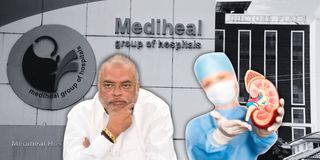
Mediheal Hospital owner Dr Swarup Mishra is facing criminal probe over organs trafficking at the health facility.
The legal team maintained that Mediheal had fully cooperated with the investigators, providing 60,000 pages of documents and obtaining court orders to protect patient privacy before sharing the information.
"Based on the report we have seen, either the committee was malicious and lazy, because all the answers they needed are in those documents," Mr Morintat said.
He questioned the committee's legal conclusions, pointing out that while it was composed of many doctors, it did not include a single lawyer.
"We supplied consent forms signed by all patients and donors. Based on their own findings, they found no single incident of organ trafficking in all 476 kidney transplants Mediheal performed over the years,” Mr Morintat said.
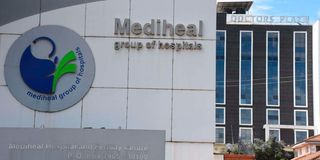
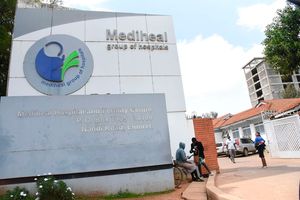
Mediheal Group of Hospitals in Eldoret City, Uasin Gishu County.
Reflecting on his motivation for establishing Mediheal, which began performing kidney transplants in 2018 in Eldoret, Dr Mishra said his objective was to make Kenya self-sufficient in medical science so that patients would not need to seek healthcare abroad.
"Kenya became a medical tourism hub attracting patients from over 14 countries because of four main things: good infrastructure, state-of-the-art health facilities and equipment, highly trained professionals, and a human touch with quality services at an affordable cost," he said.
Ms Ivy Shannie, whose 22-year-old son was born with one kidney, praised Mediheal for saving her child's life.
“I donated a kidney for my son in 2022, and the truth is that they saved my child’s life and saved me from going to India, where I would have spent much more money,” she said.
Ms Rebecca from Kiambu, who only gave one name, said that she donated a kidney for her friend, known as Leah from Kakamega County.
“I couldn’t just sit and watch my best friend die. I had to do something, which is why I took her to Mediheal myself. Today she is alive. No one paid or forced me,” the 33-year-old said.
Gene mapping
Dr Mishra attributed Mediheal's success to advanced technology for gene mapping, cross-matching, compatibility testing, and Human Leukocyte Antigen (HLA) tests that enable distinction between "self" and "non-self" tissue in kidney transplants.
This expertise allowed the facility to achieve minimal rejection rates, with only 20 cases out of 476 experiencing rejection—13 acute and seven chronic cases.
The mortality rate was also low, with only eight patients lost out of 476 procedures. "If we lose a patient post-transplant within one month, whether admitted or discharged, that counts as mortality related to the transplant," Dr Mishra explained.
Only 10 patients required dialysis post-transplant due to non-adherence to medication, whilst 17 developed infections, particularly during the Covid-19 pandemic.
As the investigation continues, Dr Mishra maintains his innocence whilst calling for a fair assessment of his hospital's contribution to Kenya's healthcare sector.