Kiambu quintuplets: Fifth baby dies
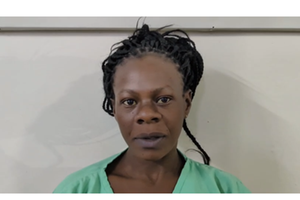
A screengrab picture of Mercy Kanini from a video in which she sought support from well-wishers.

What you need to know:
- KNH said the babies were born at an extremely premature gestational age of 25 weeks and with critically low birth weights.
- Dr Kireki Omanwa says although most of a baby’s organs are visible by the 12th week of pregnancy, this does not mean they are fully developed or functioning optimally.
Mercy Kanini, the 28-year-old woman who gave birth to quintuplets on Sunday, has lost all five children.
The last surviving child, and only son, died on Wednesday at Kenyatta National Hospital (KNH).
In a statement to the media, KNH said the babies were born at an extremely premature gestational age of 25 weeks and with critically low birth weights, presenting significant clinical challenges from the time of admission.
“Our multidisciplinary neonatal team, comprising neonatologists, nurses and allied health professionals, provided specialised care and made every effort to support the babies. Despite the dedicated efforts of our medical teams and the specialised care provided, all five newborns sadly passed away," said Acting Chief Executive Officer Dr Joel Lessan.
"We recognise the profound pain of losing five newborns and stand with the family during this extraordinarily difficult period.”

The entrance of the Accident and Emergency unit at Kenyatta National Hospital in Nairobi.
But did these babies really have to die?
Dr Kireki Omanwa, a consultant obstetrician and gynaecologist and president of the Kenya Obstetrical and Gynaecological Society, explained that ideally, the womb is designed to carry one or two babies to term.
He said that when there are more than two babies, the chances of them reaching full term are reduced. Babies born extremely prematurely are those delivered before 28 weeks, as was the case with Mercy’s children.
He said that although most of a baby’s organs are visible by the 12th week of pregnancy, this does not mean they are fully developed or functioning optimally.
“When a baby is born with extreme prematurity, the lungs could be there, but they are not functional. There is a chemical called surfactant, which reduces friction when we breathe or when the baby starts breathing. A premature baby may not have it, making the lungs non-functional, so it becomes very difficult for the baby to start breathing on its own,” he explained.
Ideally, neonatologists, doctors who care for premature and critically ill newborns, would administer surfactant to these babies, but challenges may arise when an organ is not fully developed.
Dr Kireki also told the Nation that such babies have not developed sufficient body fat, meaning they lose heat more quickly.
Other organs, such as the pancreas, may be present and functional but may still be unable to regulate blood sugar effectively.
Their immune systems are also not yet fully developed, making them prone to breathing problems and severe infections.
Other complications may include infection of the large intestine and bleeding in the brain.
“Their survival is actually very, very rare, and also precarious. If they survive, they are likely to have other challenges,” he said.
Dr Kireki explained that the brain is particularly vulnerable because its cells require oxygen to function properly. A lack of oxygen can affect the nervous system.
He also said that women with high-risk multiple pregnancies should be seen by highly experienced obstetricians who can provide appropriate guidance and improve the chances of a better outcome.
“It's not all of us who have actually managed to handle such high-risk conditions. If she had an obstetric scan done, such that we know that we have X number of babies, straight away she should have been transferred to a referral hospital,” Dr Kireki said.
“This is a patient who needs to be in hospital all the time because, with the growth of the babies, the chances of preterm delivery are very high,” he added.
He explained that the best mode of transfer in Mercy’s case would have been in utero transfer, meaning the mother should have been transferred to the referral hospital while still pregnant, rather than after delivery.
“The womb is the best incubator for these babies. And then, even before that, there are medications which we give at around 24 weeks to start preparing the lungs of the babies such that, in case she went into labour, at least the lungs are in a certain way prepared,” he said.
“We also give medication called neuroprotection to protect the nervous system,” he added.
When these interventions are provided, he said, the possibility of survival can improve.
If a mother has already delivered, Dr Kireki said there should ideally be ambulances specifically equipped to transfer premature babies.
“When these patients are being transferred, they should be transferred with trained nurses in an ambulance that has incubators whose temperature should be the same as the body temperature, or even slightly higher, because they lose heat very quickly,” he said.
“In this case, I think we failed these babies. The system failed these babies because we don't have this equipment,” he added.
Dr Kireki stressed the importance of pre-conception care for women planning to become pregnant and regular antenatal care for those who are already pregnant.
“Let us start with pre-conception care. Here we will check your hormone levels, your blood levels, your blood group and that of your spouse, whether you have any chronic illnesses like diabetes and so on,” he explained.
He said a scan should be done at around seven or eight weeks so doctors can determine where the pregnancy is located and how many babies are present.
Dr Kireki also said follow-up clinics are important, with at least eight antenatal care visits recommended, so that doctors can identify and manage any complications during pregnancy.
“I would also appeal to the men as well, that they should support their ladies emotionally. And even just being there, you may not be able to do a lot, but by being there and supporting them morally, it does quite a lot psychologically for this mother,” he said.
Follow our WhatsApp channel for breaking news updates and more stories like this.