10 diseases, one body: Loreen’s 25-year fight to stay alive

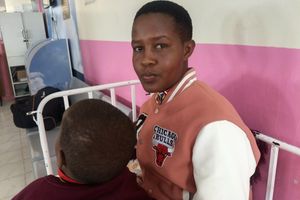
Loreen Murithi, 27, during an interview at Nation Centre on September 3, 2026. She lives with 10 chronic conditions, including autoimmune and inflammatory diseases.

What you need to know:
- Loreen is pursuing a master’s degree in intellectual property law, inspired by her own battles with treatment access and medicine costs
"They told my mother that I wouldn't live to see my seventh birthday," says Loreen Murithi, recalling what her mother told her years later.
She was two. Doctors had made that prognosis after she fell seriously ill with a range of problems they could not fully explain at the time. She is now 27.

Loreen Murithi interacts with her friend Ian Odhiambo on September 3, 2026, at Nation Centre.
Loreen was born weighing just 700 grams and spent close to a month in an incubator. By about two months, she had gained 800 grams, reaching 1.5 kilograms, and was discharged from hospital. For a short while, things settled down.
Then, at around three months, her mother noticed a pink rash on her skin.
"At first, she thought it was a heat rash," says Loreen.
Also read: Nine years, three tumours, two transplants: One family's fight against a cancer that keeps returning
It disappeared after about a week, then returned with a fever. At the hospital, she was diagnosed with measles. She was only three months old at the time, too young for the measles vaccine, which Kenya routinely gives at nine months. Years later, a geneticist would suggest that her severe reaction to the virus might have been an autoimmune response, the immune system mistakenly attacking the body's own tissues — an early sign that something was wrong.
The illnesses did not stop there. Throughout her early childhood, Loreen suffered repeated fevers, bouts of bronchitis and episodes in which her lungs became blocked. The hospital became a familiar place. Between the ages of one and seven, she was admitted every two or three months. In some years, more than ten times.
"I didn't really have a childhood," she says.
She spent so much time around doctors and nurses that she learnt medical terms before ordinary words. Her speech only improved once she started school, and even getting into school was a fight. Some doctors advised her parents against enrolling her at all, worried her illnesses would affect her mental development.
From around five, she began having episodes of low blood sugar and had to eat frequently, even at nursery.
"Other children saw me eating snacks throughout the day and assumed that I was spoilt and privileged," she says.
She also developed a salt craving that nobody could explain. That mystery would take more than two decades to solve.
The hospital visits eased as she reached her teens. Between 11 and 13, life was, relatively, better. Then at 14, the illnesses came back. By 15, in high school, severe acid reflux had become part of her daily life. The school was often reluctant to call her parents about it. Mostly, she was handed antacids and painkillers and sent back to class.
After a 25-kilometre walk organised to mark the school's 70th anniversary, she developed severe pain low on the right side of her abdomen. The school nurse rushed her to St
Anne's Hospital in Meru, where an ultrasound suggested appendicitis.
At Meru Level Five Hospital, though, doctors read the same problem differently — chronic inflammation, they said, long-term damage rather than an emergency — and treated her with six months of antibiotics instead of surgery.
By then, her complaints at school were harder for people to believe.
"You're just pretending," the deputy principal told her. "From now on, none of your issues are a concern in this school."
Eventually, Loreen started to believe it herself.

Dr Jackson Ngechu, a gastroenterologist at Gasex Clinic, says people living with several chronic conditions can experience overlapping symptoms, which makes it difficult to determine which condition is responsible at any given time.
"I had to survive high school," she says.
For close to two years, she took diclofenac almost daily, medication she would later learn had badly damaged her gut. Her daytime sleepiness was written off as laziness.
"No one took the time to ask themselves, 'Is this student unwell?'" she says.
After she turned 18, her periods came with vomiting and diarrhoea. A gynaecologist found no reproductive cause. A gastroenterologist diagnosed irritable bowel syndrome, a condition affecting bowel function that causes abdominal pain and altered bowel habits. Around 2018 or 2019, a CT scan found fluid behind her uterus, and she was diagnosed with pelvic inflammatory disease, treated for about two years.
In May 2020, a snake bit her at night. She survived, but the antivenom brought its own damage, injuring her optic nerve and leaving her with partial loss of eyesight.
In January 2021, she developed severe internal bleeding. An endoscopy found grade four gastro-oesophageal reflux disease (GERD): severe, recurrent reflux of stomach contents into the oesophagus, with inflammation already spreading to her larynx and throat.
"Every time I receive a diagnosis, it breaks my heart," says Loreen.
Medication helped, briefly. At the six-month follow-up, the inflammation had worsened instead. A surgeon recommended reflux surgery; Loreen declined and changed doctors. Not long after, giardiasis hit, and she deteriorated fast. She lost her appetite and stopped showering and getting dressed.

Loise Wambui is a counsellor at the WAY Counselling and Wellness Centre. She says that being young and living with multiple conditions can be psychologically overwhelming.
"I didn't want to wear any clothes. I did not want to eat. I did not want to shower. I did not want to do anything."
A full examination found the extent of the damage from GERD: bleeding, vomiting, inflammation of the voice box and stomach, acid and bile reflux, and a hiatal hernia; part of her stomach pushing through the diaphragm into her chest, pressing against her left lung. There was a second hernia too. Her insurance would not cover repairing both.
The pain got so bad that, at one point, she handed her mother a knife and asked her to cut off her toes, hoping the pain would simply move somewhere else.
"My mother thought that I was hallucinating. She called a taxi, and we went straight to the hospital."
The operation was meant to take four to six hours. It took 11. Surgeons repaired the reflux damage and the hiatal hernia, found an ulcer the scans had missed, and removed part of her stomach. Her surgical record now runs long: reflux surgery, hernia repair, an appendectomy, a cholecystectomy (removal of the gallbladder), and adhesiolysis, a procedure to cut away internal scar tissue.
She regained consciousness after about 23 hours, unable to speak, swallow, move or control her bladder and bowels. She started on two sips of water a day, moved to apple juice by day five, and lived on blended food for close to two months.
In May 2023, cholecystitis (inflammation of the gallbladder) brought low blood pressure and low blood sugar with it. Some doctors, again, questioned whether she was really unwell. One asked if she exercised. Another told her that having low blood pressure at her age was something to be grateful for.
"Are you looking for illness? Would you prefer to have hypertension?"
Around the same time came joint pain and unexplained blisters on her skin. A rheumatologist diagnosed reactive arthritis and told her to try physiotherapy, swimming and strength exercises.
In 2024, a dermatologist started looking at whether it was all connected. Lupus was suspected and ruled out. Then a bowel inflammation test came back with very high results, and a colonoscopy found active inflammation in her colon — ulcerative colitis, a chronic condition causing inflammation and ulcers in the lining of the colon and rectum.
These diagnoses are not necessarily separate, says Dr Paul Etau, a specialist in arthritis and rheumatological treatment.
Inflammatory bowel disease (IBD), a group of conditions involving ongoing inflammation in the digestive tract, involves immune dysregulation and can travel alongside arthritis and pyoderma gangrenosum, a rare inflammatory skin condition causing painful ulcers.
Genetic factors, he says, may predispose some patients to several autoimmune or inflammatory conditions at once. Treating such patients often needs a team, because one treatment can help more than one condition — and unchecked inflammation can damage several organs at the same time.
"IBD is associated with arthritis and pyoderma as part of the disease process," he says.
Reactive arthritis, he adds, commonly affects younger people and can cause painful or swollen joints in the knees, hips and ankles.
"That is why you need a multidisciplinary team" — a rheumatologist, a dermatologist, a specialist managing the bowel disease, sometimes all three at once.
Pyoderma is particularly hard to live with, Dr Etau says, given the cost of treatment and the psychological weight of a visible wound. Inflammation from the bowel disease can trigger flare-ups; inflammation from the arthritis can eventually damage the joints themselves.
"Early detection is important because the earlier you treat, the better the outcome," he says.
For Loreen, the sheer number of overlapping diagnoses has made it hard to tell which condition is behind which symptom at any given time.
Dr Jackson Ngechu, a gastroenterologist, says this is common among people managing several chronic conditions at once.
"Sometimes the symptoms overlap, so it becomes difficult to know which condition is actually causing the symptom at that particular time," he says.
IBD alone, he notes, can affect the joints, skin, eyes, liver and bones — between 20 and 40 per cent of patients experience symptoms outside the gut entirely. A patient can have ulcerative colitis and still have IBS on top of it, or ulcerative colitis and gastritis.
"You may have ulcerative colitis and still have IBS," he says. "You may have ulcerative colitis and gastritis."
Regular review matters, he says, because medicines for one condition can complicate another, and self-managing with old prescriptions can delay a proper diagnosis.
"Patients should be reviewed regularly," he says, noting that continuing old prescriptions or buying medicines over the counter without reassessment can complicate treatment and delay diagnosis.
The toll is not only medical.
"Living with multiple chronic diseases is challenging, especially for a young person," he says. "It affects education, employment, relationships and mental wellbeing."
Loreen's most recent major surgery came in mid-2025, after unbearable pain from her appendix and gallbladder. Her surgeon said the appendix was close to rupturing.
"I've done this so many times; over 3,000 times," he told her. "I can do a clinical check with my hand and tell you whether it's inflamed."
Surgeons removed the appendix and gallbladder and cleared scar tissue. They found blood and inflammatory cells in her abdomen, but no cancer, no obvious leak.
A transvaginal ultrasound later turned up ruptured "chocolate cysts" and adenomyosis — tissue like the uterine lining growing into the muscular wall of the uterus. A hysterectomy was recommended as the definitive fix.
At 26, that was not an easy decision. She agreed to it anyway. Two weeks before the procedure, her surgeon died. Unable to afford another specialist, she now manages the condition with hormone treatment instead.
Then came the fainting. Nausea had dogged her for almost a decade. Eventually it turned into fainting spells, sometimes dozens a day. Over two months, she counted more than 400 episodes.
One morning her hands went numb. She felt cold and shaky, then lost consciousness. She woke up in intensive care with a blood pressure reading of 67/27 and a blood sugar of one.
Doctors first suspected steroid withdrawal, though she hadn't taken steroids in a year. Tests on her heart, brain and kidneys turned up nothing. Then a surgeon remembered her lifelong salt craving.
"For as long as you've been craving salt, only one disease in the world causes that," an endocrinologist told her after reviewing her history.
Addison's disease, primary adrenal insufficiency, the adrenal glands failing to produce enough hormones, including cortisol. She is now dependent on daily steroid replacement therapy, and on emergency hydrocortisone during crises, for the rest of her life.
"If you cannot do it yourself, someone else who is not able to do it, you die."
She has had two adrenal crises since. Further tests found severe pancreatic insufficiency, meaning her pancreas doesn't produce enough digestive enzymes and gastroparesis, where the stomach empties food too slowly. A surgeon suggested removing what's left of her stomach and connecting the intestine directly. She has stuck with enzyme treatment
instead.
Ten chronic conditions, in total. Four are managed through regular treatment. The rest are inflammatory, and they feed off one another. Her inflammatory bowel disease is currently in remission, though remission, for her, does not mean symptom-free.
Her days now revolve around avoiding the next crisis. She avoids stress. She gets an annual flu vaccine, since infection can trigger an adrenal crisis. She's careful in the shower because a sudden temperature change can drop her blood pressure and make her faint.
Mornings are the hardest. Low cortisol leaves her so tired that some days, standing up is difficult. She once fainted and hit her jaw on the bed. Brain fog and memory lapses are simply part of how her days go now.
"People think you have to look sick and pathetic for them to believe you're ill."
Ian Odhiambo, her friend, met her in her first year at university, in 2021. For about three years, he watched her juggle school and illness, attending some classes and exams, missing others. At first, he didn't realise she was sick. Then he learned.
"You don't have to look sick to be sick," he says.
He's been with her to hospital and seen how fast things can turn. A cancelled plan, to him, is never simply a change of heart; she might have woken up unable to leave the house. Watching her suffer has left him feeling helpless at times, he says, though he also sees how much she carries.
The worst periods, for him, were 2022 and December 2024. He worries about her living alone, in case she faints or another crisis hits when no one's there.
Loreen says she manages mostly on her own, but calls someone over when she's not feeling right. The trouble with Addison's disease, she says, is that she can feel fine one moment and be in trouble the next.
"I know when I can handle something. When I feel any symptoms, I go to hospital."
Also read: How a SHA bureaucratic gap has left engineering student fighting rare disease without cover
Knowing when to ask for help, she says, has become part of how she stays alive.
There's an emotional cost too. Loise Wambui, a counsellor, says being young and managing several conditions at once can be overwhelming in ways that are easy to overlook.
"While their peers are thinking about careers, relationships and the future, those living with chronic illness may be preoccupied with their symptoms, medication, doctors' appointments and the possibility of another crisis," she says.
Support helps, Wambui says, but it doesn't remove the weight; the person living with the illness still has to carry it.
"Chronic illness can bring sadness, low self-esteem and a constant state of alertness, particularly when someone has lost some independence or needs help with everyday activities."
Patients end up watching their bodies constantly, bracing for the next flare-up.
"You are never really settled because you are always thinking, what is going to happen next?"
Not everyone with a chronic illness develops a mental health condition, Wambui adds; resilience, personality and support all shape how people cope. Still, she encourages
patients to build a life that isn't defined entirely by the diagnosis.
"Build a life outside the illness," she says; keep relationships, keep interests, stay connected to people who understand.
For Loreen, that has meant leaning on family and a small circle of friends.
Then there's the money. Loreen has comprehensive insurance, but the gap between her outpatient and inpatient limits means she still pays large sums herself. Her outpatient limit is Sh200,000; inpatient cover runs to Sh5 million. She used up the outpatient allocation in about four months; consultations alone took the biggest bite.
She sees a surgeon, a dermatologist, an endocrinologist, a rheumatologist, a nutritionist and a geneticist. The geneticist alone costs Sh10,000 per visit. Specialist consultations can run to Sh50,000 a month before medicine is even factored in. Kidney and liver tests cost between Sh4,500 and Sh5,000. Her most recent colonoscopy cost
Sh78,000, because she needed intravenous fluids to guard against an adrenal crisis. An endoscopy runs about Sh30,000. Pancreatic tests processed outside Kenya cost Sh48,000 a round.
Fludrocortisone costs Sh14,600 a month. Emergency hydrocortisone runs about Sh3,600 a bottle. Pancreatic enzymes cost between Sh10,500 and Sh23,450 a month, depending on the dose
"I spend at least Sh100,000 per month on treatment alone. That's without the surgery."
Her next stomach operation, due within a month, is projected to cost at least Sh2 million; the surgeon's fee alone is estimated at Sh450,000, with the anaesthetist charging roughly 30 per cent on top of that. Her family spent around Sh1.3 million on the 2025 appendix and gallbladder surgery, including an eight-day hospital stay. Whole-exome sequencing, a genetic test examining the protein-coding parts of her genes, has been postponed indefinitely; it would cost about Sh80,000.
Despite all of it, Loreen finished university and is now pursuing a master's degree in intellectual property law. The field, she says, speaks to questions her own experience raised: the cost of medicines, who gets access to treatment, and who decides.
"I don't think of the future as the future. I think of the future as the present."
Asked what her illnesses have taken from her, she doesn't hesitate.
"Everything."
Death, though, isn't what scares her most.
"It's my cat," she says, laughing. If she doesn't come home one day, she worries, her cat won't understand why.
People keep telling her she's strong. She doesn't romanticise it. She knows exactly what it has cost her, and she's learnt to listen when her body tells her something.
"I can be laughing and still be in chronic pain. Looking well doesn't mean I am not in pain or seriously ill. In fact, I've noticed that most sick people don't actually look
sick."
Her message to anyone living with an illness that others don't believe is simple.
"If you know something is not right and you can feel it, don't let anyone tell you otherwise. Be your own best advocate. Don't go through life in pain and stay quiet about it."
Loreen's 10 chronic conditions
1. Addison's disease (adrenal insufficiency)
2. Ulcerative colitis
3. Pancreatic insufficiency
4. Gastroparesis
5. Reactive arthritis
6. Grade four GERD
7. Hiatal hernia (repaired)
8. Adenomyosis
9. Irritable bowel syndrome
10. Pelvic inflammatory disease (treated)
Four are managed with daily treatment. The rest are inflammatory and can trigger each other.
Timeline: A life in and out of hospital
• Age 2 — Born at 700g. Doctors doubt she'll live to seven.
• 3 months — Diagnosed with measles; possible early sign of immune trouble.
• 1–7 years — Hospitalised every 2–3 months, sometimes 10+ times a year.
• 15 years — Severe acid reflux begins in high school. School dismisses her pain as pretending.
• 18 years — Diagnosed with irritable bowel syndrome.
• 2020 — Snakebite; antivenom damages her eyesight.
• 2021 — Diagnosed with grade four GERD. Major 11-hour surgery removes part of her stomach.
• 2023 — Cholecystitis. Doctors question if she's really ill.
• 2024 — Diagnosed with reactive arthritis, then ulcerative colitis.
• 2025 — Appendix and gallbladder removed. Diagnosed with Addison's disease after 400+ fainting episodes in two months.
The cost of staying alive
• Outpatient insurance limit: Sh200,000 — used up in 4 months
• Inpatient limit: Sh5 million
• Specialist consultations: up to Sh50,000/month
• Geneticist visit: Sh10,000
• Colonoscopy: Sh78,000
• Endoscopy: Sh30,000
• Fludrocortisone: Sh14,600/month
• Emergency hydrocortisone: Sh3,600/bottle
• Pancreatic enzymes: Sh10,500–23,450/month
• Total monthly treatment cost: at least Sh100,000 — before surgery
• Next stomach surgery (projected): Sh2 million
• 2025 appendix/gallbladder surgery + 8-day stay: Sh1.3 million