A doula’s mission: Wambui Wanjau’s fight against obstetric violence
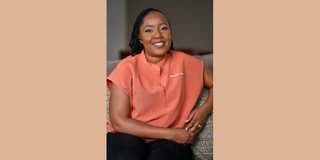
Wambui Wanjau, birth doula and home-birthing midwife, whose childhood visits to a chaotic Kenyan maternity ward set her on a mission to change how women experience birth.

What you need to know:
- Childbirth in Kenya's public hospitals is often marked by abuse, neglect, and a total lack of support for mothers.
- Birth doula Wambui Wanjau, shaped by her training in Finland and Australia, returned home to fill that gap, guiding women through pregnancy, labour, and the difficult days after.
Childbirth in Kenya is a tale of two worlds. In private facilities, women often receive dignified, communicative care. In many public wards, the reality is starkly different — verbal and physical abuse, a chronic lack of privacy, and systemic neglect that turns what should be a safe space into one defined by fear.
Kenya has made progress in increasing facility-based deliveries, but that transition has been shadowed by persistent reports of obstetric violence. For the urban poor and those living in marginalised slums, the burden is heavier still, compounded by unaffordable costs and substandard services.
In rural areas, these failures push women back towards traditional birth attendants, where cultural practices and herbal medicine remain the primary tools for managing labour pain that many women describe as agonising and unbearable.
Wambui Wanjau, a birth doula and home-birthing midwife, traces her relationship with childbirth to her childhood. Her mother was a caterer at a medical facility and close friends with a nurse in the maternity ward, which meant that young Wambui was regularly sent on errands between them. What she encountered on those trips to the maternity ward stayed with her.
"I found the maternity ward so hectic that I questioned my mother on how she had three of us and whether all her childbirth experiences had been as chaotic," she says.
Women were in various stages of labour, half-dressed and in agony, while nurses shouted orders from across the room. It was her entire reference point for birth — until she left Kenya.
When Wambui enrolled at a university in Finland to study nursing, an internship placement gave her a glimpse of something she had never seen before: a calm birth.
"The lights had been dimmed, the labouring mother was silent, sitting on a birthing ball, soft music playing in the background. She was also encouraged to walk around and do whatever she felt was comfortable for her. Here, the nurses spoke calmly, in low tones, and had to remind me over and over to lower my voice. It was a total turnaround from what I had witnessed back at home," she recalls.
She rang her mother immediately after. It was the first time it had occurred to her that women could experience birth so differently.
After graduating, she moved to Australia to work as a travel nurse, placed at a short-staffed hospital on South Island, where she rotated across departments as needs arose. "If people are flown in due to an emergency, you become the emergency nurse. Once you admit them to the ward, you become the ward nurse, and if they are taken to theatre, you become the scrub nurse. If there's need at the maternity ward, you become a maternity nurse," she explains.
When she was assigned to support a midwife with a labouring woman, she walked into a room that would quietly change the course of her career. A birth doula was present — the first she had ever encountered.
"The patient in labour was sitting on a birthing ball overlooking the sea. The doors were open, the breeze coming in. She was taking her contractions very quietly, taking deep breaths as the midwife rubbed her back. She walked around, came back, and the process continued until she felt she was ready to deliver. I was shocked and really curious," Wambui recalls.
When the woman was ready to push, she chose a birthing chair — a seat designed to tilt so that the mother is effectively squatting while still seated. She delivered on the third push.
Afterwards, Wambui asked the midwife to explain what she had witnessed. The answer was straightforward: her role had been to support and monitor the mother, and to allow labour to take its natural course.
Years later, back in Kenya, married and pregnant, Wambui received a diagnosis of fibroids. The medical facts were clear, but what followed was disorienting — she could not find adequate guidance on managing the pregnancy, navigating childbirth with fibroids, or caring for herself and her baby postpartum. It was a friend training to become a birth doula who eventually helped her find her footing.
That encounter set her on a new path. She trained under Elizabeth Project International as a childbirth educator and doula, also known as a labour support specialist, and later added lactation support and perinatal loss training to her qualifications, equipping her to support mothers through child loss as well.
What a birth doula actually does
"Our work as birth doulas often involves guiding expectant mothers to the right healthcare providers based on their specific needs. You may meet someone struggling to conceive or experiencing a complicated pregnancy, and you're able to refer them to a doctor who specialises in high-risk cases.
"On the other hand, a mother may have a smooth pregnancy but a detailed birth plan. In such cases, you guide her towards a patient doctor who will respect her wishes and not dismiss them as excessive," Wambui explains.
The work extends into hospital settings, helping mothers understand which facilities allow a labour support specialist in the delivery room and which do not. It also reaches into mental health, beginning long before labour starts.
"Because we meet mothers during pregnancy, we take a detailed history. Just like you would ask about conditions such as hypertension or diabetes in the family, we also ask about mental health. This process can reveal underlying conditions. A mother might say there's no family history of depression, but then disclose that she has bipolar disorder.
"From there, we begin to ask whether she is on medication and if the condition is well-managed. Armed with this information, labour support specialists are better positioned to advocate for mothers within healthcare settings," she says.
That advocacy continues in the delivery room.
"When we accompany them to the hospital, we can help ensure their mental health needs are considered. We work closely with midwives and doctors, sometimes asking them to explain procedures again to the mother so she understands why certain steps, like monitoring the baby, are necessary.
"In this way, labour support specialists serve as a vital bridge between mothers and the healthcare system, ensuring care is not only medically sound but also compassionate and personalised."
When mothers are informed and involved in decisions during labour, Wambui says, it gives them a sense of control. When things escalate into rushed emergencies without explanation, the emotional damage often surfaces afterwards.
"They feel the power was taken from them. They're unhappy with the decisions, and no one explained what was happening. This is why taking a thorough history early is crucial. It allows her to identify risks, anticipate mental health challenges, and put support systems in place, including ensuring the mother is rested and has adequate help," she says.
Fatigue and inadequate support, she notes, are among the leading contributors to postpartum distress. Simple interventions can make a meaningful difference. "Sometimes, just getting a few hours of sleep changes everything," she says.
The cost of the work
The role takes its toll. "Child loss is extremely difficult. Even unexpected changes in birth plans can be distressing for mothers. To cope, I've learned to debrief with colleagues, and I also go to therapy," Wambui says.
The physical demands are equally relentless.
"This work is mentally exhausting. The unpredictability of labour, late-night calls, prolonged pre-labour, and back-to-back births often means long stretches without sleep. You can leave one birth at 3am and head straight into another that lasts until the next evening. By the time you get home, you're completely drained. The impact spills into family life too, making rest, boundaries, and recovery time essential."
To guard against burnout, she prioritises rest, pursues therapy and peer support, and carves out time for home projects and travel. Faith also anchors her.
"The moment I see a baby being born safely, it feels like a miracle every time. Outside of work, I lean on faith, leading women's Bible study and carving out time for reflection and family. I never want it to feel routine; I want to always see it as something sacred. That balance keeps me grounded, allowing me to continue showing up fully for every mother I support."
A field still finding its place
Birth doulas in Kenya are currently certified by international bodies such as Dona International and Lamaze International, as the profession is not yet locally standardised. Engagement with the Ministry of Health is ongoing, with efforts aimed at clarifying that doulas are non-clinical providers, offering emotional and physical support, not medical care.
"We are not midwives or doctors; we support women through labour to improve their experience and outcomes," Wambui says.
Awareness is growing, but integration into the formal healthcare system remains slow.
"What's missing is continuity of care and personalised support. Hospital-based care often lacks the one-on-one, consistent presence that doulas provide. Stronger collaboration between hospitals, government, and trained doulas could improve maternal care. If the system fully understood our role, it would be easier to allow that support, because at the end of the day, it's about better outcomes for mothers."