Recreating the village: The search for postpartum care in urban Kenya
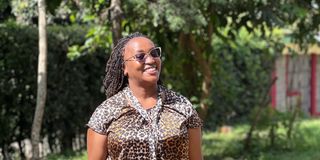
Jackline Murimi, the founder of PremacCare, a home-based caregiving and nursing company offering dedicated support for newborns and mothers.

What you need to know:
- Other women in the city have sought to reclaim traditional postpartum care by hiring traditional birth attendants from upcountry.
- These attendants assist with newborn care —bathing, oil rubbing, and breastfeeding guidance—while also providing nutritional advice, social support, and helping to identify danger signs requiring medical attention for both mother and child.
Beth Wangui, 29, vividly remembers watching her grandmother care for her mother after the birth of their youngest brother. She recalls the house in the village transforming into a sanctuary, a space where her mother was treated as sacred.
A fire burned constantly, herbs simmered nearly without pause. Her grandmother would usher her mother into a warm, secluded room, closing the door to the outside world. For 40 days, her mother’s sole purpose was to heal and bond. A bowl of hot porridge was always within reach at her bedside, while the heavy lifting was handled by a dozen aunties. They moved through the household with gentle authority, directing older children and settling squabbles with quiet efficiency.
But in Wangui’s Umoja home, that memory feels like a cruel fairy tale. The city does not honour the 40 days of grace. Within her two-bedroom flat, the village warmth has been replaced by cold, tiled walls. There is no auntie to take the baby so she can sleep; only the relentless thump of a neighbour’s woofer blasting Gengetone.
“When the baby sleeps, I often stand in the shower, wondering if my body will hold me up long enough to get properly clean,” she says. “There’s no elder to scrub my back, to gently wipe my scar, or to massage my exhausted limbs with healing herbs. My husband has already returned to work after his two-week paternity leave.”
As the week wears on, the struggle deepens; shifting from physical pain to a terrifying battle within her own mind. The mask of the ‘strong woman’ she wears for her husband and neighbours is beginning to crack. Late at night, when the baby’s high-pitched, colicky cries pierce the thin walls for a fourth relentless hour, Wangui finds herself wondering when, or if, better days will ever come.
“I often have to restrain myself from leaving the baby wailing and just walking out because staying feels like a form of cruelty. Yet at the same time, I ache for just a moment of quiet,” she confesses.
“The sleep deprivation is the worst. Sometimes, when the baby finally sleeps, I sleep too, but it’s never enough. If I were in the village, my auntie or mother would have taken one look at me and just known—they would have taken the child. Here, I can only wait for my nanny, who is caring for the older child,” she adds.
For Jackline Murimi, entry into motherhood was far from the glowing, seamless transition so often glamorised online. In her own words, it was a period of profound "suffering." Nothing could have prepared her for the raw, isolated reality of becoming a mother during the Covid-19 pandemic.
Her recovery bore no resemblance to the village sanctuary her ancestors would have known. After a C-section, she faced the jarring reality of a body held together by stitches, where even the simple act of coughing forced her to physically clutch her belly against the pain.
“The nights were defined by a relentless, high-pitched exhaustion from a baby with severe colic. He cried endlessly, but when he finally stopped, my mind wouldn’t. I was too scared to put him in his cot, and when we co-slept, I lay there, perpetually alert,” she recalls.
Cracked nipples
She also wrestled with the pressure of “natural” breastfeeding, nursing through the searing pain of cracked nipples and the guilt of a milk supply that never matched the triple-digit volumes others seemed to boast about. This sense of inadequacy haunted her, even following her into maternal clinics.
“There was a traumatising weight to standing in line, still carrying the heavy aftermath of pregnancy, while holding my tiny baby in the clinic. The silent comparisons with other mothers felt like proof I was failing,” she says.
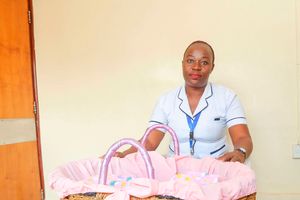
This painful experience would become the inspiration behind PremacCare, a home-based caregiving and nursing company dedicated to supporting both newborns and new mothers. The service allows mothers the space to heal and enables fathers to be present for their families. Murimi explains how city mothers have embraced the concept, noting it has even helped save marriages strained by sleep deprivation and resentment.
“Motherhood in the city was tough. And even after I had escaped the throes of newborn life, I looked around and realised my friends were suffering, too. I wasn’t the only one,” she recalls. “I found myself spending evenings at friends' houses as an unofficial nurse. I would step in at 6pm, bathe the baby, and tell the new mother to sleep, caring for the infant until she woke up.”
Also read: From manger to incubator: How modern medicine is rewriting the story of childbirth in Kenya
She witnessed the transformation in their eyes after just a few hours of uninterrupted rest. In that moment, she recognised how the ‘Kenyan way’ of pretending everything was fine perpetuated a cycle of silent trauma. In 2023, she transformed those evening check-ins into a formal service, providing professional, medical-grade support in the comfort of the family’s home. Now, qualified nurses or caregivers take the night shift, allowing parents to wake up rested and ready for the day.
"You cannot pour from an empty cup. A rested mother bonds better than a hallucinating one," she reflects. "Choosing yourself isn't about giving the baby away; it's about ensuring that when you hold your child, you are truly present, whole and sane, ready to cherish the blessing that once felt only like a source of pain."
Other women in the city have sought to reclaim traditional postpartum care by hiring traditional birth attendants (TBAs) from upcountry. These attendants assist with newborn care —bathing, oil rubbing, and breastfeeding guidance—while also providing nutritional advice, social support, and helping to identify danger signs requiring medical attention for both mother and child.
Unlike the often-clinical atmosphere of hospitals, TBAs offer a comforting, familiar presence rooted in cultural customs. They provide emotional and physical support that many new mothers find lacking in what they perceive as rushed or impersonal hospital care.