A warrior’s winning formula: Why early detection is the ultimate cancer fighting tool
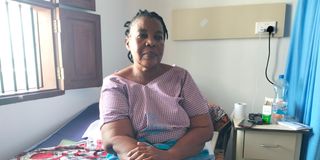
Wilhelmina Walembwa Makau, 59, sits on her hospital bed in Langoni, Lamu County on May 8, 2026. She had just undergone successful surgery to treat cervical cancer.

What you need to know:
- Cervical cancer remains a deadly threat to Kenyan women. It develops slowly, often undetected, until treatment becomes costly and complicated.
- The Ministry of Health reports about 5,250 new cases and 3,200 deaths annually from this preventable disease.
Wilhelmina Walembwa sits on the edge of her hospital bed at Langoni, Lamu County. Dressed in comfortable post-surgery attire, the 59-year-old mother of two and grandmother of six listens attentively to nurse Maurine Wanyonyi.
Gently, Maurine shares the pathology results: the surgical margins are clear; the cancer has been completely removed. A wave of relief washes over Walembwa, releasing months of tension and anxiety since her diagnosis. Tears of joy well in her eyes, and a slow, genuine smile spreads across her face.
A resident of Bombolulu in Mombasa, Walembwa had travelled some 340 kilometres to Lamu Town for cancer treatment. She was diagnosed with cervical cancer in 2023.
It began during a routine check-up at Mombasa’s Bomu Clinic. Though she had no symptoms or pain, she opted for cancer screenings, which detected abnormalities in her cervix.
“Doctors noticed something wasn’t right,” she says. A cervical biopsy was performed, and in December 2023, results confirmed cancerous cells at stage 2B.
Cervical cancer remains a deadly threat to Kenyan women. It develops slowly, often undetected, until treatment becomes costly and complicated. The Ministry of Health reports about 5,250 new cases and 3,200 deaths annually from this preventable disease. According to the WHO, over 95 per cent of cases are caused by persistent HPV infection, with HPV 16 and HPV 18 responsible for most. Without urgent intervention in sub Saharan Africa, deaths could rise nearly 50 per cent by 2040.
But cervical cancer is not a death sentence. It is preventable and highly treatable if caught early. Walembwa knew this.
She began treatment in January 2024. With help from family and friends, she raised funds for 13 cycles of chemotherapy and 31 radiotherapies at Mombasa Hospital, followed by three brachytherapy sessions at HCG CCK Cancer Centre in Nairobi.
Brachytherapy is a form of internal radiation therapy that places radioactive sources such as tiny seeds or wires directly inside or next to a tumour. This delivers a high, targeted dose while sparing healthy tissue. It is considered a gold-standard, life-saving treatment for many cervical cancer patients.
Despite being registered with the Social Health Authority (SHA), Walembwa says she still spent over Sh200,000 out of pocket on various tests and imaging.
After post-treatment follow ups including gynaecological and general specialist consultations, bloodwork, MRI and CT scans, doctors told her her first PET scan was normal. A PET scan detects changes in cellular metabolism and can identify early signs of cancer recurrence before conventional imaging picks them up.
However, her second PET scan revealed problems. She was advised to undergo pelvic exenteration surgery, which involves removing the reproductive organs.
“After a series of assessments, my doctors advised surgery to remove the uterus, cervix, ovaries and fallopian tubes to fully get rid of the cancer. I agreed,” says Walembwa.
When she consulted her specialist, Dr Victor Tetty in Mombasa, he said the procedure would cost up to Sh600,000. She had no money.
As she struggled to raise the funds, help arrived through a fully subsidised surgical outreach programme: Gynae Oncology Mashinani. The group brings together gynae oncologists, urogynaecologists, laparoscopic and general surgeons, urologists, anaesthetists, nurses, and theatre technicians to perform complex surgeries in rural Kenya.
This time, they organised a three-day free medical camp at Lamu’s Langoni Hospital from May 6 to 8. Dr Tetty, who founded the initiative in 2025, led the team. Walembwa was successfully incorporated into the programme. She became one of 40 women from across the Coast region and beyond who received free, life changing surgeries.
“Dr Tetty already knew my situation. He is among my specialists. When the Lamu free camp came, he informed me, and I applied. I am happy that through the initiative, I was treated for free. I didn’t pay a penny,” she says.
In an interview with Healthy Nation in Lamu, Dr Tetty said he launched Gynae Oncology Mashinani to help grassroots patients access treatment for complex health challenges. So far, about 300 patients have undergone surgeries that would otherwise cost between Sh500,000 and Sh1.5 million.
“Some of the surgeries include cancers of the ovary, cervix, uterus, vagina and vulva, as well as endometriosis, tubal blockage, uterine removal, fistulas, ovarian cysts, adenomyosis, and pelvic floor prolapse,” he said.
Beyond Lamu, similar free camps have been held in Mombasa, Voi (Taita Taveta), Kwale, and Malindi (Kilifi).
Dr Tetty stressed the importance of early detection, linking it to better quality of life, lower treatment costs, simpler therapies, and higher survival rates. “Prioritising early detection and routine wellness screenings saves lives,” he said.
Langoni Hospital Director, Dr Nurein Mohidin, called the programme a new dawn for women in underserved areas like Lamu, Kilifi, and Kwale, who have long endured painful, unaffordable journeys.
Back to Walembwa. After such intensive treatment, her body now needs significant time to heal. She acknowledges that long lasting or emerging side effects are common during recovery.
But the key lesson from her journey is simple: early detection and adherence to medication. Had she not made routine checkups a habit, she would never have caught the cancer early enough for highly effective treatment.
“People shouldn’t wait until they’re sick to go to the hospital. Regular checkups make you more aware and help detect unsuspecting conditions like cervical cancer early.
Catching cancer early and seeking immediate treatment is the ultimate fighting tool. It paves the way to health.”
As she speaks, still seated on the edge of her hospital bed, Walembwa gently touches her abdomen, not just to feel the physical evidence of the healing ahead, but to experience a profound sense of empowerment. In this intimate, triumphant moment, her smile signals a turning point: a celebration of survival, a shedding of fear, and the embrace of a future with a clean bill of health.