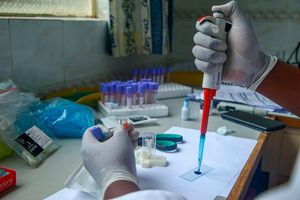
How being invisible in global genetic databases puts African patients at risk
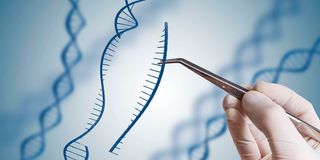
The absence of African DNA in the global genome map is hampering progress in treating conditions like sickle cell anaemia.

What you need to know:
- African DNA makes up just two per cent of global genetic databases despite Africa's rich genetic diversity.
- Kemri is collecting 100,000 genome sequences to address this gap.
- Including African genetic data would improve medical treatments worldwide.
Africans remain largely invisible in the global genetic blueprint that guides modern healthcare, leaving millions vulnerable to misdiagnosis and ineffective treatments. Scientists are now sounding the alarm: the absence of African DNA in global genome maps isn't just a scientific oversight – it's a matter of life and death.
Nearly 90 per cent of all genomic studies have focused on European populations, with Africans representing a mere two per cent of collected data. This staggering imbalance creates blind spots in treating conditions like sickle cell anaemia, which disproportionately affects African populations.
"The lack of diversity in genomic data is limiting our ability to understand how specific genetic variants contribute to disease, especially in African populations," researchers warn, pointing to a troubling gap between scientific knowledge and African healthcare needs.
The irony is particularly sharp for Kenya, often called the "cradle of mankind." Despite its rich genetic history that has contributed significantly to understanding human origins, evolution, and migration, Kenya's genetic diversity remains severely underrepresented in global databases – depriving both local communities and the world of potentially life-saving discoveries.
What many don't realise is that African genetic information holds unique value for global medicine.
"African genomes are characterised by shorter linkage disequilibrium (LD) blocks due to their greater genetic diversity," explains Ms Eva Aluvaala-Nambati, who leads DNA research at the Kenya Medical Research Institute (Kemri). "This means that genetic variants are more likely to be inherited independently, allowing for finer resolution in identifying disease-associated loci."
This distinction is crucial. While populations with longer linkage disequilibrium blocks, such as Europeans, inherit larger genetic segments together, African genetic structures offer scientists a more precise map to pinpoint disease causes.
"Including African genomic data can significantly improve the accuracy of disease gene mapping, benefiting global populations," Aluvaala-Nambati notes.
The consequences of this oversight extend beyond theoretical science. "African populations harbour the highest diversity, and studies focused on European populations will miss out on variants present in African populations," she emphasises. "This means that discoveries made on disease gene associations will not always apply to African populations. This may lead to misdiagnosis as some variants in African populations are yet to be catalogued and associated with disease."
Even the seemingly straightforward matter of medication dosage becomes complicated without proper representation. "Drug dosage recommendations based on data from European populations cannot be blindly applied to African populations as variations in drug-metabolising enzymes can be population-specific," Aluvaala-Nambati explains. This gap leads to "adverse effects or poor patient outcomes for populations that are underrepresented in genomic studies."
Cameroonian scientist Ambroise Wonkam, who heads the African Society of Human Genetics, puts it bluntly: "If we don't know which genes are the most important in terms of diagnosing genetic diseases in African populations, it is impossible for me, as a medical geneticist, to treat an African child in the same way I treat a European child."
Genomic studies
Kenya stands at a unique crossroads in this genomic story. According to Aluvaala-Nambati, the country's "rich anthropological history, diverse ethnolinguistic groups and diverse environments" position it as a focal point for both current and ancient genomic studies.
"However, limited genomic data has been collected from this population, yet this has the potential to benefit not only Kenyans but the rest of humanity," she notes. "Even though Africa has the highest genetic diversity, Kenya is right where the greatest genetic diversity is."
This potential is driving ambitious new initiatives. Last year at the 14th Kemri Annual Scientific & Health (Kash) conference, Kemri announced plans to build a forensic DNA database to help the government track down murder suspects, missing persons, disaster victims, and sex offenders.
The first phase of this effort, known as the 'Ancestry-Linked Genomic Biorepository,' aimed to collect about 1,000 samples from all ethnolinguistic groups in Kenya to generate population-specific genetic data with applications in health and forensics.
After four years of development, this pilot project is now ready for implementation. "The data is currently being curated and will be included in a searchable database that can be accessed for research and investigative purposes. Access will, however, be restricted. We anticipate that this will be available before the end of 2025," Aluvaala-Nambati reveals.
"There isn't a direct benefit to individual Kenyans — researchers and forensic investigators will be the consumers of the resource and so the benefits will be for the common good," she adds.
Kemri has now embarked on an even more ambitious initiative: 'The Human Kenya Genome Project,' which aims to generate 100,000 whole genome sequences from healthy individuals and disease cohorts from the Kenyan population.
"The samples are currently biobanked in Kemri and mitogenome reference data (mitochondrial DNA) for the Kenyan population has been generated. The reference mitogenome data has application in forensic investigations, health as well as anthropological studies," Aluvaala-Nambati explains.
She describes why this project represents a revolutionary shift: "We are generating genomic data that will contribute toward addressing the current underrepresentation of African genomes in genomic studies. This will ultimately drive health equity and precision medicine in Kenya. Human genomic databases and research are the backbone of modern precision medicine, and studying our genetic diversity as it relates to health is essential."
Scientists argue that this type of research isn't just beneficial – it's necessary for truly inclusive healthcare. Breakthroughs like certain anti-cholesterol treatments were developed by studying African individuals with naturally low cholesterol levels. Yet despite this proven value, African genomes remain severely underrepresented.
As Kemri pushes forward with these pioneering efforts, Aluvaala-Nambati emphasises the ultimate goal: "We need to increase the representation of African genomes in genomic studies to truly realise and benefit from precision medicine. It is important for genomic research to be carried out at a large scale and on diverse populations, for health equity to be achieved."