Behind closed doors: Inside Kenya’s unlicensed health facilities still treating patients

Shauri Moyo Medical Centre in Nairobi on October 30, 2025.
What you need to know:
- In March this year, the Kenya Medical Practitioners and Dentists Council launched a scrutiny of health facilities nationwide.
- By August 28, two gazette notices—numbered 12178 and 12179—had deregistered at least 998 health facilities across various counties.
- The reasons were damning: no valid licences or registration, unregistered practitioners, and a lack of proper waste disposal systems.
Imagine walking into a clinic with a persistent cough, only to walk out with medication for malaria. The "doctor" who examined you? A receptionist in a borrowed white coat.
The laboratory test that confirmed your "diagnosis"? A self-testing kit handled in a dusty room filled with cobwebs. This isn't a scene from a dystopian novel. For thousands of Kenyans, it's a terrifying reality playing out in unlicensed health facilities across the country.
The consequences are stark: misdiagnosis, delayed treatment, sepsis, and in some cases, death. Yet, despite a nationwide crackdown, many of these facilities remain defiantly open, their doors unlocked, their unqualified staff still seeing patients.
In March this year, the Kenya Medical Practitioners and Dentists Council (KMPDC) launched a scrutiny of health facilities nationwide. By August 28, two gazette notices—numbered 12178 and 12179—had deregistered at least 998 health facilities across various counties. The reasons were damning: no valid licenses or registration, unregistered practitioners, and a lack of proper waste disposal systems. Many facilities were shut down due to non-compliance with licensing and regulatory standards.
But were they really shut down? Healthy Nation set out to find the answer.
The clinic that wouldn't close
The dust hangs thick in the air along a quiet stretch in Shauri Moyo estate, Nairobi. Here, tucked between residential buildings, Shauri Moyo Medical Centre continues to operate despite being among the facilities unlicensed by KMPDC.
It's a Monday morning, and the first thing that strikes me as I walk in is the hygiene—or rather, the lack of it. Stained tiled floors stretch across the reception area. Dust coats surfaces that look like they haven't been wiped in weeks. A young boy, accompanied by an adult, clutches tablets in one hand and a tumbler half-filled with water in the other.
At the counter stands a gentleman in a red hat and football jersey. He introduces himself as Samuel, an employee at the facility. When I ask to see a doctor, he ushers me into the consultation room without hesitation.
Inside, the conditions are worse. Conspicuous brown stains mark the walls. The floor is thick with dust, a clear indication it hasn't been cleaned in quite some time. A patient's bed sits in one corner alongside two chairs and a doctor's desk.
Samuel, the same man who served me at reception, walks in, picks up a white coat from somewhere, and settles into one of the chairs.
"How can I help you?" he asks.
Baffled, I remind him that I asked to see a doctor.
"I am a nurse, but we have a doctor who is just a call away," he explains. "You can proceed and tell me what you are ailing from, so I know if I can handle it. If not, I will call the doctor."
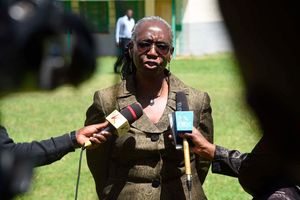
According to Dennis Nkarichia, an advocate at Mohammed Muigai LLP, this facility shouldn't be operating at all. "Under the Medical Practitioners and Dentists Act, Cap. 253, when KMPDC gazettes you, you are presumed to be registered, and you can lawfully provide services. The moment there is an issue with the facility, they can either suspend you temporarily or cancel your annual practicing license," he explains.
When I formally introduce myself as a journalist, Samuel's countenance changes. He quickly shares that they are "in the process of getting their house in order."
"Your facility was deregistered and shouldn't be open, right?" I ask.
"Madam, we are planning ourselves, so we get that license," he responds. "You know if a patient walks in, we cannot turn them away, so we will still offer services. Right
now, even the tests we are doing are for malaria and HIV, but we are using the self-testing kits as our lab is not functional. Our employer is planning on bringing diagnostic machines for the lab. We are planning ourselves."
The facility only attends to patients who pay out of pocket, I learn. Samuel leads me to the laboratory, and what I see is deeply concerning. Dust-filled shelves line the walls. Cobwebs cling to the corners of the dark room. Empty specimen tubes collect dust on the lower shelf.
A gentleman walks in, eyeing me suspiciously.
"This is my colleague. He is a clinical officer, so we work together," Samuel offers quickly.
Appalled by the poor hygiene levels, I question again why they are still open.
"Madam, you know how these things work," the "clinical officer" responds. "They told us to get a license and a public health license, of which we are waiting for the public
health officer to come and inspect the facility, then we will proceed to get the licence."
The legal implications are severe. "If you are a practitioner who has a license for that year but the facility has had its license cancelled or removed from the register, then that amounts to providing medical services at an unregistered facility," Nkarichia explains. "That would mean that the person would be liable for a fine not exceeding Sh5 million or imprisonment for a term not exceeding five years or both. It is deemed as an offence under section 22 (5)."
He stresses the need for health facilities to display their operational licenses so that they are visible to patients.
Three days later, my team and I return to Shauri Moyo Medical Centre. It is still open.
The dental clinic taking bookings
Our investigation takes us to Eastleigh 10th Street, to Macaash Dental Clinic, located inside a cream-painted building. Two men sit outside, taking note of who goes in and out. This clinic is among those whose licenses have been revoked.
Once again, I pose as a patient.
"We normally do a consultation for Sh1,000, then install braces at Sh20,000 per jaw," one of the men offers.
The price is strikingly low—and that should be a red flag. According to Dr Kahura Mundia, President of the Kenya Dental Association, the cost of installing braces in public hospitals such as Kenyatta National Hospital ranges between Sh50,000 and Sh60,000, and this is with the government offsetting some costs. In private facilities, the costs range above Sh100,000 because practitioners must cover employee salaries, their own fees, rent, and other operational expenses. KMPDC regulates the medical fees for orthodontic treatment.
Mundia notes that KMPDC has failed to regulate some of these facilities in Eastleigh, where people pose as dentists yet they are not real dentists. When a clinic offers braces at less than half the standard public hospital rate, the question becomes unavoidable: what corners are being cut, and at what cost to the patient?
I ask to see a dentist and emphasise that I need an appointment.
"They plan when dentists will come," the man says casually.
"I can assure you that there is nothing that we do not handle, and when we get a referral case, we charge them Sh10,000 as a standard fee," he insists.
When I bring up the closure, the duo tells me that their previous license had expired and they had made a renewal early this month. They show me proof of Sh20,000 paid to KMPDC for the renewal.
"We still have to pay rent, so we remained open as we were still taking in clients. We have bills to pay," one of them explains. "But I can assure you we have now paid for the licence, and we are just waiting to submit all the documents, even the data protection license they told us to get."
The Kenya Dental Association has, on many occasions, raised concerns about the proliferation of fraudulent dental clinics following cases of reported botched procedures.
Due to the location of this facility and the men manning it, our attempts to capture photos fail. When we return a few days later, the Healthy Nation team notes that it is still wide open.
The pharmacy with a secret
At Al-Haraman Pharmaceutical Ltd and Dental Services, also located in Eastleigh, another facility on the closure list, the front of the business operates as a pharmacy.
I walk in seeking dental services.
The gentleman at the front counter informs me that they are only an operational pharmacy.
"Since I came, I have not seen the dental side of the business," he says. "But I can connect you with the manager. Maybe they can assist further. You can come later."
I ask whether the facility has been deregistered.
"Yes, they came, but I do not know what they agreed with the owner," he responds. "I am just an employee."
The missing notices
According to KMPDC, they had placed a closure notice on the door of each deregistered facility, and only they have the right to remove these notices. Yet none of these facilities had any notice on their doors.
Our investigation was limited to Nairobi, but we identified similar facilities in Kisii and Homa Bay. The owners and managers of these facilities refused to speak to us, leaving us unable to verify their operational status. The pattern emerging suggests this could be happening across the country.
"They should be closed and owners arrested"
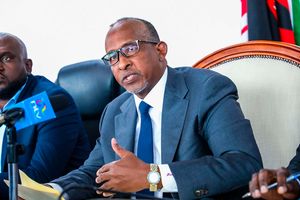
Dr David Kariuki, KMPDC Chief Executive Officer, is unequivocal about the severity of the situation. He stresses that there has been a proliferation of unlicensed facilities offering services to unsuspecting Kenyans. Some of these facilities have been linked to botched procedures performed by unqualified personnel posing as doctors.
In an interview with Healthy Nation, Kariuki addresses our findings and explains what went wrong with the enforcement process:
What were your findings on the ground?
"We found that many of these facilities did not have licenses, and others did not meet the public health standards. Therefore, the conditions were unsanitary and would pose a high risk of infections," Dr Kariuki explains. "So far, we have closed more than 400 facilities across the country, and we will continue with our inspections."
How can a Kenyan know whether a facility is registered?
"When one visits a facility, it is good to confirm that the facility is in order," he advises. "We are urging Kenyans to ascertain that the facility they attend for medical services is registered. One, they should prominently show their license. Two, a patient can verify if the facility is registered by sending a text to our system number 20547 before they receive services."
Our investigation found that some facilities that received closure notices have reopened and are still treating patients. What action will KMPDC take?
"Those facilities have already gone against the law and should be closed and owners arrested," Kariuki states firmly. "Mostly, when we have major issues, we also make arrests of the unqualified personnel. We are working with the county government and the county commissioners to help us keep track of those places."
What possible dangers can a patient face in such facilities?
"Some of the challenges an unsuspecting patient can face are misdiagnosis, delay in treatment, and sepsis."
How was the closure of these facilities carried out?
"After assessment, KMPDC went to each of these facilities and put a notice on the door indicating the closure of the facility and the reasons behind the closure," he explains. "It even quotes the section of the law which we have used to close, and that notice should stay until the facility has complied with the recommendations we have given them. It is our officers who should go back and remove that notice when we are reopening. Anyone who removes the notices before our officers go to inspect the facility again is in breach of the law."
One of the facilities, Macaash Dental Clinic in Eastleigh, says they have already renewed their license; hence they are continuing with operations. Are they wrong?
"Yes, they should have waited for the due diligence process," Kariuki confirms. "Once the due diligence process is done, they need to write to us indicating that they have complied. Based on our assessment, if it is a simple issue such as a license, we would confirm through our systems then we clear them. One has no reason to reopen without our knowledge."
In the event a Kenyan gets a botched procedure in such facilities, who is to blame?
"That is a crime under the criminal civil code," he says. "Once you are operating without a license, you are already committing a crime because you are not a licensed facility to operate. That will now move from KMPDC to the Directorate of Criminal Investigations. You will be questioned as to why this person was giving services without a license. We want service providers to know that operating outside of the regulations and law is actually criminal, even where they thought they were actually trying to do good."
What is the way forward?
"We will send officers separately to verify, working with the different agencies, as this is a multi-agency operation, so that we can have a streamlined crackdown to arrest those who have reopened without proper authorisation."
Meanwhile, the doors remain open. The dust continues to settle on laboratory shelves. And somewhere in Kenya, a patient walks into a clinic, unaware that the person in the white coat has no right to be wearing it.